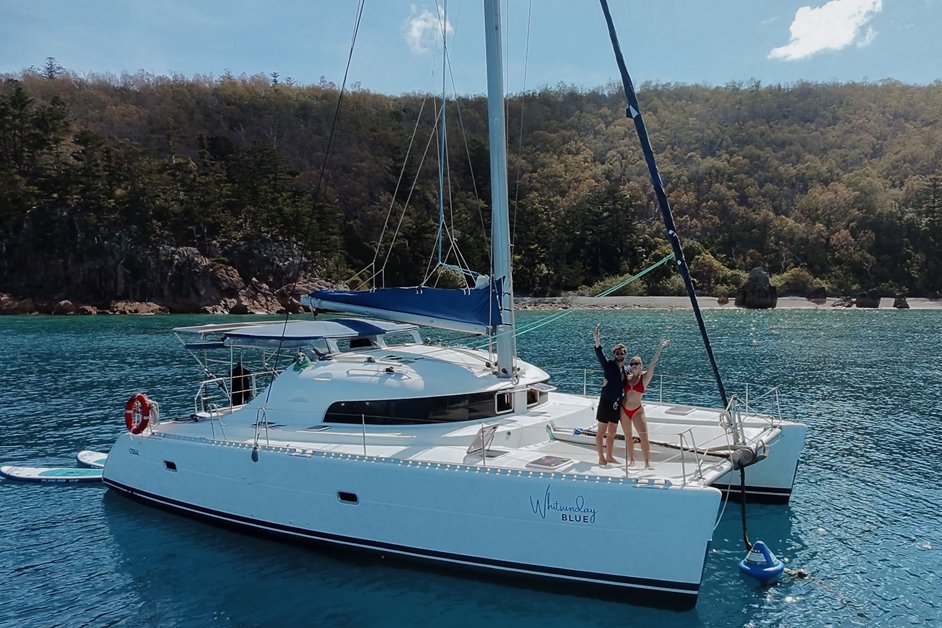
The Whitsunday Islands are one of prettiest regions in Australia, a collection of 74 islands off the coast of Queensland, part of the world famous Great Barrier Reef. Airlie Beach on the mainland is considered the gateway to the Whitsundays.
→ Check out my guide to visiting Airlie Beach.
We're currently living full-time in our campervan, a 2018 Mercedes Sprinter, and exploring Australia, with a plan of "driving the lap" (completing the entire perimeter of the country). I first visited Australia in 2019, following the classic backpacker route, mostly visiting big cities, staying in hostels and traveling by public transport.
The Whitsundays formed over 110 million years ago as layers of volcanic explosive debris built up and hardened. They were once part of continental Australia - unlike some parts of the Great Barrier Reef which are true offshore cays and reefs - and made up a mountain range on the mainland. They have separated and reconnected a number of times through the ice ages, most recently disconnecting about 10,000 years ago when glacier melt led to the rising of the Coral Sea and much of the valleys of the mountain ranges submerged. Essentially, the Whitsundays are the mountain tops left exposed above the present-day ocean surface.
For over 9,000 years, the Ngaro people lived on the islands, long before any Europeans arrived.
Captain James Cook is the first recorded European to have sighted the Whitsundays and the Airlie Beach coastline in 1770. He named the islands so as he spotted them on the Christian Festival of Whitsun that year.
The first European settlers began to arrive in the 1860s to work in timber camps until the 1930s. This sadly saw the forced removal of most of the Aboriginal Ngaro people, except those employed by the timber camps.
Tourism took off in the 1920s with boat trips to explore the beautiful landscapes. 96% of the Whitsundays are protected national parks, with Queensland Parks and Wildlife working with Ngaro descendants to protect significant areas.
→ Learn the complete and fascinating history of the Whitsundays.
Every single spot (and more) that I mention in all my blog posts about Australia can be found in my Australia | Ultimate Map!
This is a digital map featuring hundreds of my favourite restaurants, campgrounds, accommodations, shops, photo spots, museums, beaches, lakes, animal spots, bridges, viewpoints, hikes and SO much more in Australia, including its three external territories.
Each pin includes exact locations, images, detailed information, the ability to open and save the spot in your Google Maps and a link to my relevant blog post to read more.
COMING SOON → Buy the Australia | Ultimate Map!
Below is some useful information for preparing for your trip to the Whitsunday Islands. In all cases, please be sure to check with the relevant local authorities for the latest and accurate information.
Language: The official language of Australia is English. In the Whitsunday Islands, the traditional language of the Ngaro people was Ngaro, which is today considered an extinct language.
→ Learn more about the language of the Ngaro people.
Currency: The currency used in Australia is the Australian dollar, denoted as AUD $. I use a Wise account when I travel which allows me to have a single, free account with multiple currencies. I only have to pay once to convert my money in the app and then I can pay in AUD $!
→ Check the latest currency conversion between AUD $ and your local currency.
Data/WiFi: There is hardly any reception in the Whitsunday Islands. Your tour operator may offer Starlink access but it is not common. See it as an opportunity to disconnect and be present in the stunning scenery surrounding you!
Visa: All passport holders except New Zealand require a visa to visit Australia. All arrivals must fill out an Australian arrival card before landing.
→ Check which visa you need for Australia.
Time of year to visit: Australia can be visited all year-round, as can the Whitsundays. Having said that, the peak season to visit the Whitsundays is from September to November for pleasant, clear, consistently sunny days. We visited in January at the end of the peak season and got lucky with beautiful, dry weather; a few weeks prior there had been the very rainy Cyclone Koji coming through!
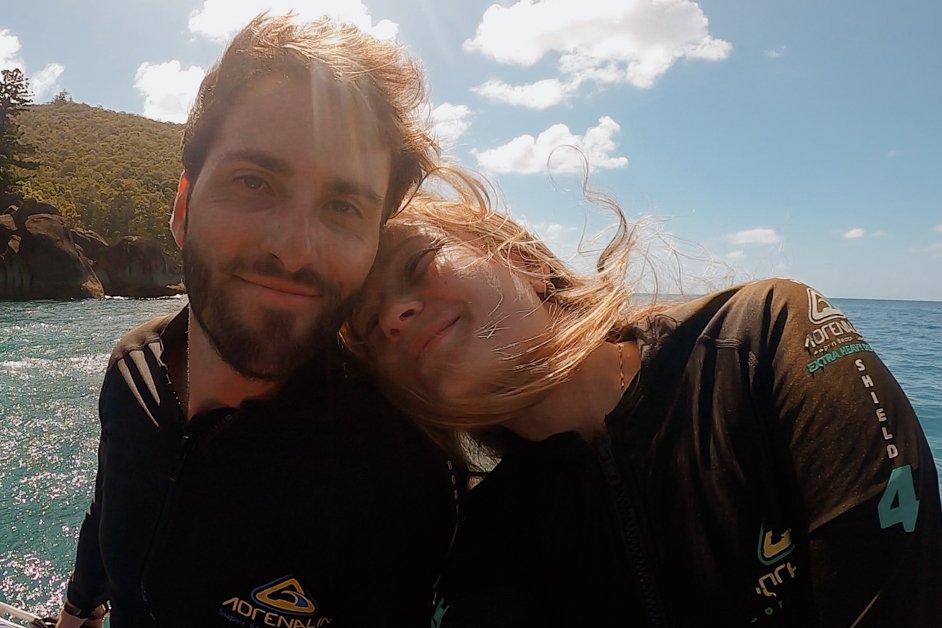
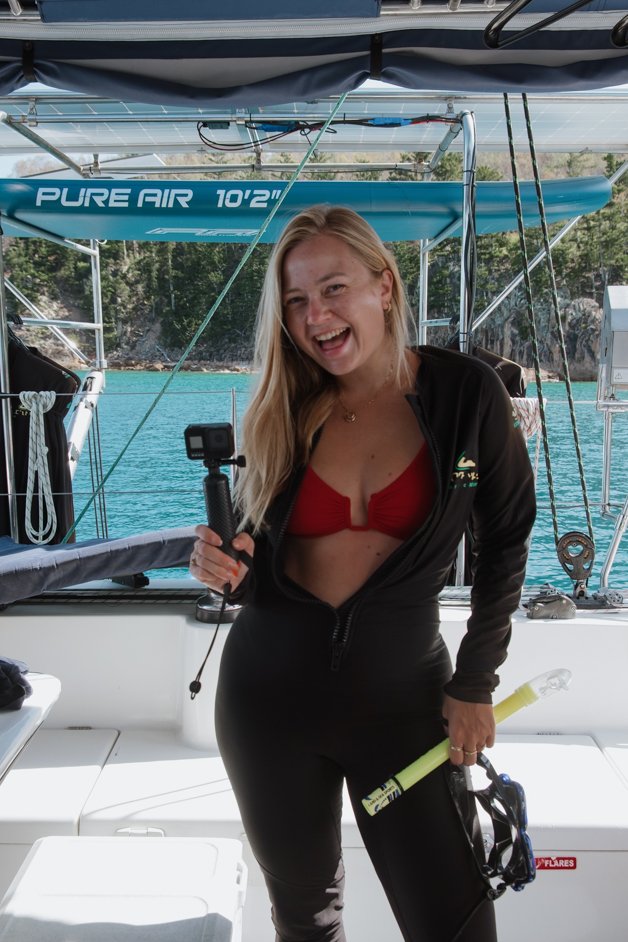
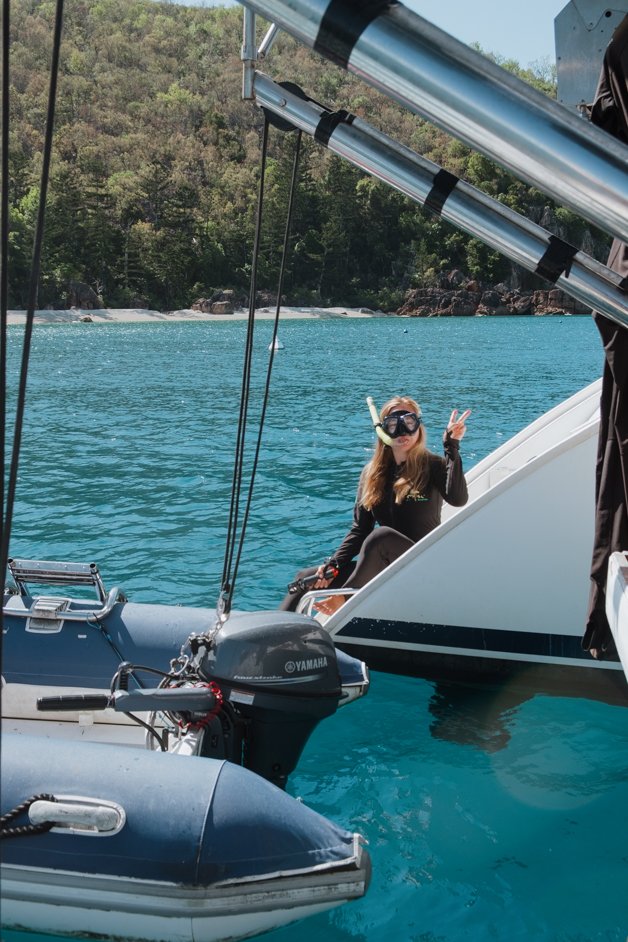
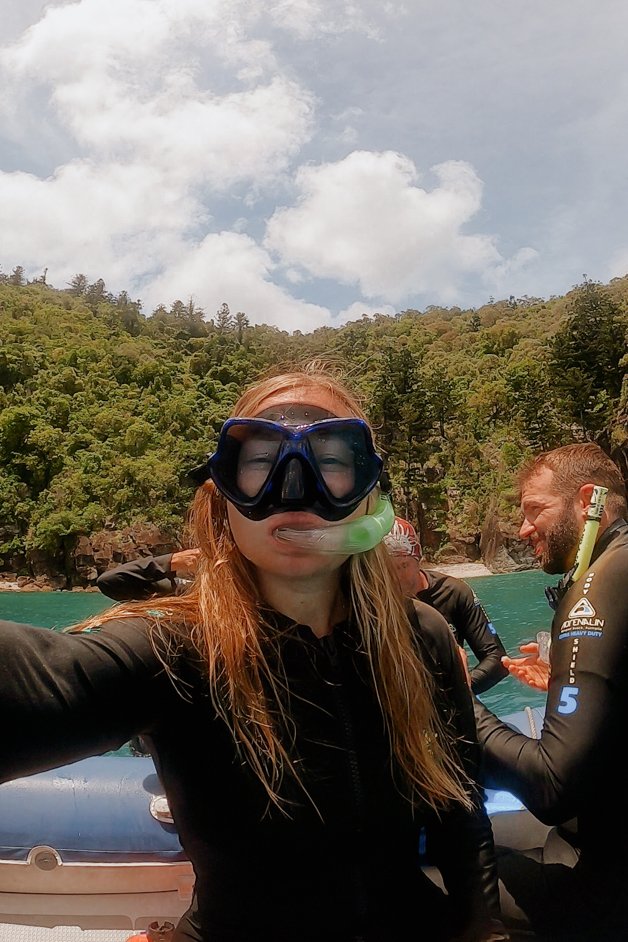
If you are in the water in the Whitsundays between October and May, you must wear a protective stinger suit against fatal stings from poisonous jellyfish.
Length of stay: We chose a three-night sailing trip in the Whitsundays, one of the longer boat trips, in order to really get to see as much of the region as possible. You can select a day trip or multi-night trip, depending on your schedule, budget and desire.
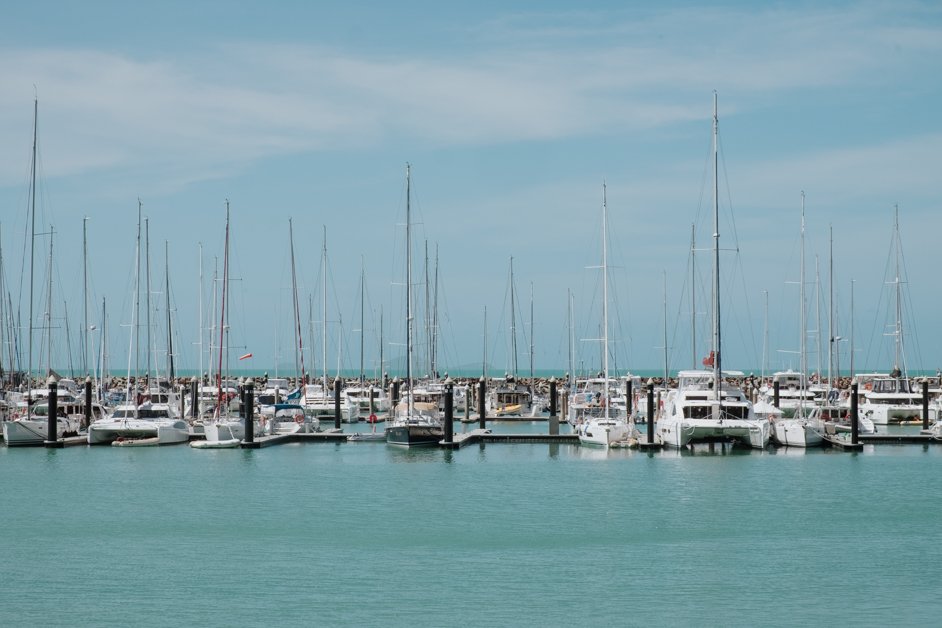
Coral Sea Marina in Airlie Beach
The Whitsunday Islands are a collection of 74 islands off the coast of Queensland. Airlie Beach is the gateway to the Whitsundays on mainland Australia.
→ Check out my guide to Airlie Beach, including how to get there.
By flight: The main airport servicing the Whitsundays is on the mainland, near Airlie Beach. This is your best option if you are planning to do a boat trip from Airlie Beach.
Alternatively, you can fly directly to the islands from Brisbane, Sydney or Melbourne landing at Great Barrier Reef Airport on Hamilton Island. This is your best option if you're planning to stay at a resort on Hamilton Island and explore the Whitsundays from there.
By boat tour: The most popular way to explore the Whitsundays is by joining a boat tour.
Depending on your schedule, budget and interests (boat size, group size, length of trip, focus, etc.), there are countless different options for a boat tour through the Whitsundays. You can just go for a day or you can spend multiple nights exploring the islands.
We chose a three-night sailing trip. We loved the Whitsundays, they are truly one of the most beautiful parts of Australia, but the actual boat and crew themselves left a lot to be desired for us so I cannot recommend them. Instead, I recommend doing your own research before booking a trip that aligns with your goals for exploring the Whitsundays.
→ Book a boat tour of the Whitsunday Islands.
By scenic flight: An increasingly popular way to see the Whitsundays is to fly over them from above in a small plane or helicopter, giving you incredible birds-eye views of the stunning islands, coral reefs (such as the famous Heart Reef), sandbanks and bright blue water.
→ Book a scenic flight over the Whitsunday Islands.
By private or charter boat: You can also visit the Whitsundays without a tour. If you have your own boat or would like to charter one, then you have the freedom to explore where you like.
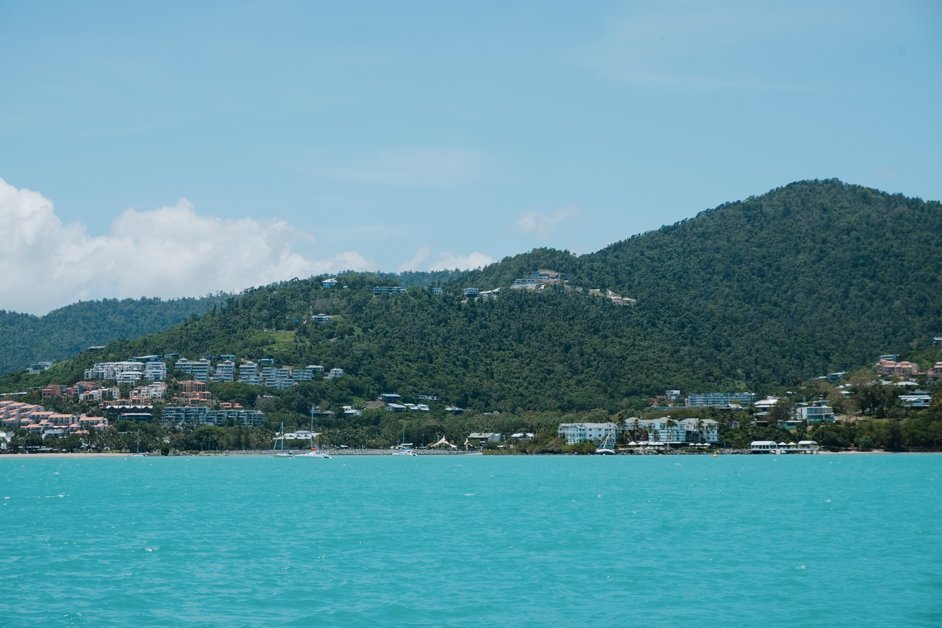
Airlie Beach from the water
The most popular way to explore the Whitsunday Islands is by joining a boat tour. Depending on your schedule, budget and interests (boat size, group size, length of trip, focus, etc.), there are countless different options for a boat tour through the Whitsundays. You can just go for a day or you can spend multiple nights exploring the islands.
We chose a three-night sailing trip. We loved the Whitsundays, they are truly one of the most beautiful parts of Australia, but the actual boat and crew themselves left a lot to be desired for us so I cannot recommend them. Instead, I recommend doing your own research before booking a trip that aligns with your goals for exploring the Whitsundays.
→ Check out the reel I made about our Whitsundays sailing trip!
Here is everything we got to see; many of the stops are places that most boat tours will visit (such as Whitehaven Beach) and others were unique to our tour, giving you an idea of what you can expect in the Whitsundays.
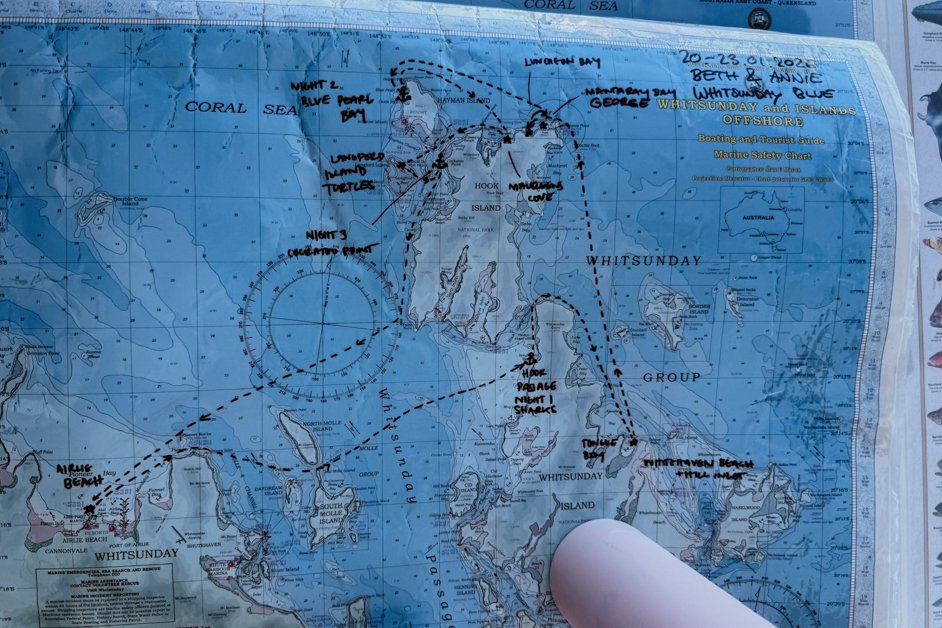
Our three-night sailing itinerary
Day 1
Our first day actually began at 3pm which is the time we met our fellow passengers and crew at Coral Sea Marina in Airlie Beach. Most tours to the Whitsundays leave from Coral Sea Marina (your tour operator will confirm this directly with you). There is safe, paid, long-term parking right at the marina - including longer parking spots for campervans - where you can leave your vehicle while you're in the Whitsundays.
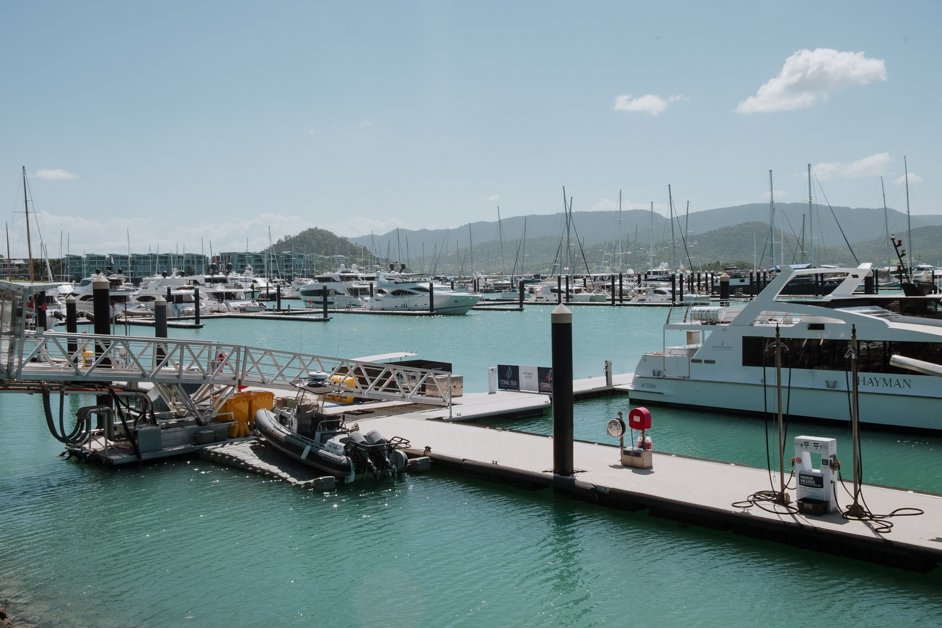
Coral Sea Marina
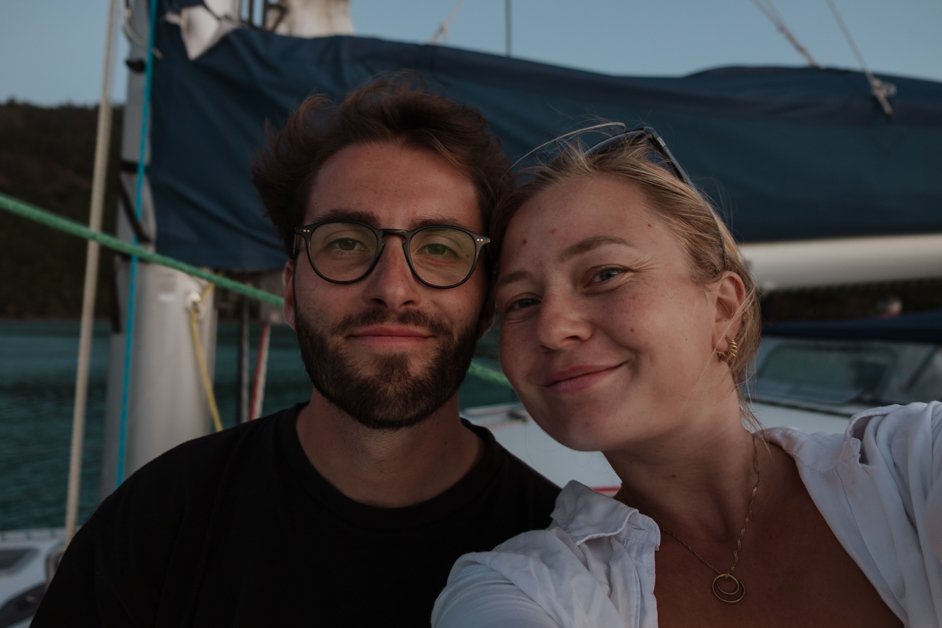
We boarded our boat in the afternoon and introduced ourselves, got to know the others (there were eight of us in total, four couples across four cabins) and met the crew (two: a captain and a skipper) who gave a brief talk on boat safety and what to expect of our Whitsundays adventure ahead.
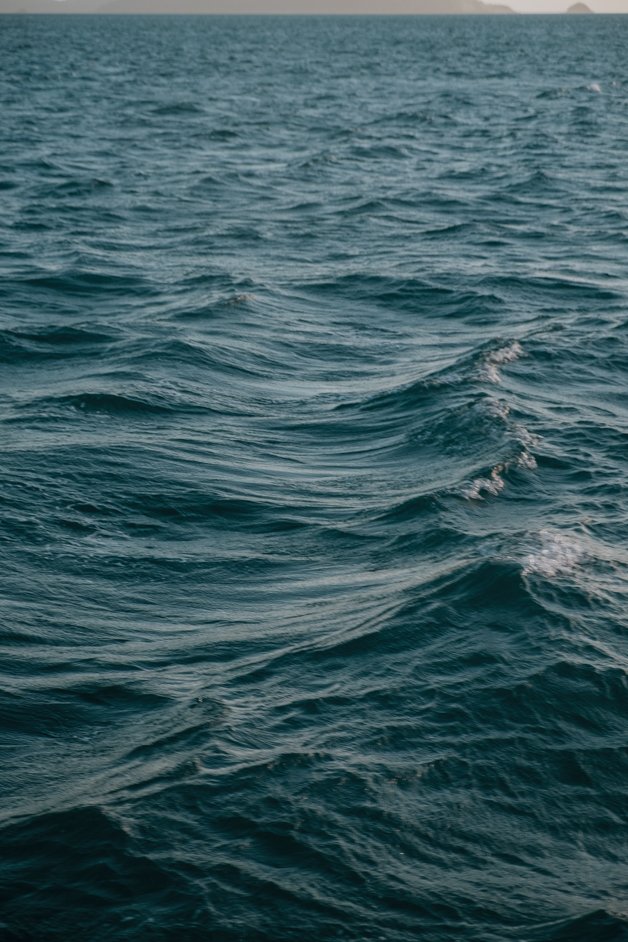
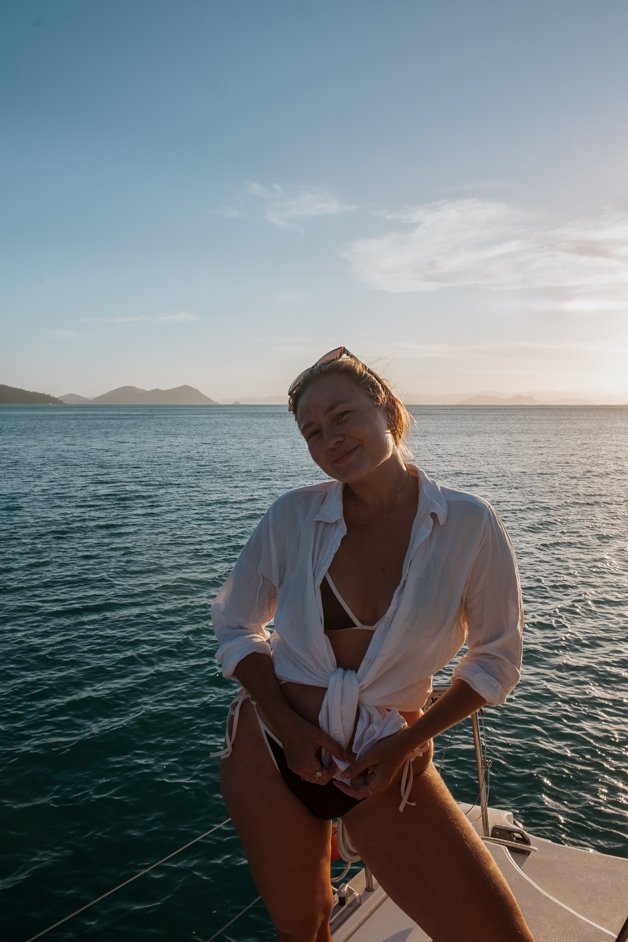
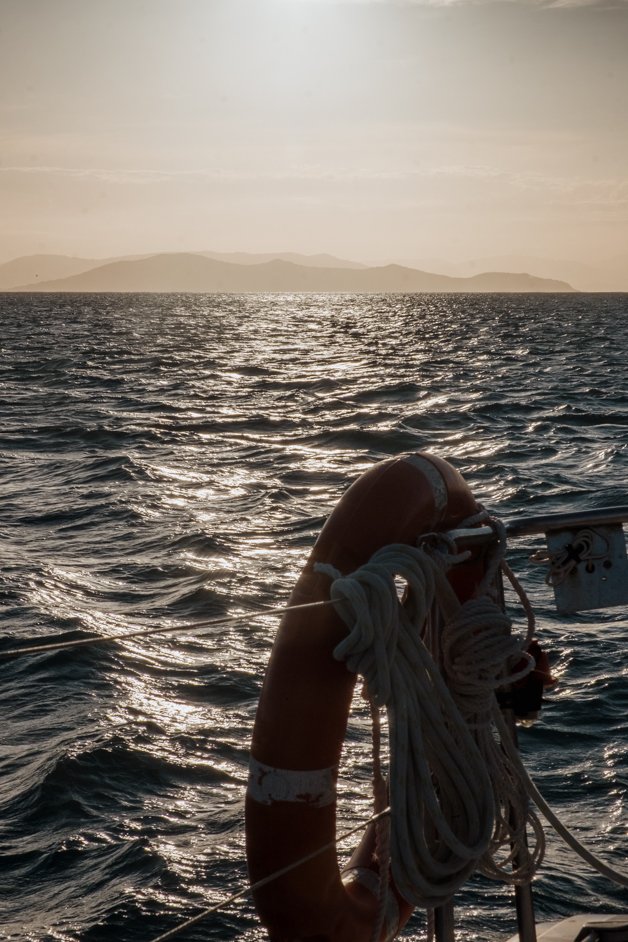
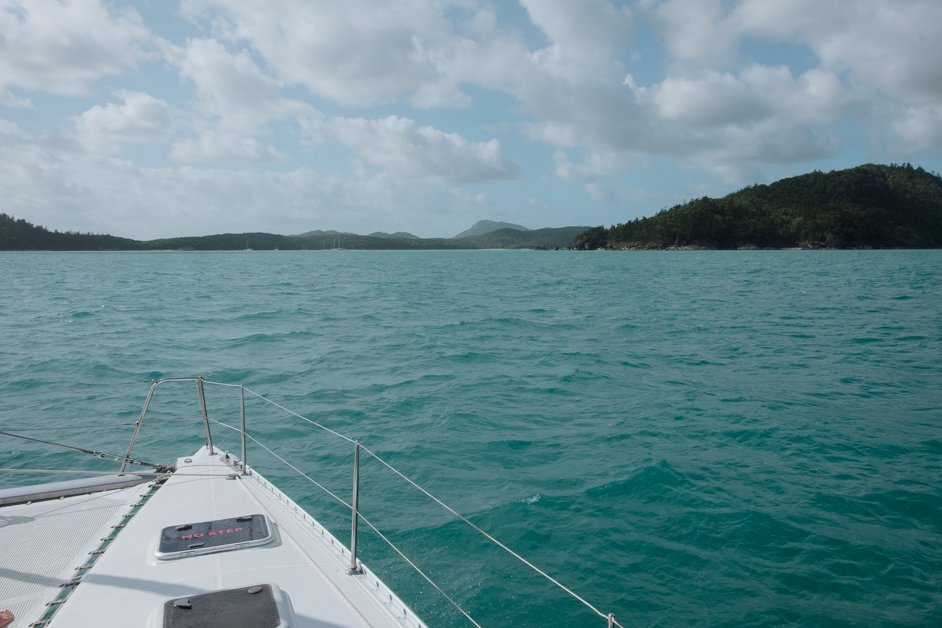
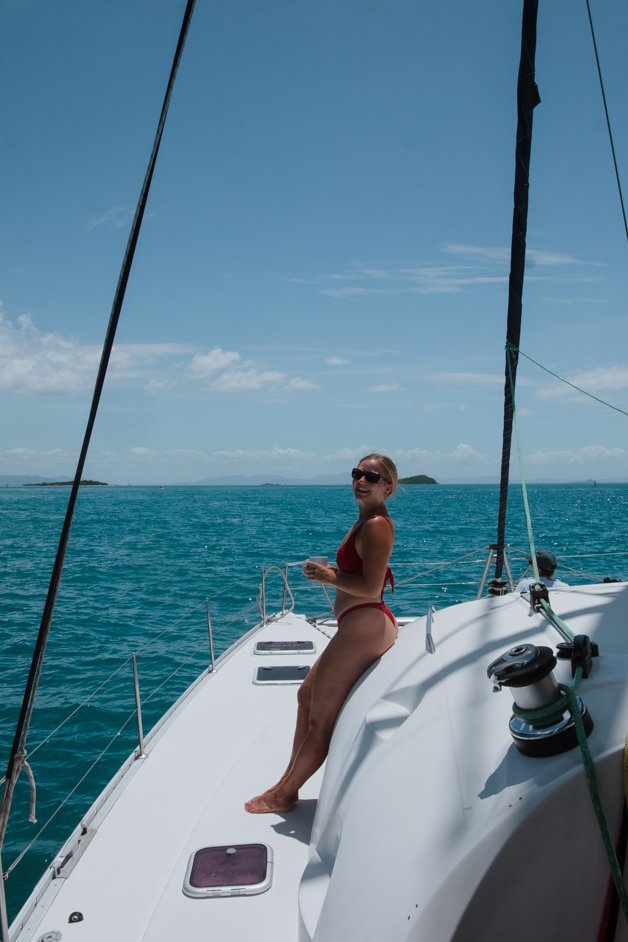
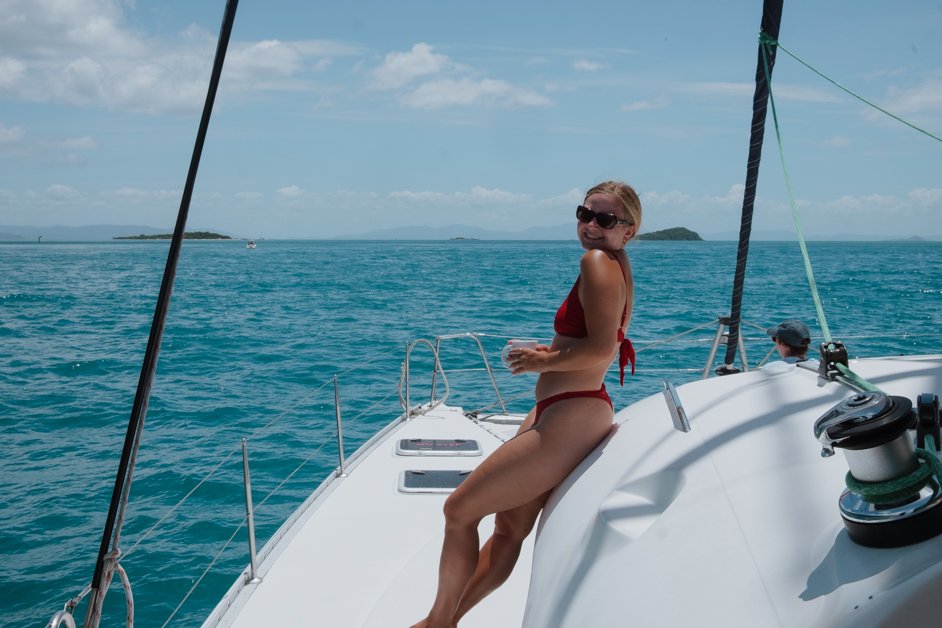
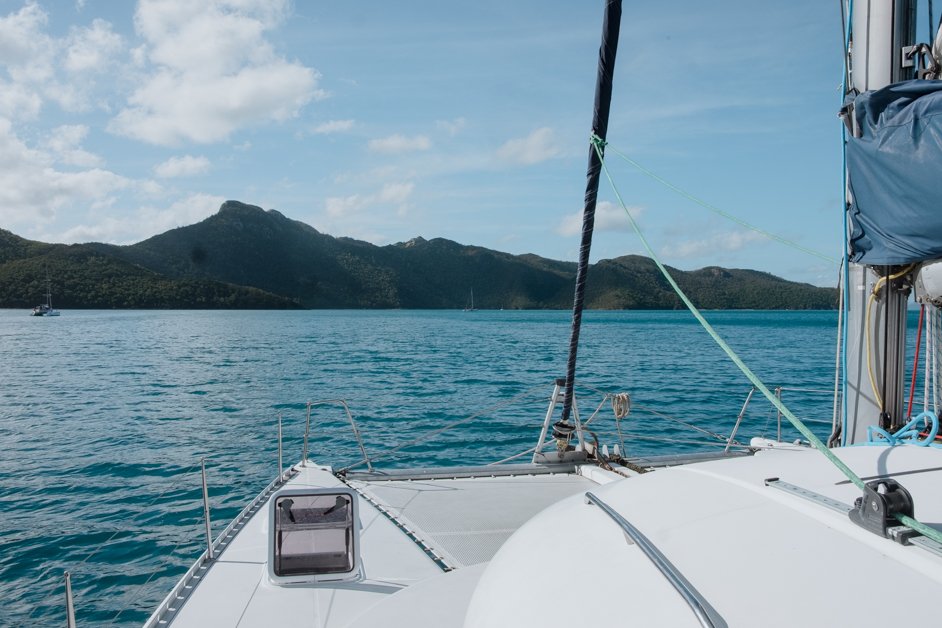
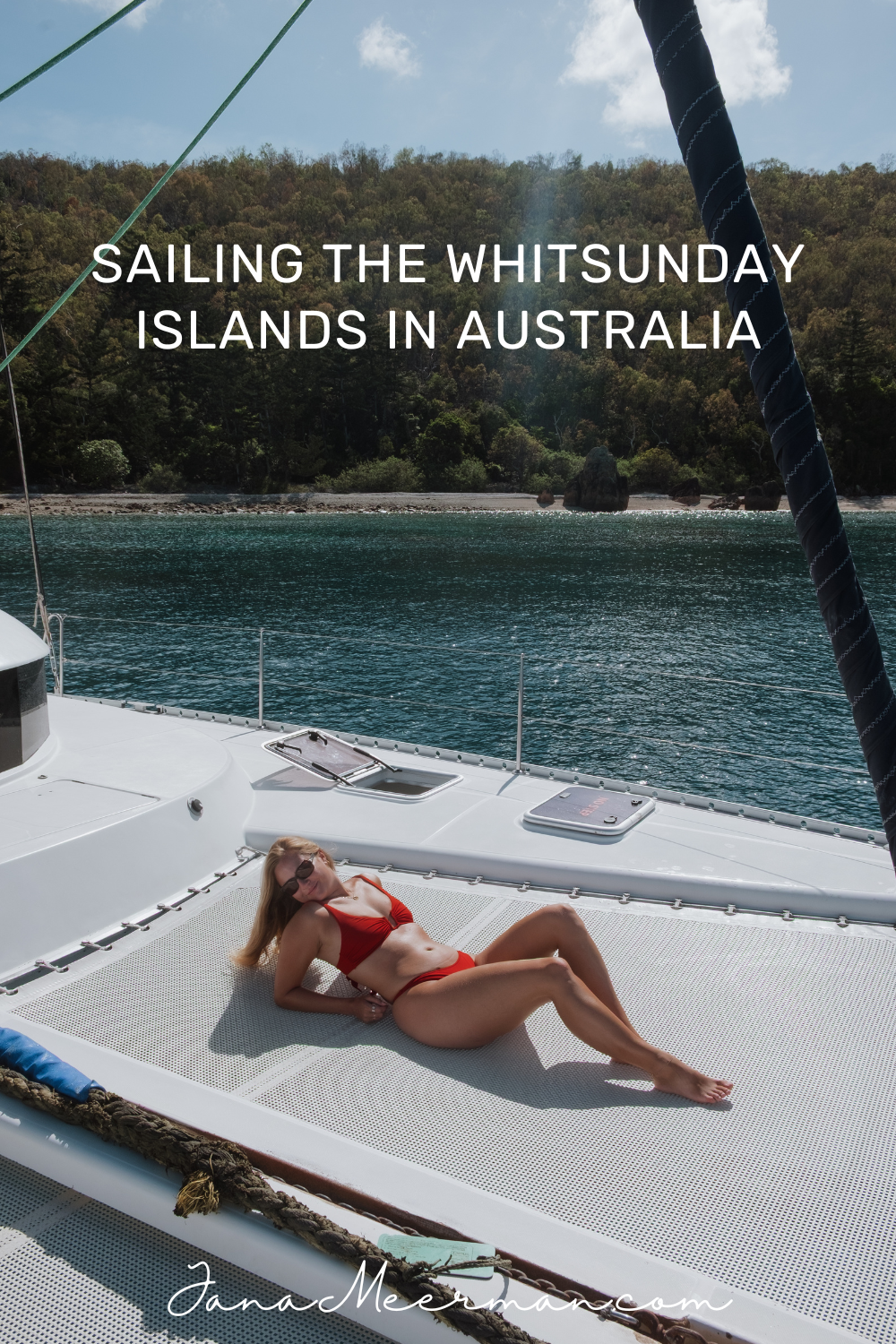
Our first day was focused on sailing from Airlie Beach out to the Whitsundays, a journey of about three hours. We sat up front on the nets of the catamaran, watching the scenery rush past, hearing the lapping of the waves beneath us.
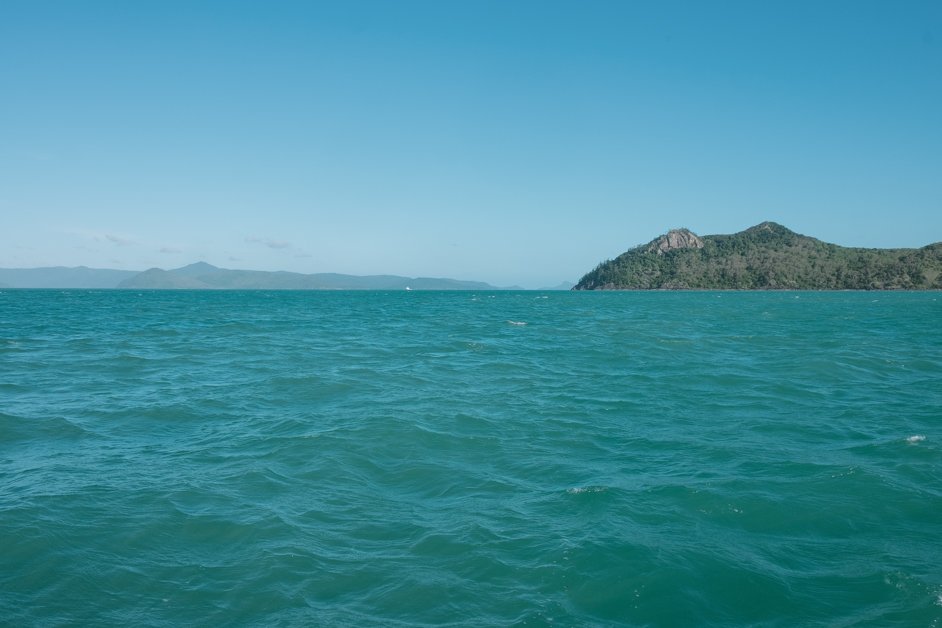
Setting sail from Airlie Beach
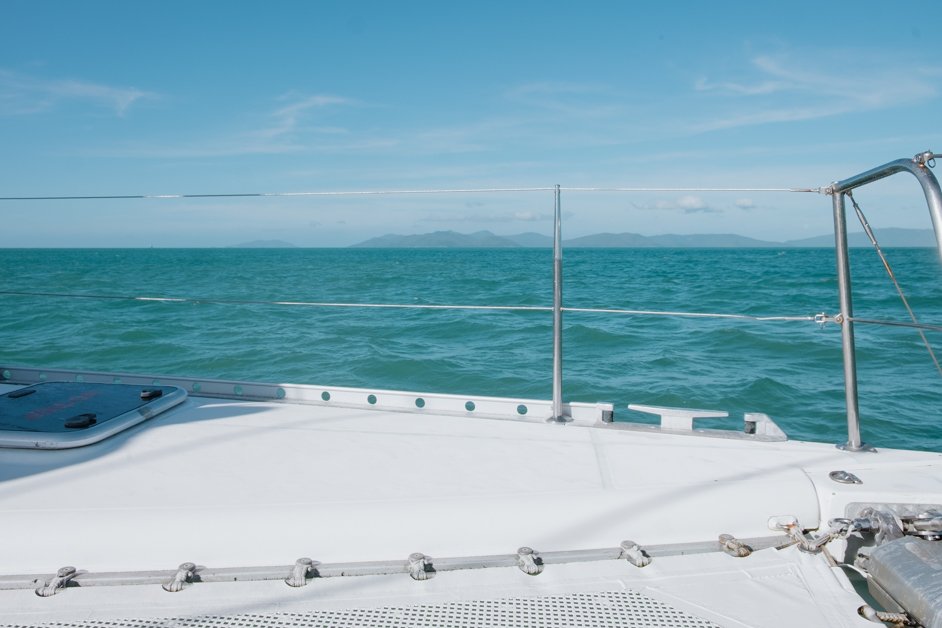
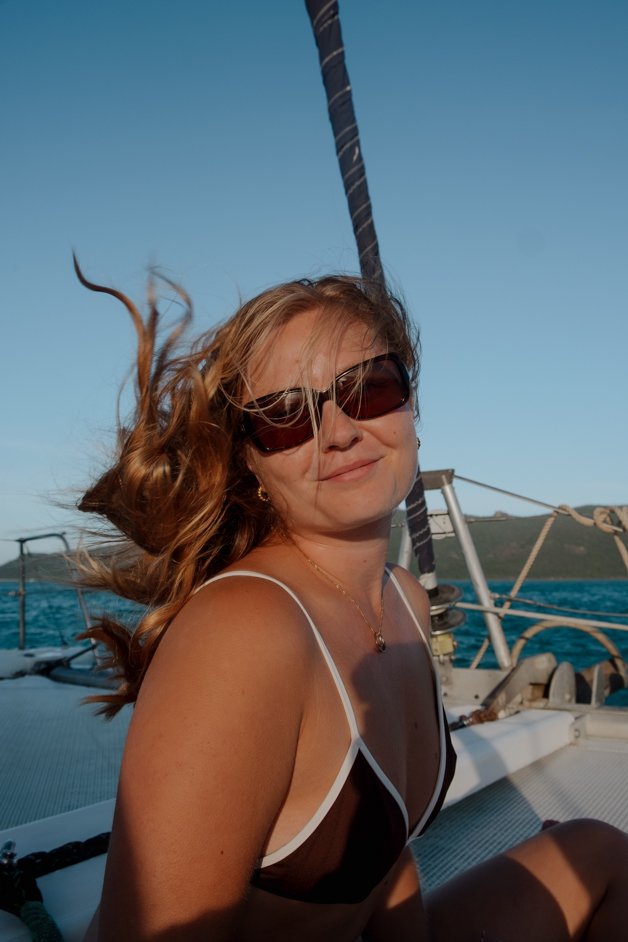
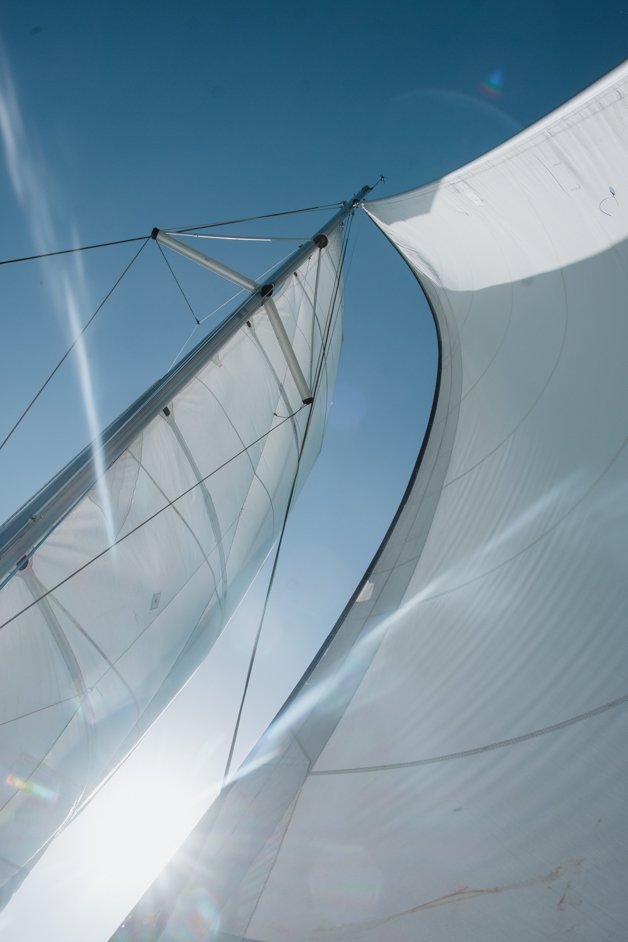
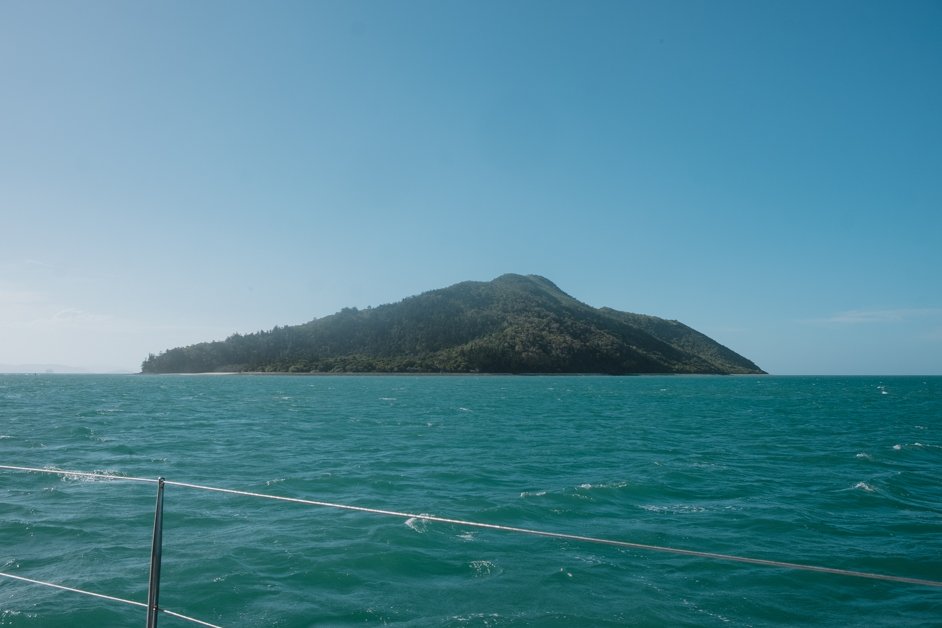
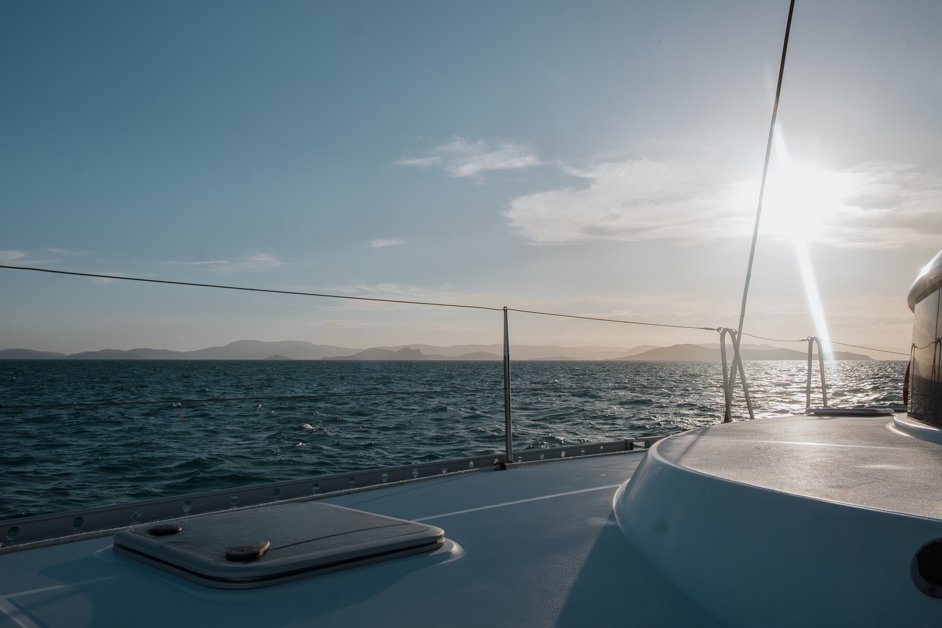
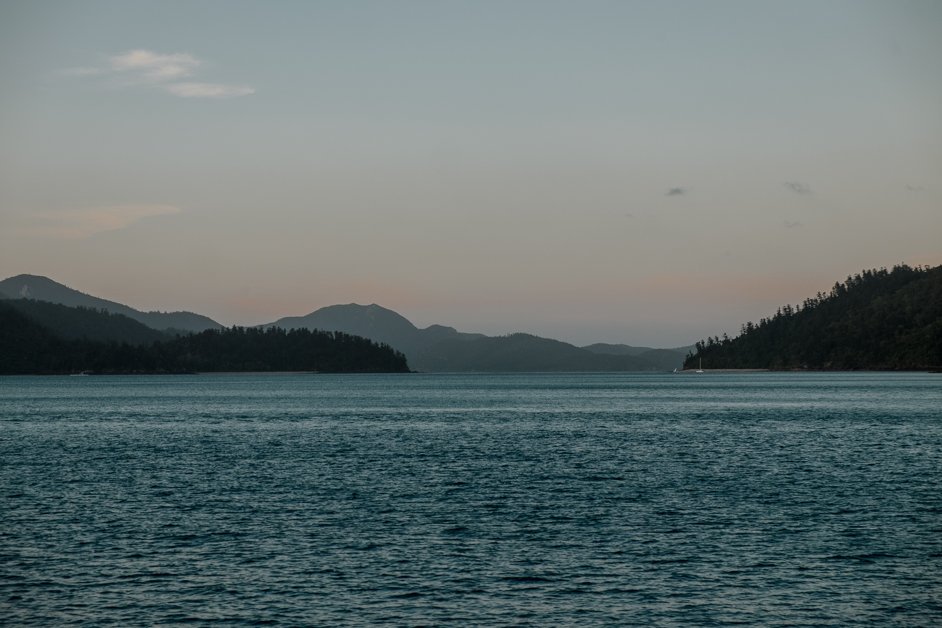
We reached our first anchor of the trip, spending our first night in a peaceful little cove alongside the Hook Island Passage (this is the exact location on Google Maps). There were a few other boats dotted around near us, each of us with our own cove.
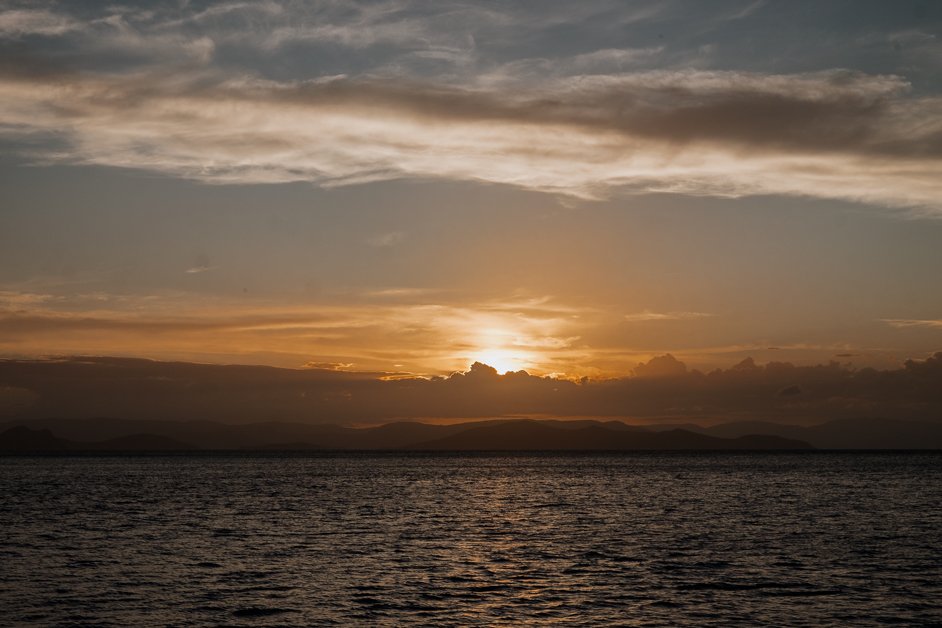
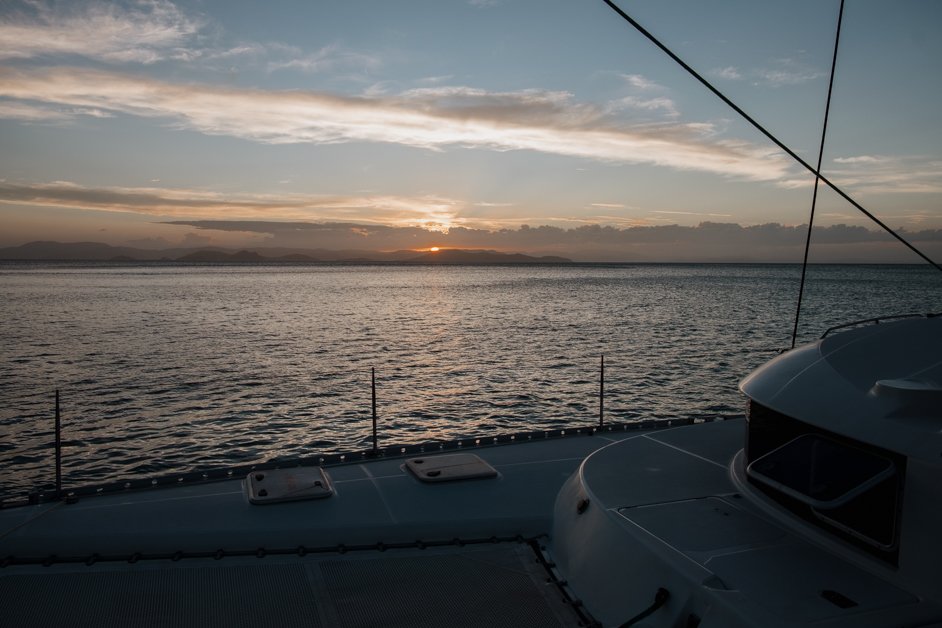
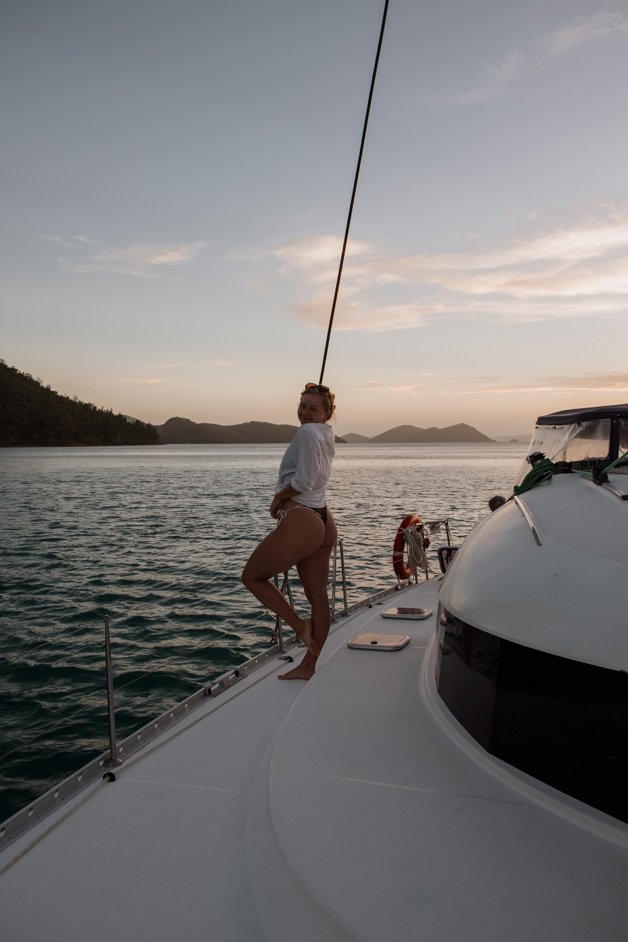
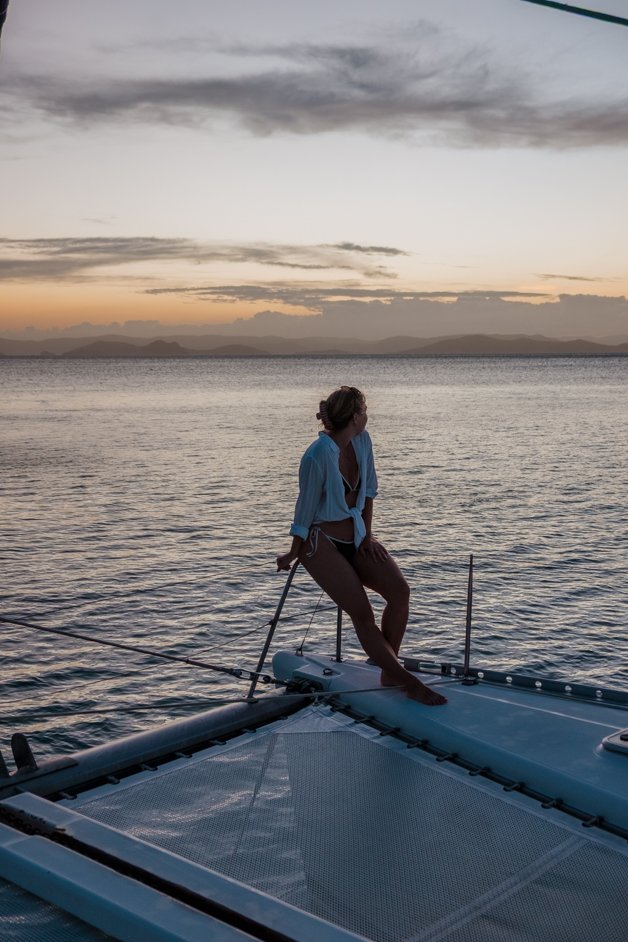
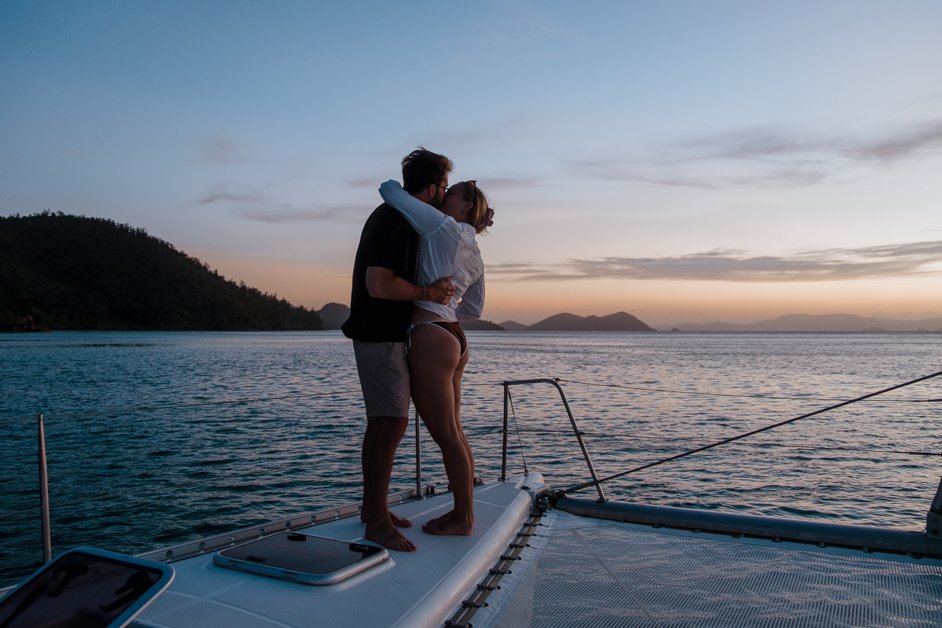
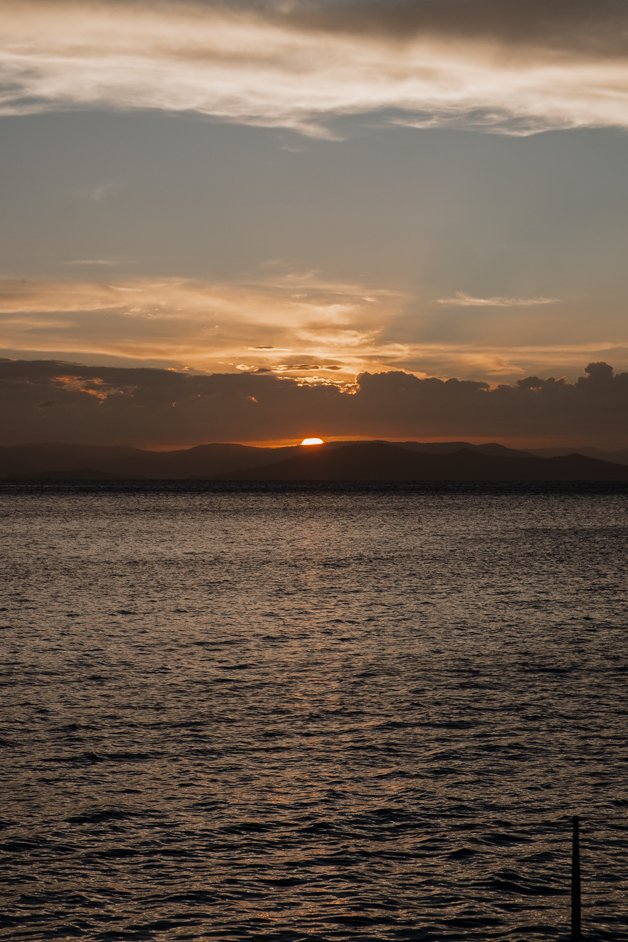
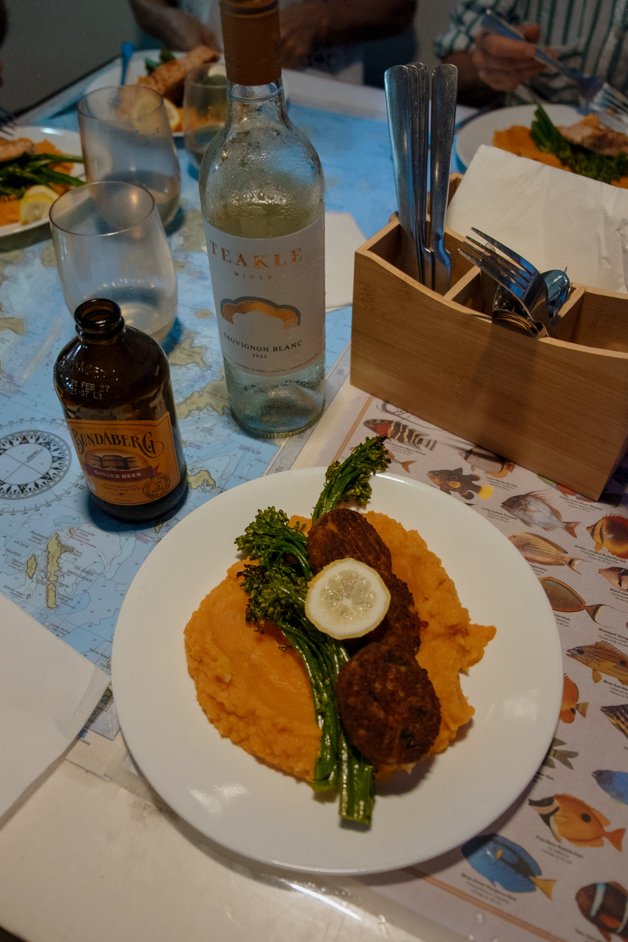
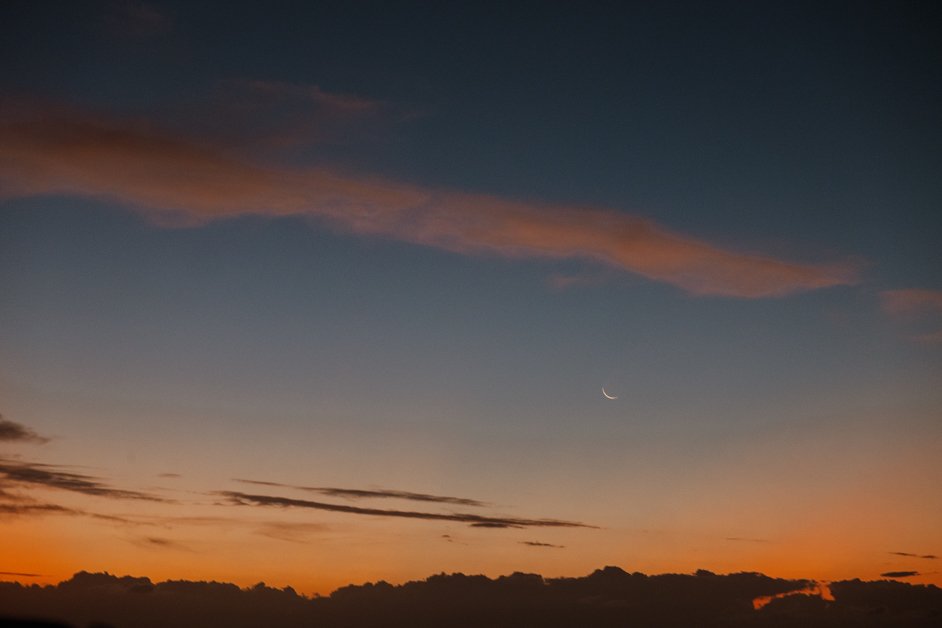
The sun slowly dipped below the horizon, lighting up the islands in a wash of gold. Homecooked dinner was served on the back deck by our skipper and just when we thought it was time to retire for the night, our crew turned on the back floodlights of the catamaran. This attracted countless squid up closer to the boat which subsequently brought its predator, the black-tipped reef shark, out in droves. We've snorkeled with harmless reef sharks plenty of times but this was certainly the highest quantity we'd ever seen and it was brilliant watching them circle the boat in search of dinner.
Day 2
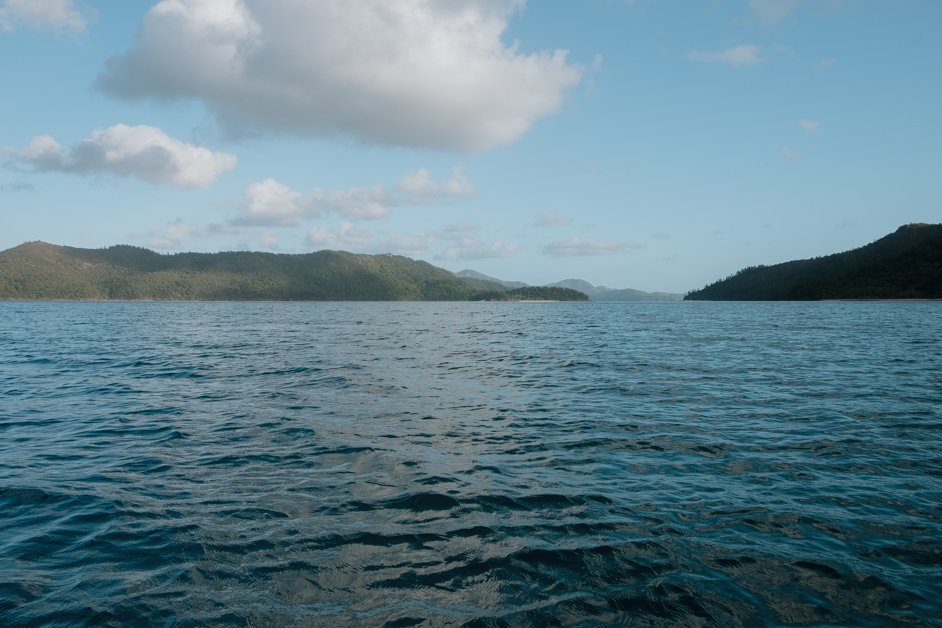
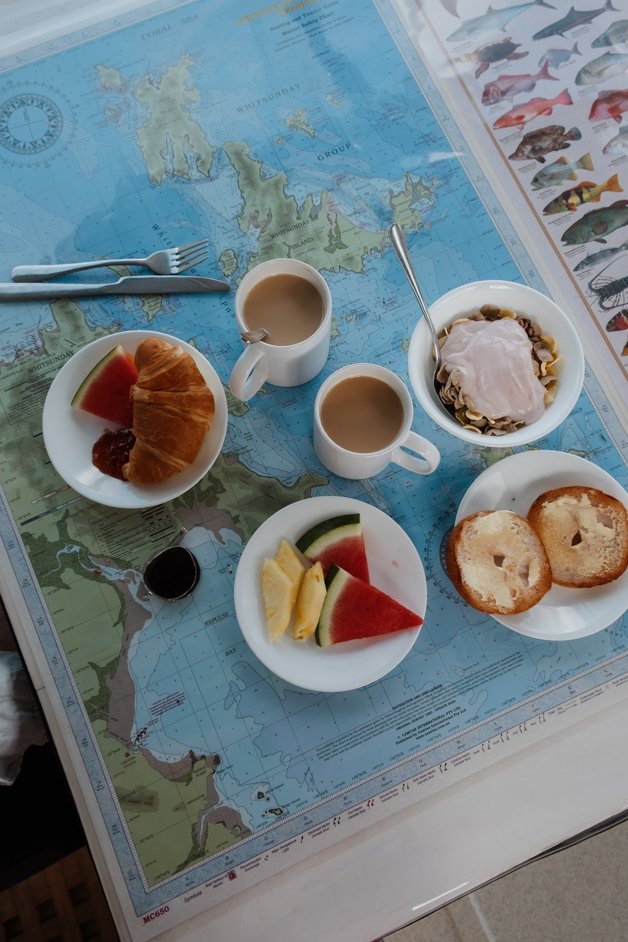
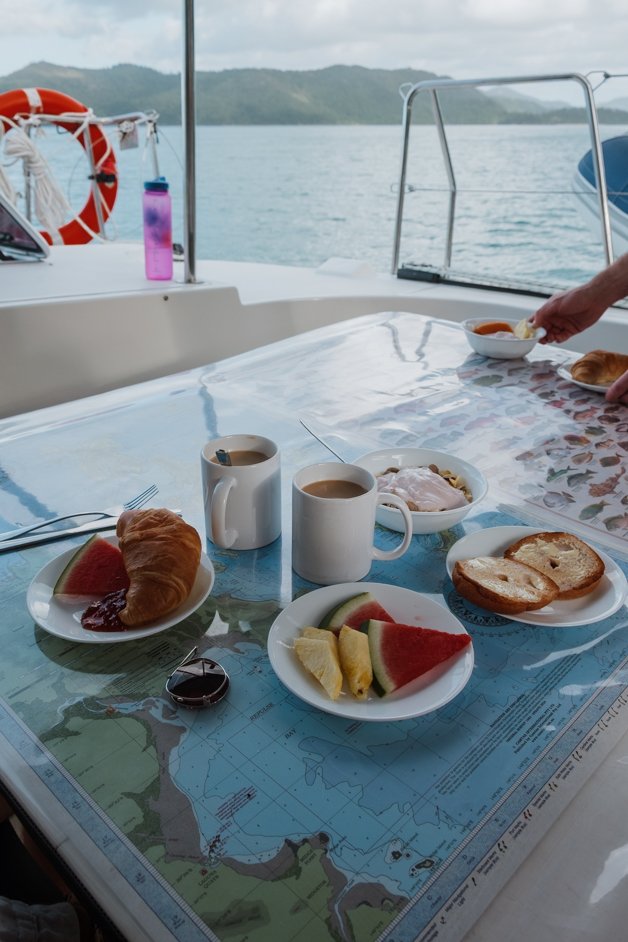
The following morning was an early start - we had to reach Whitehaven Beach before all the day-trippers descended on the island! We started with breakfast on the boat in our little Hook Island Passage cove before setting sail through the passage, around Whitsunday Island and down towards Tongue Bay.
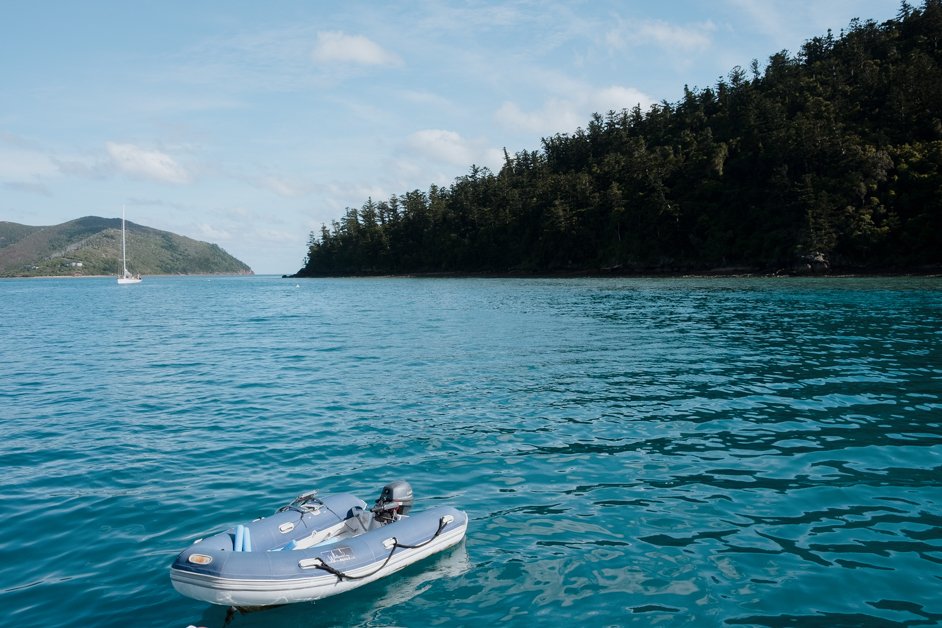
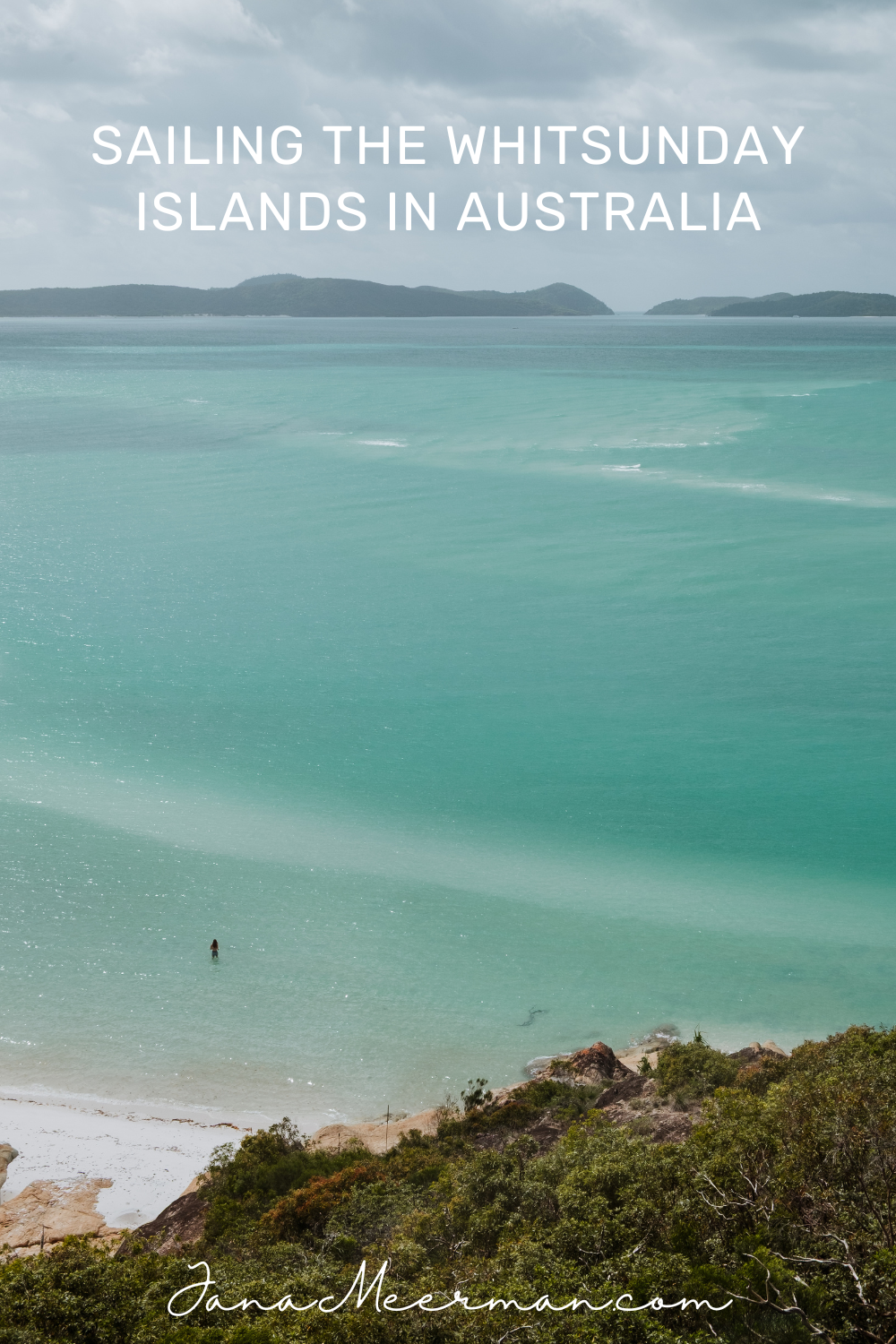
From Tongue Bay, where most boats anchor thanks to the deeper waters, we rode the little dinghy to shore. From there, it was a short hike over the hill to reach Whitehaven Beach. We started by hiking our way up to Hill Inlet Lookout from where you can get world-class views of the famous blue water and white sand swirls of Whitehaven Beach from above. There are three platforms here from which to take your visual fill of one of the world's greatest beaches.
→ Check out the reel I made about the view from Hill Inlet Lookout!
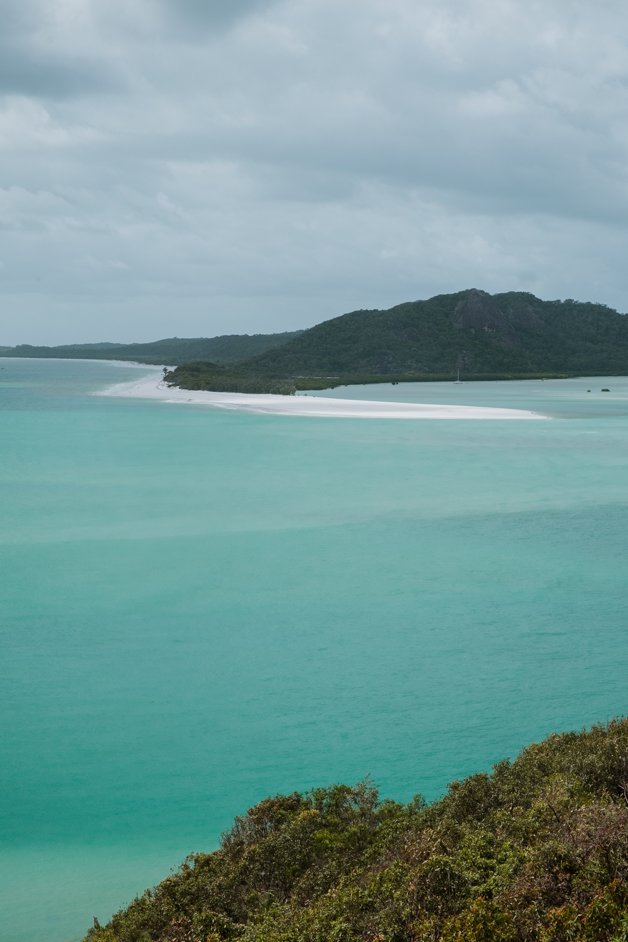
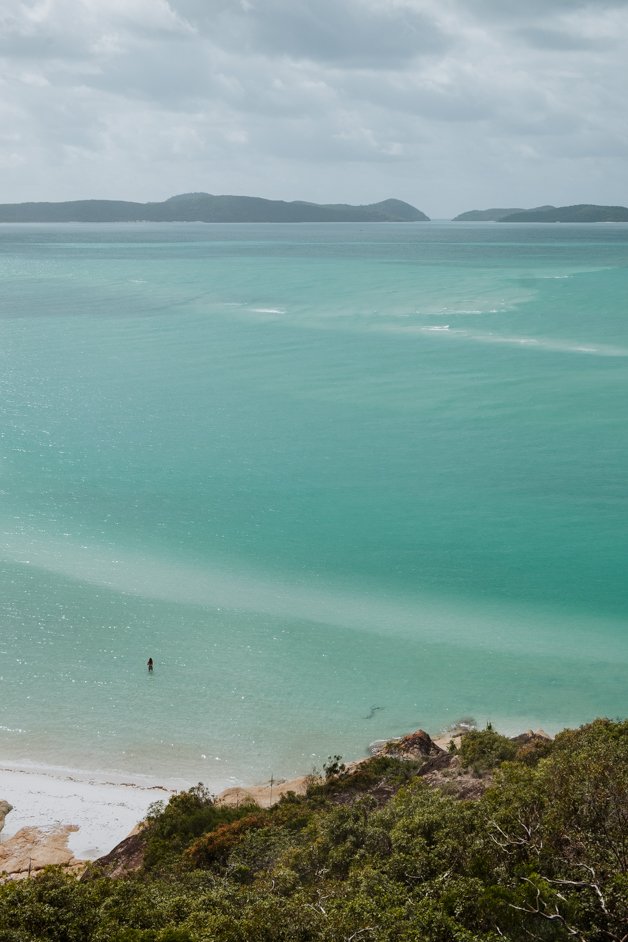
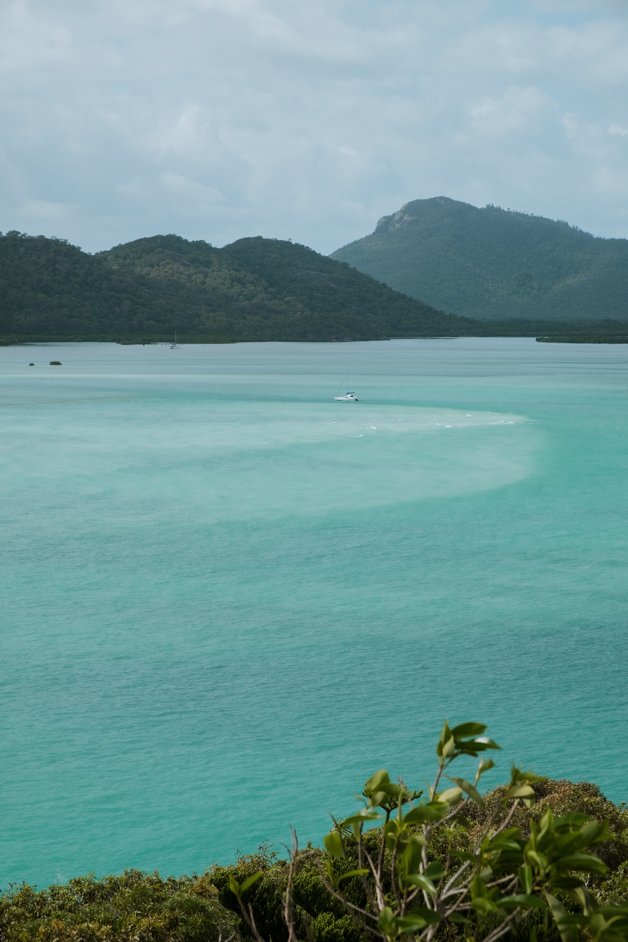
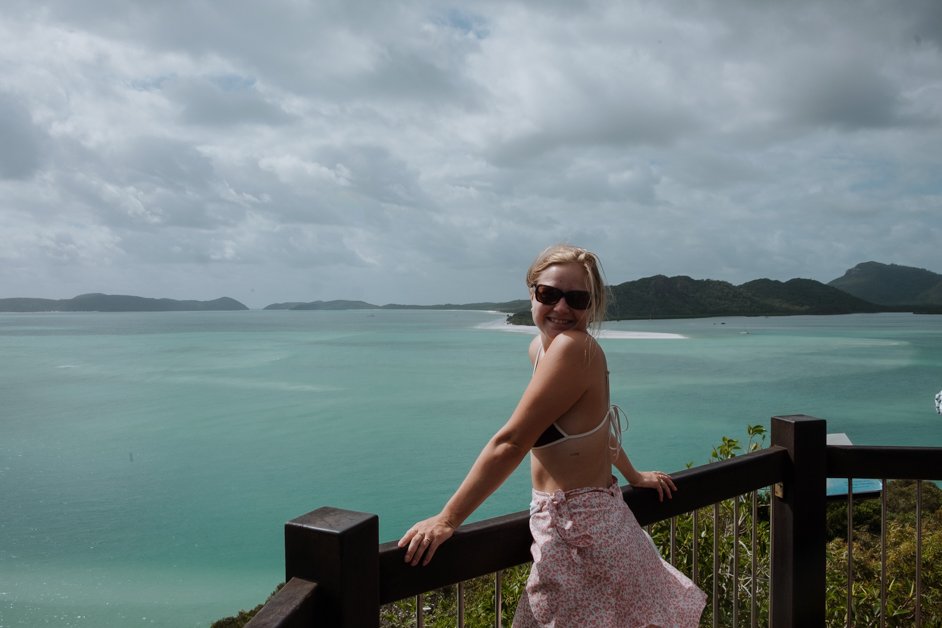
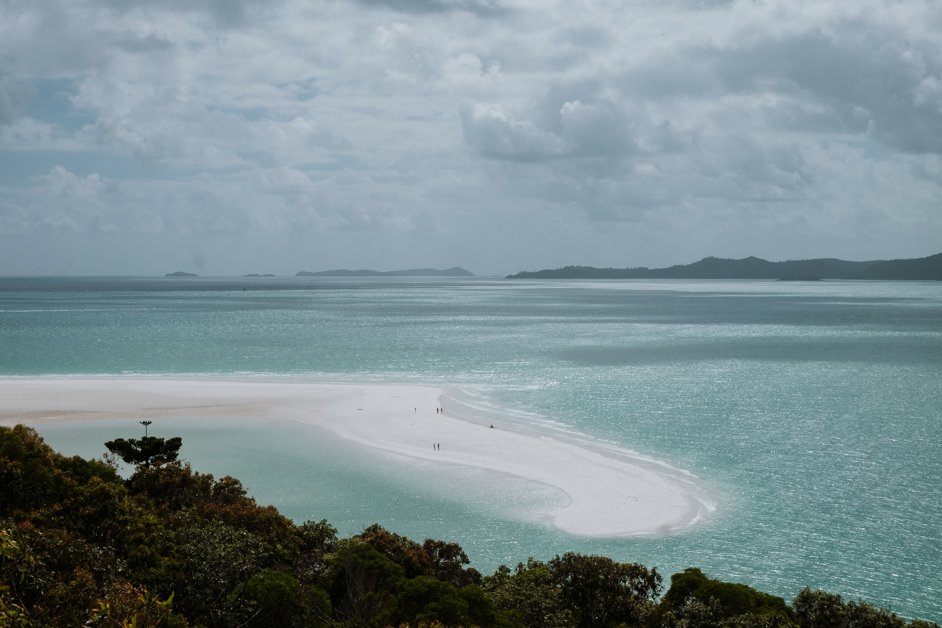
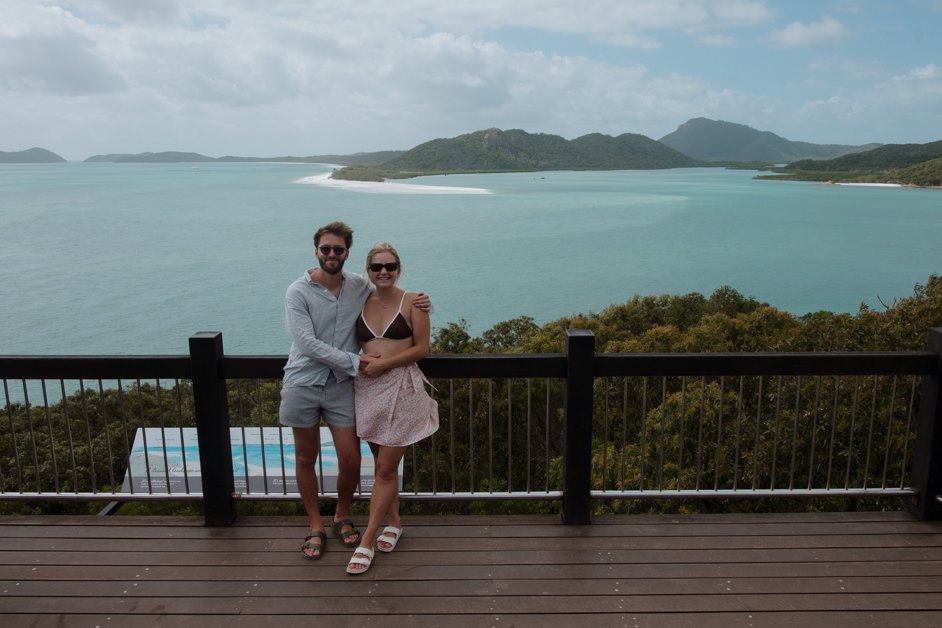
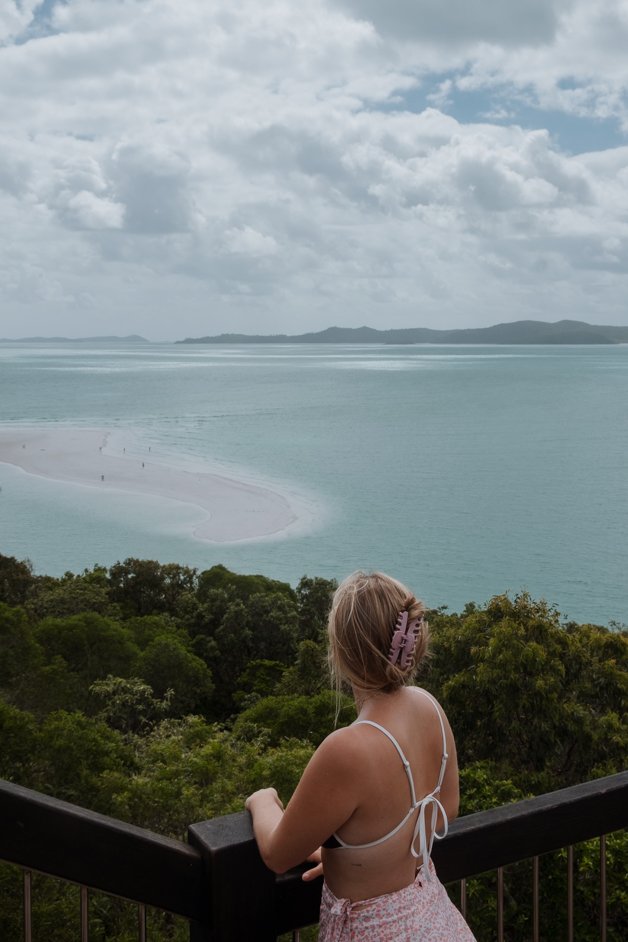
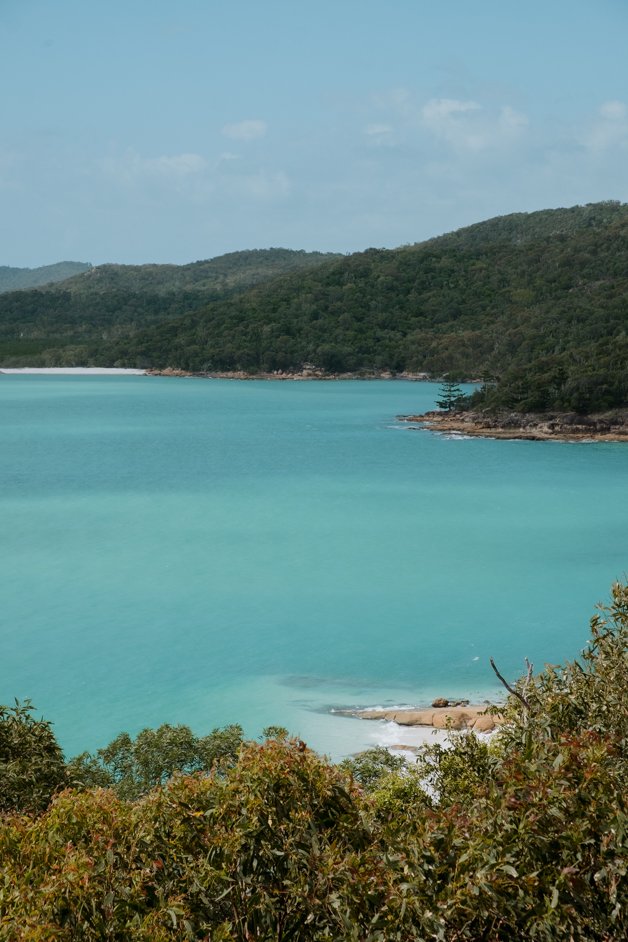
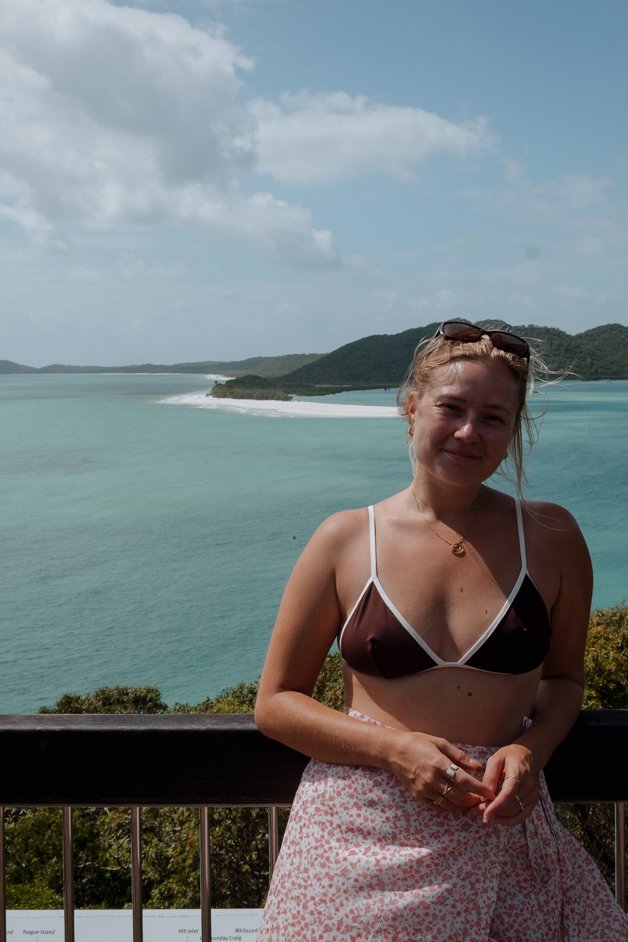
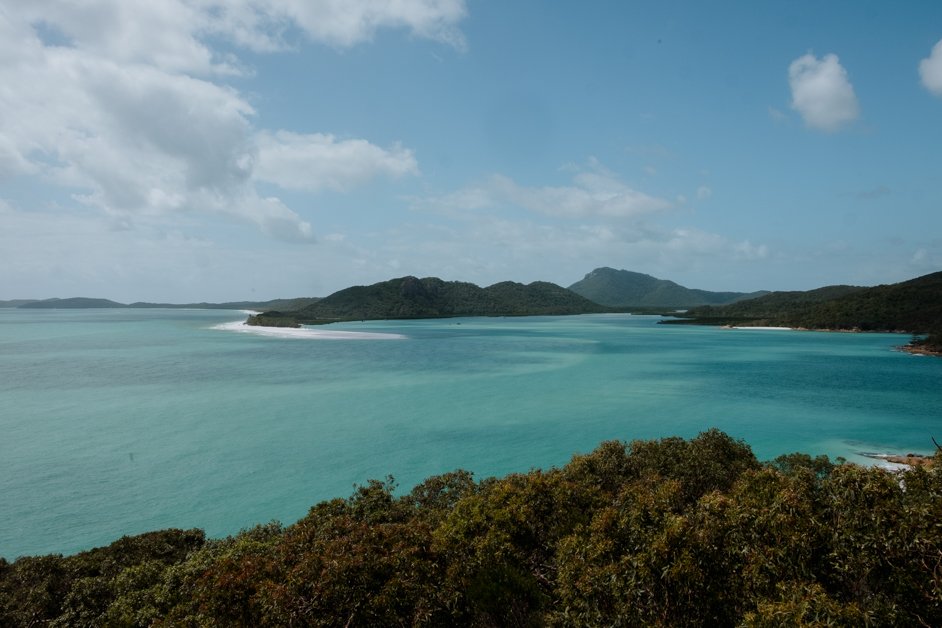
Then we walked back down towards Betty's Beach, the pathway now filling up with eager visitors. Most tours actually go to Betty's Beach, not the famous Whitehaven Beach. You can see Whitehaven Beach from Betty's Beach and we hung out there for a while but admittedly, it's much prettier from above. We also spotted plenty of the scenic flights overhead all taking in the view.
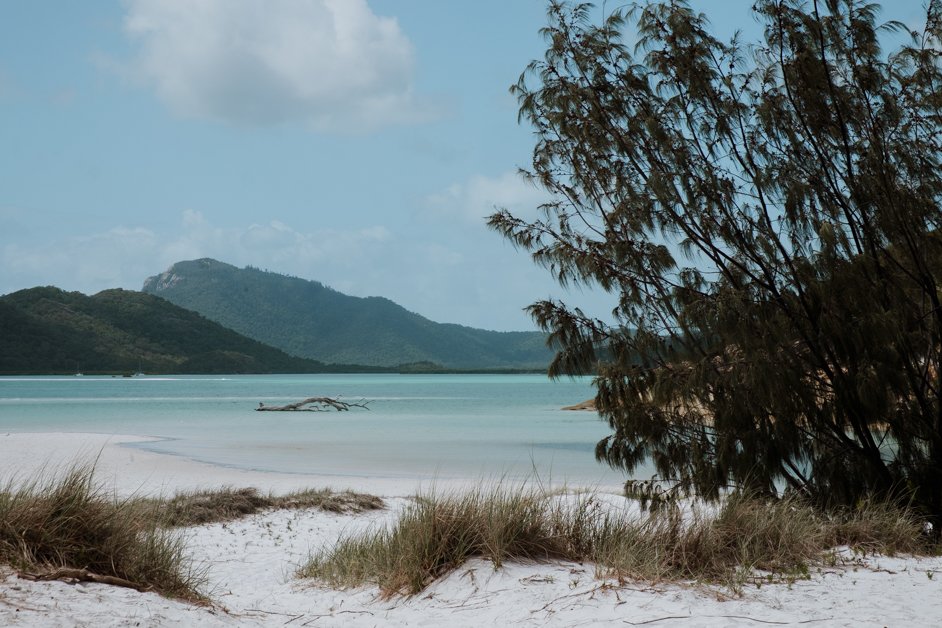
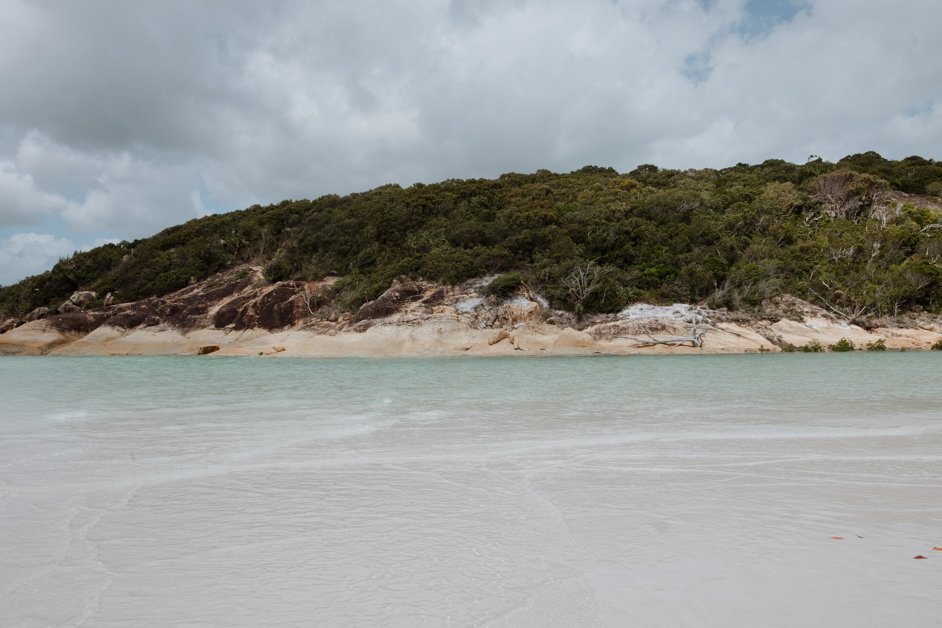
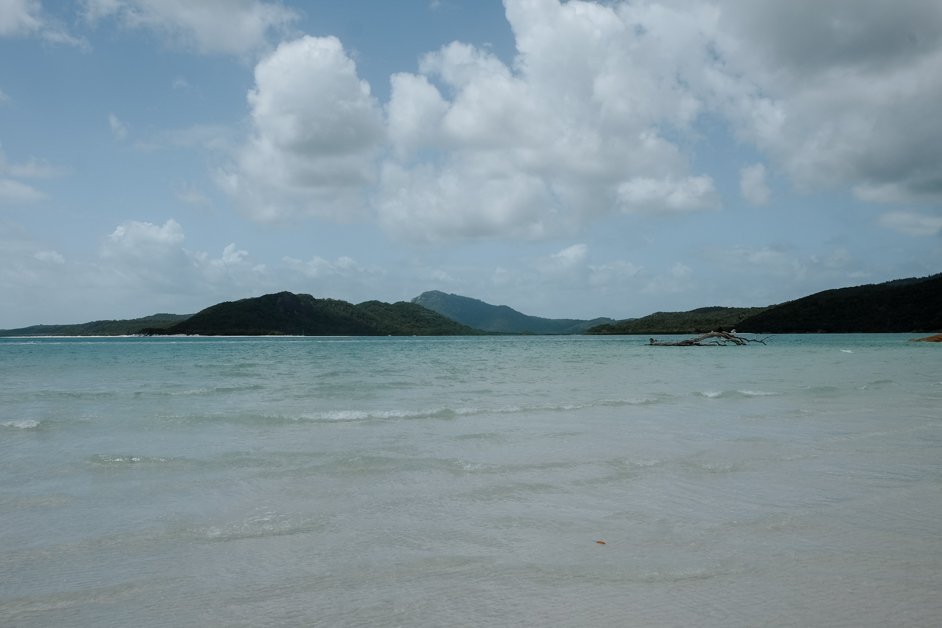
After our morning exploring the Whitehaven Beach area, we were picked up again by our dinghy and returned to the catamaran for lunch in Tongue Bay. Then it was time to sail northwards through the islands to reach the northern tip of Hook Island where it was finally time to get in the water for some snorkeling.
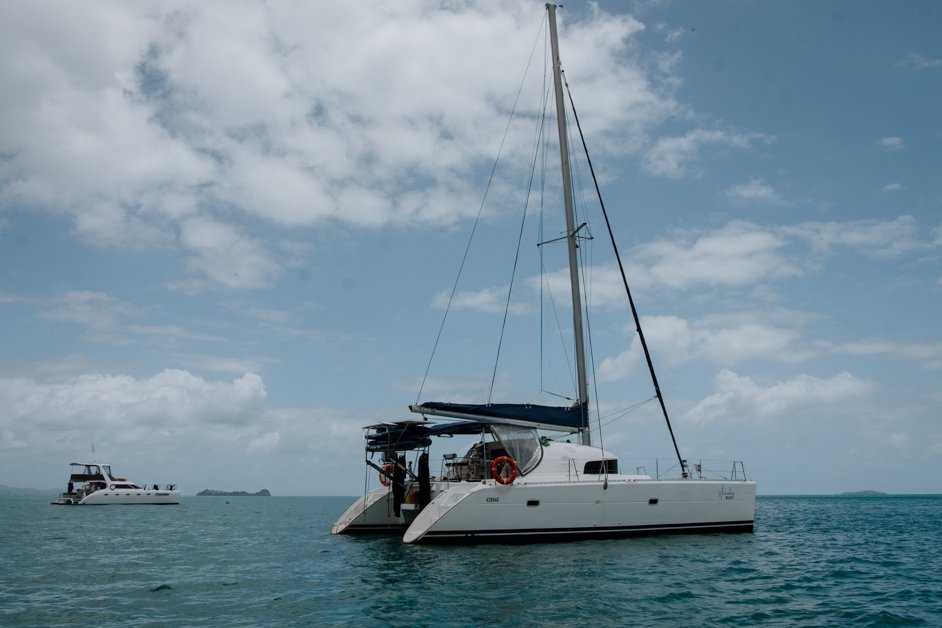
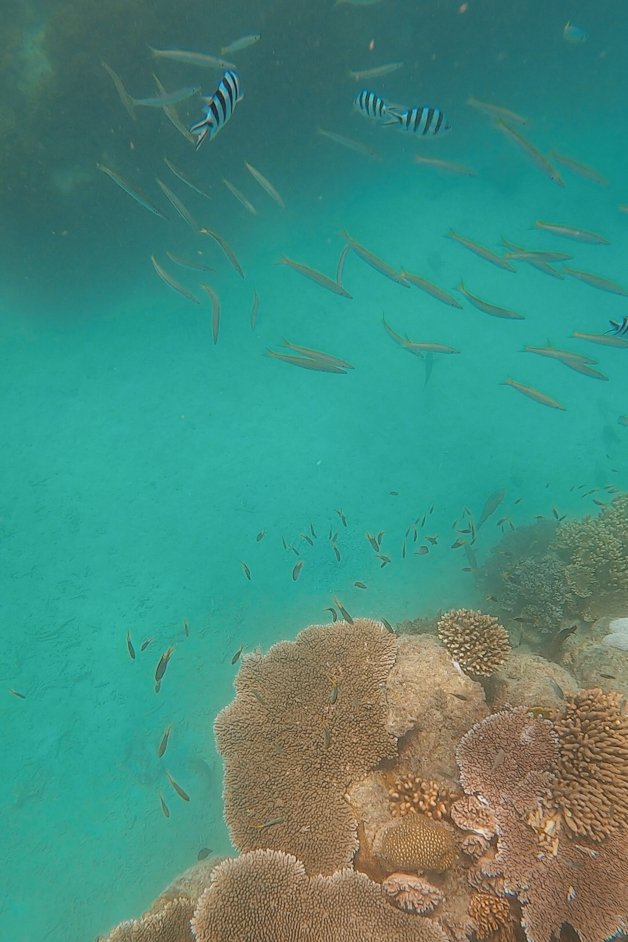
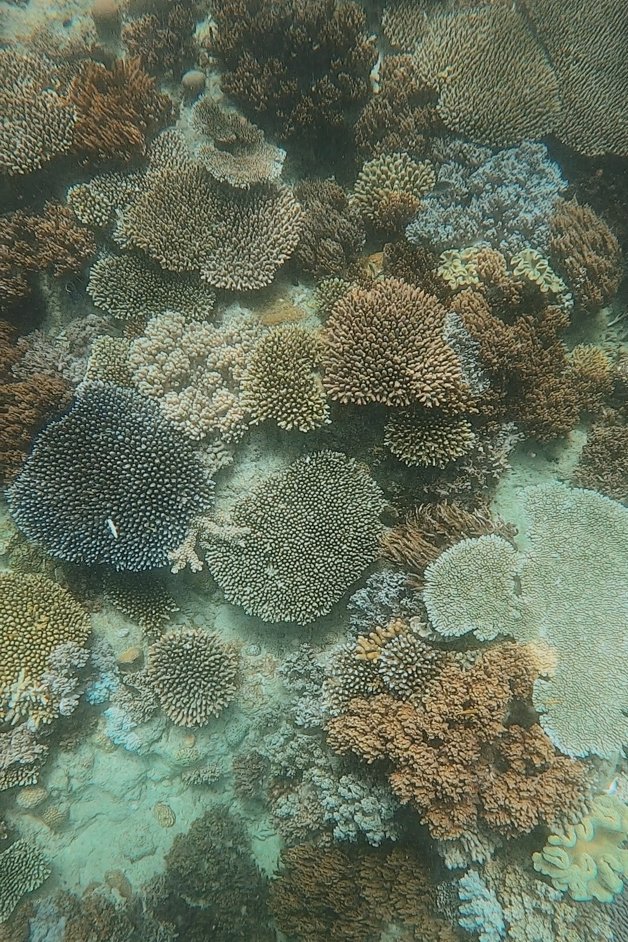
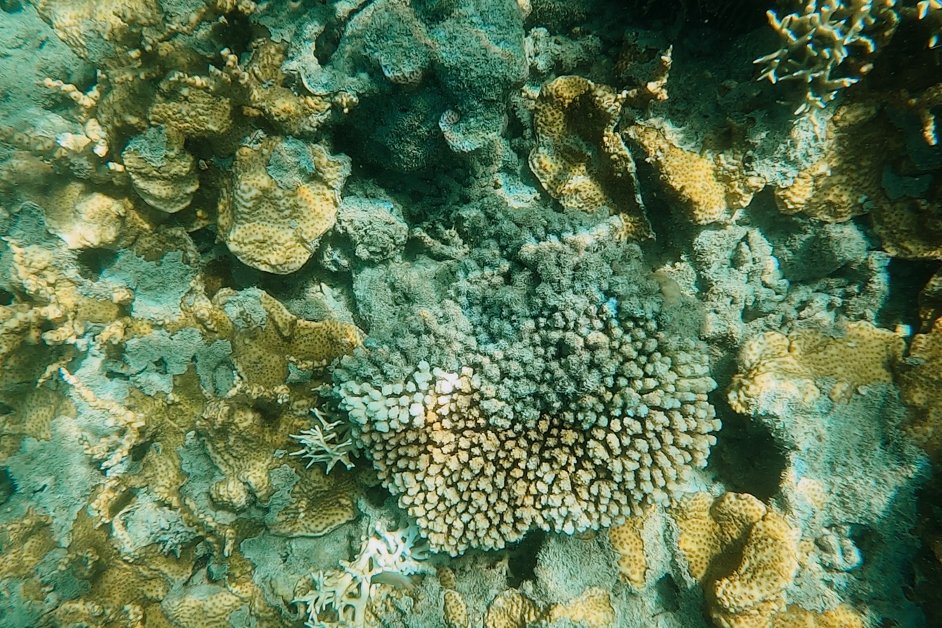
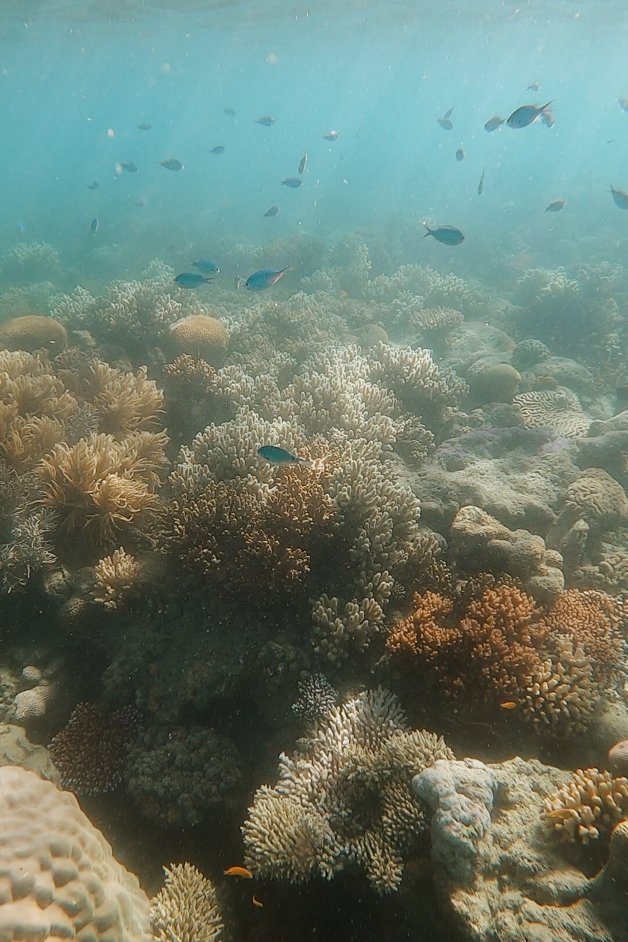
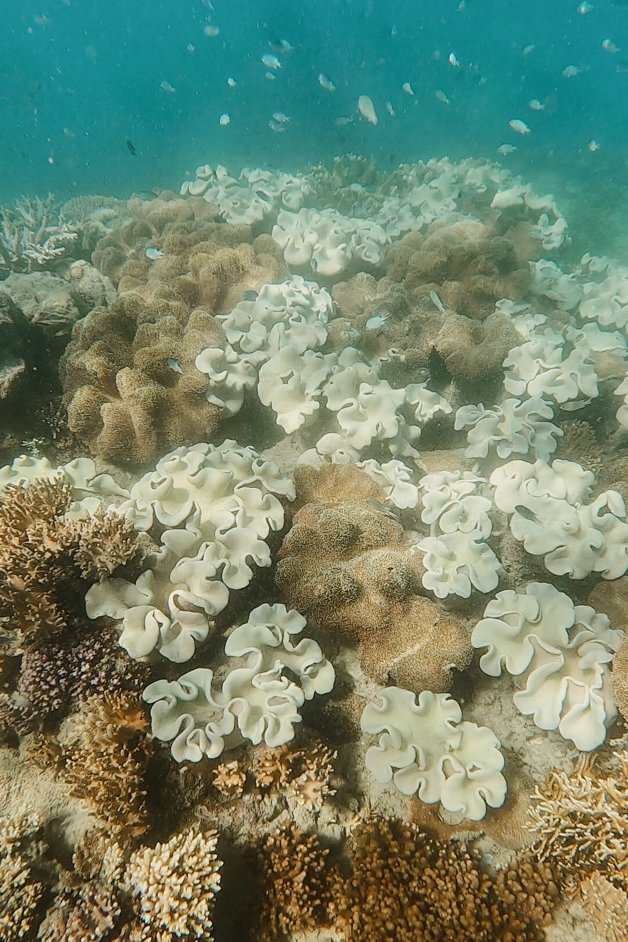
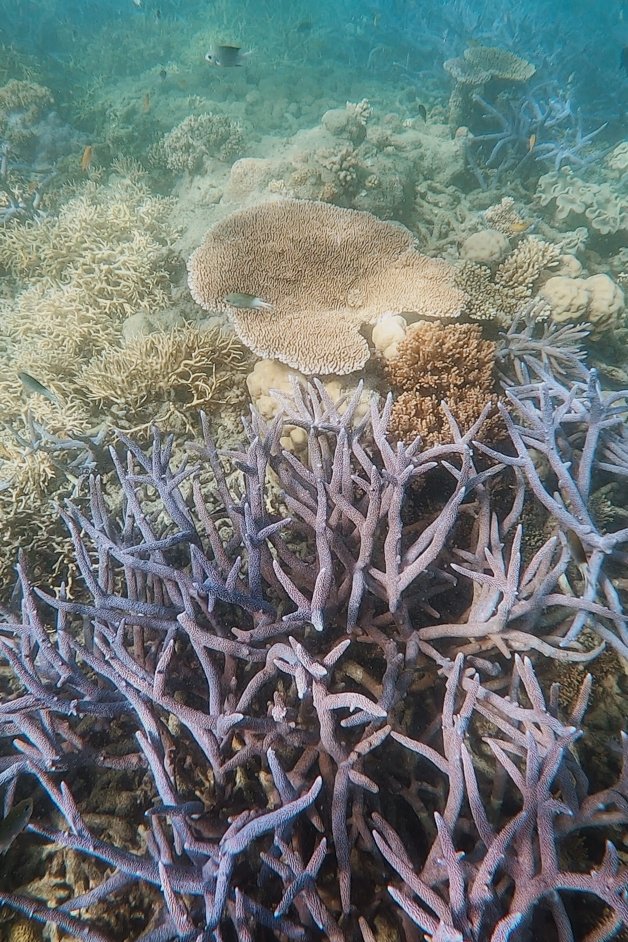
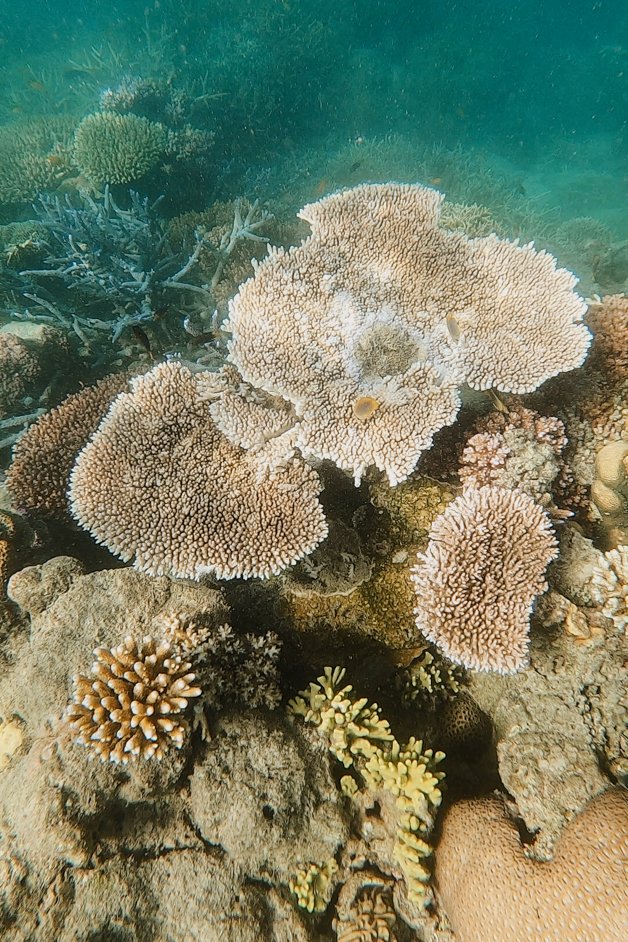
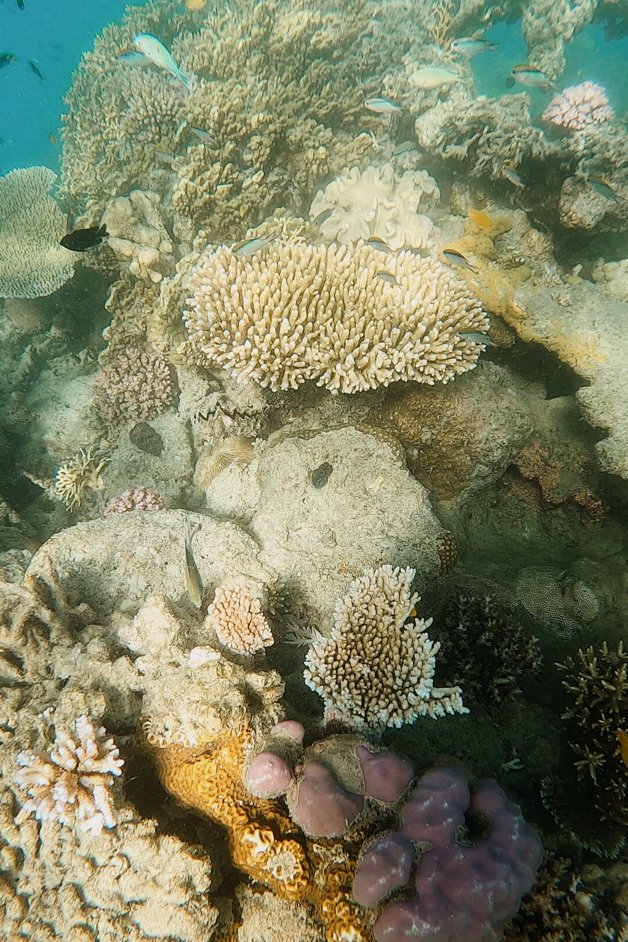
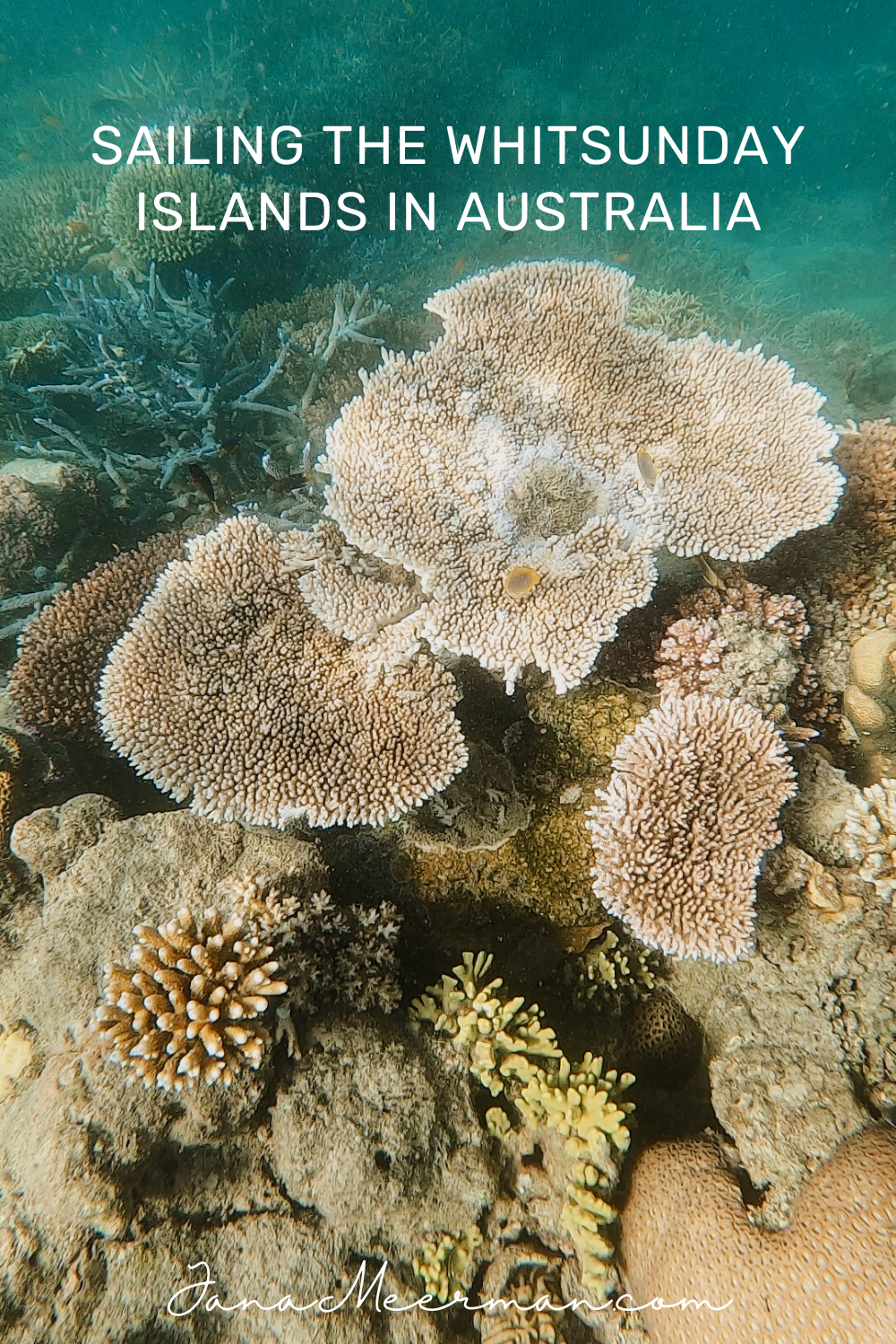
We snorkeled at two spots on our second day, both protected coves of Hook Island. We started at Luncheon Bay where we saw loads of colourful corals and fish.
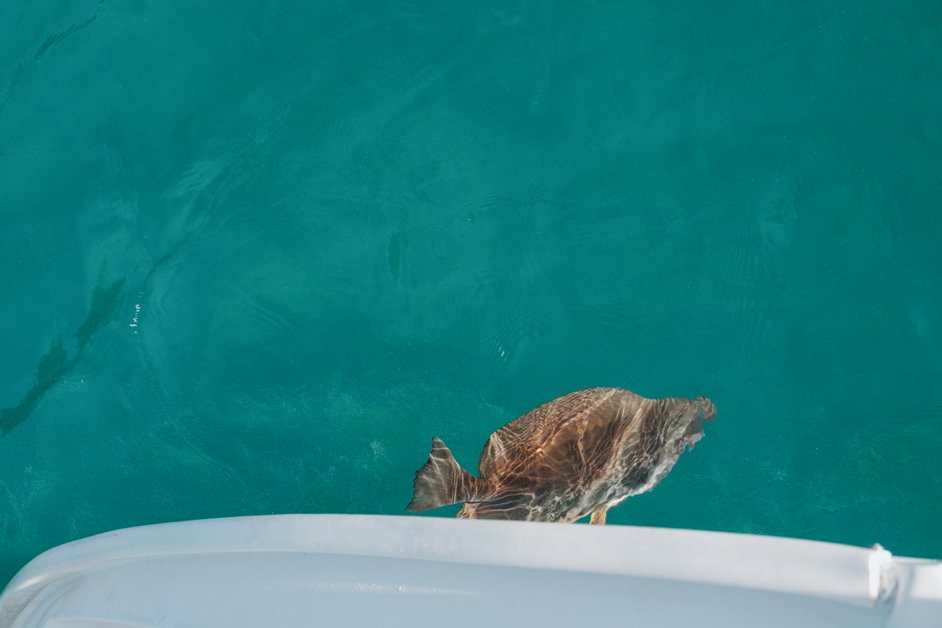
We then popped around next door to Mantaray Bay where you might be lucky enough to spot one of the largest fish of the Whitsundays whom tour crew have fondly named George.
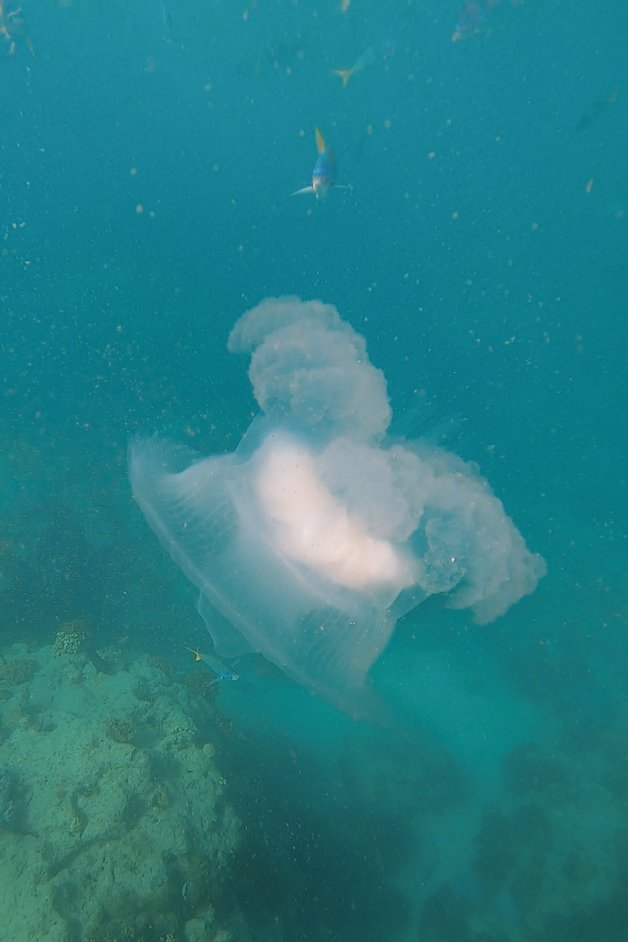
If you are in the water in the Whitsundays between October and May, you must wear a protective stinger suit against fatal stings from poisonous jellyfish.
→ Check out the reel I made about snorkeling in the Whitsundays!
Luncheon Bay
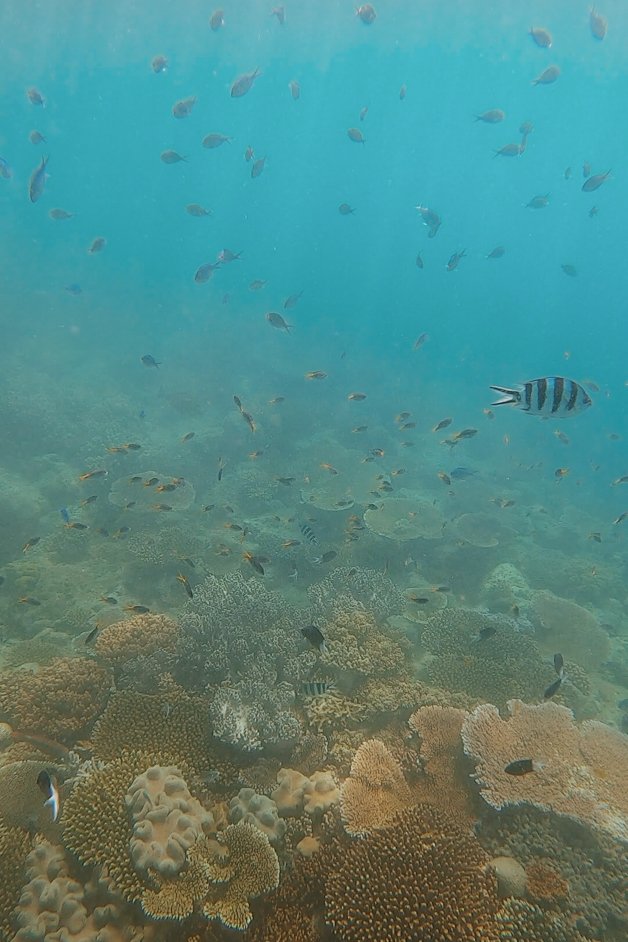
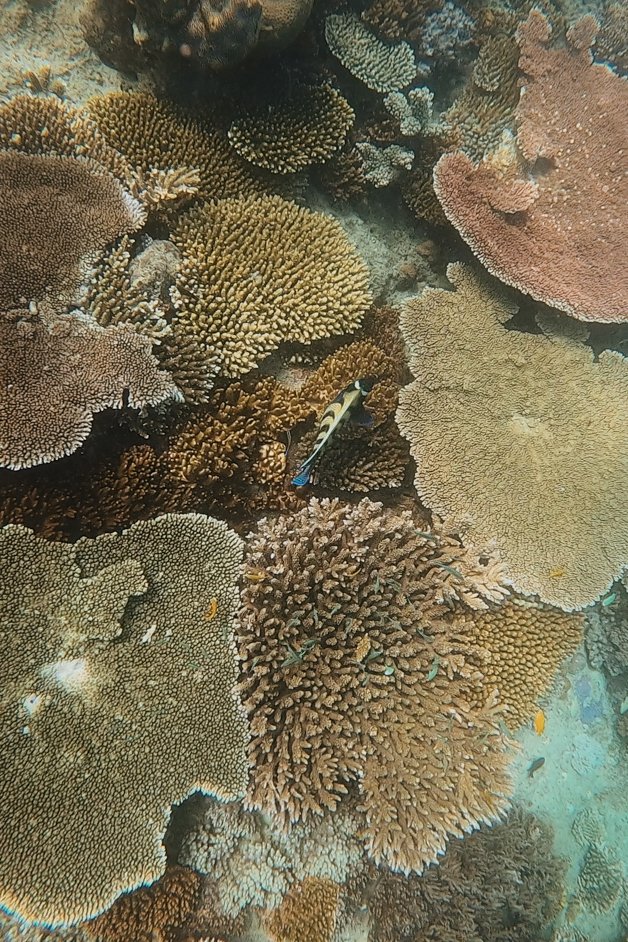
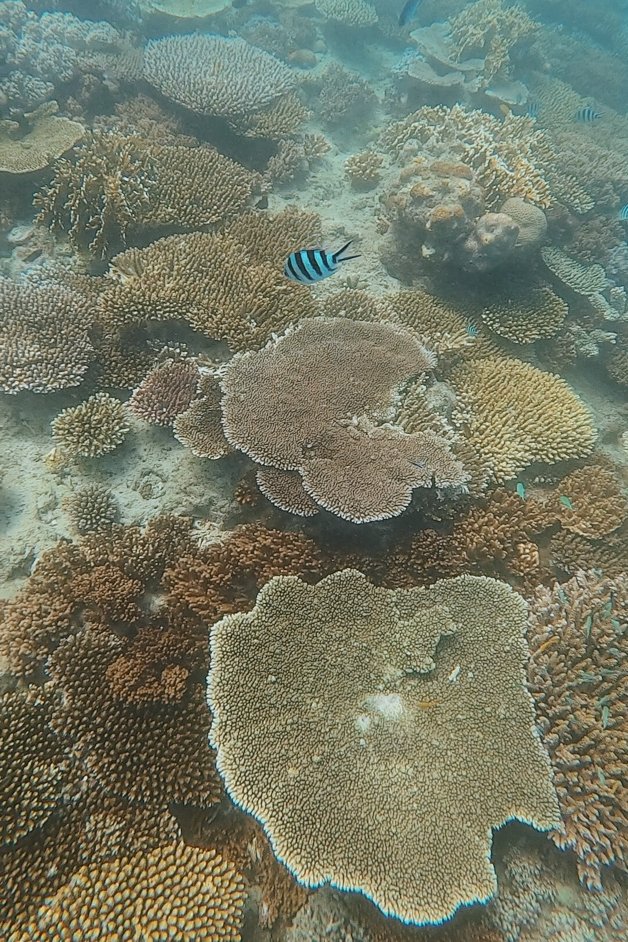
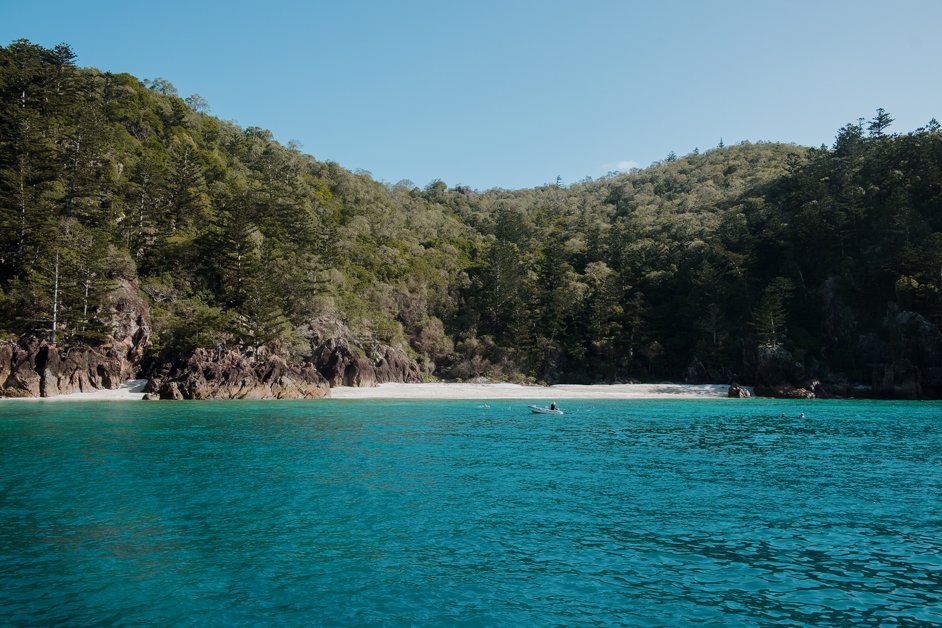
Mantaray Bay
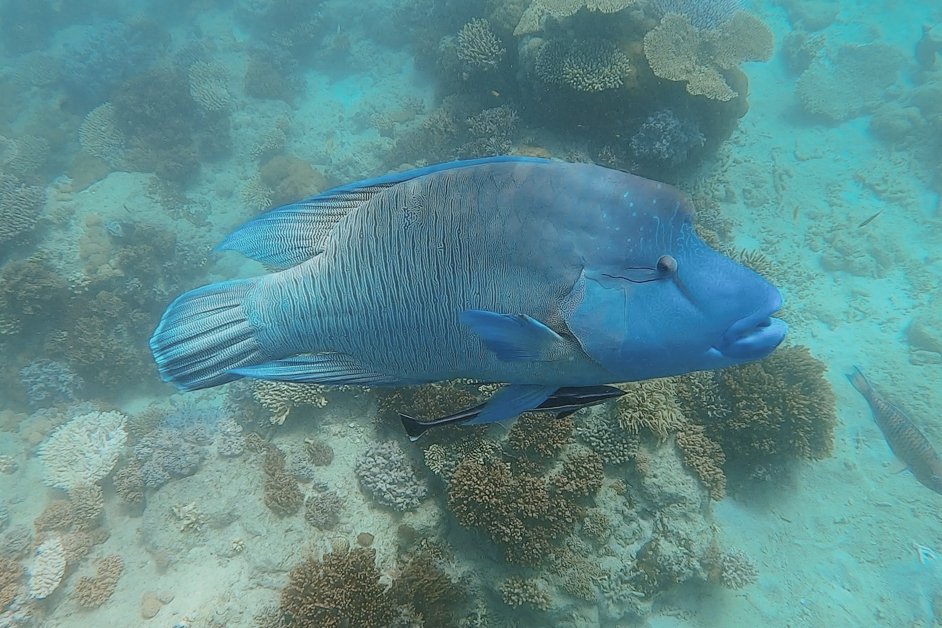
George
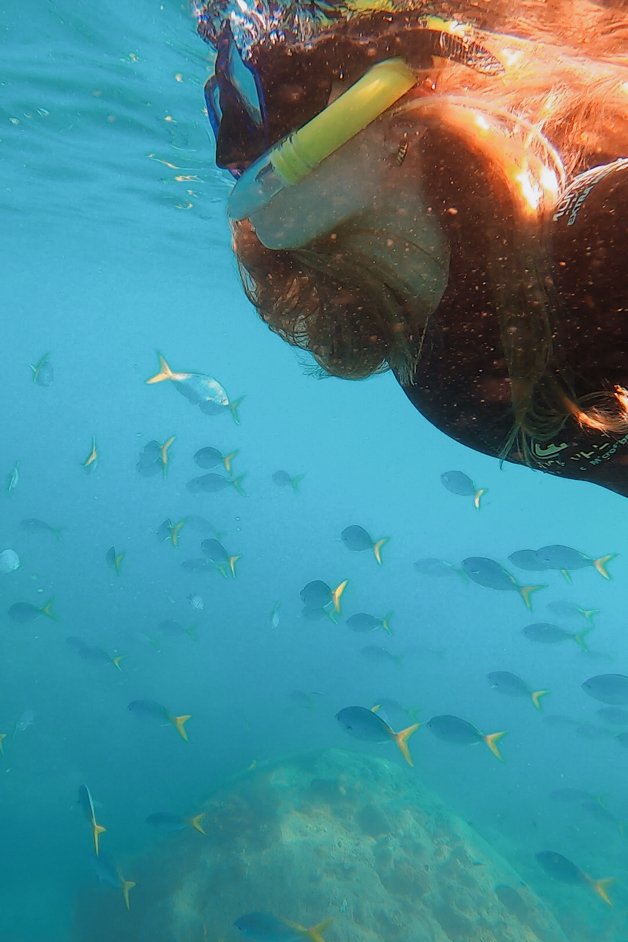
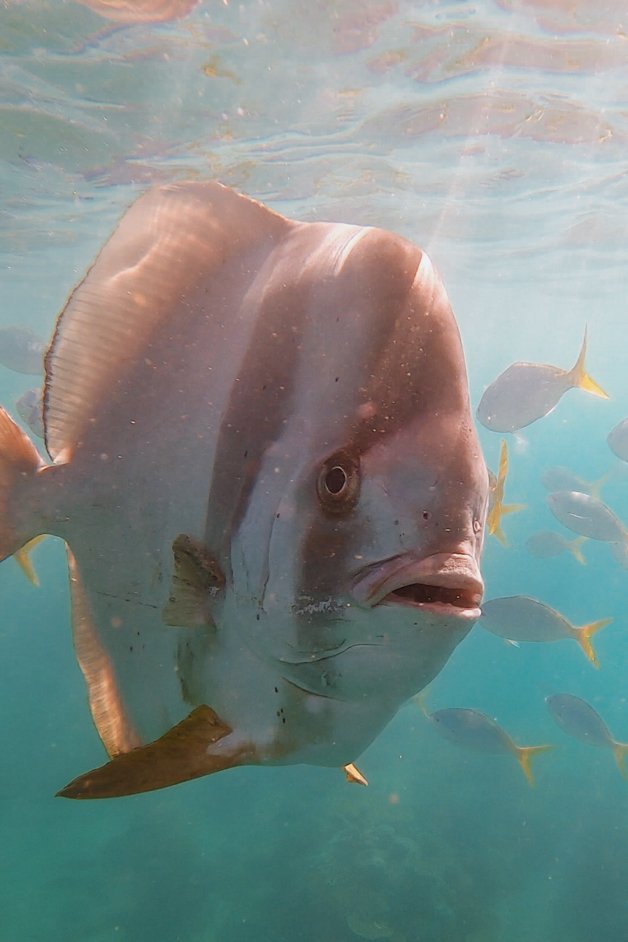
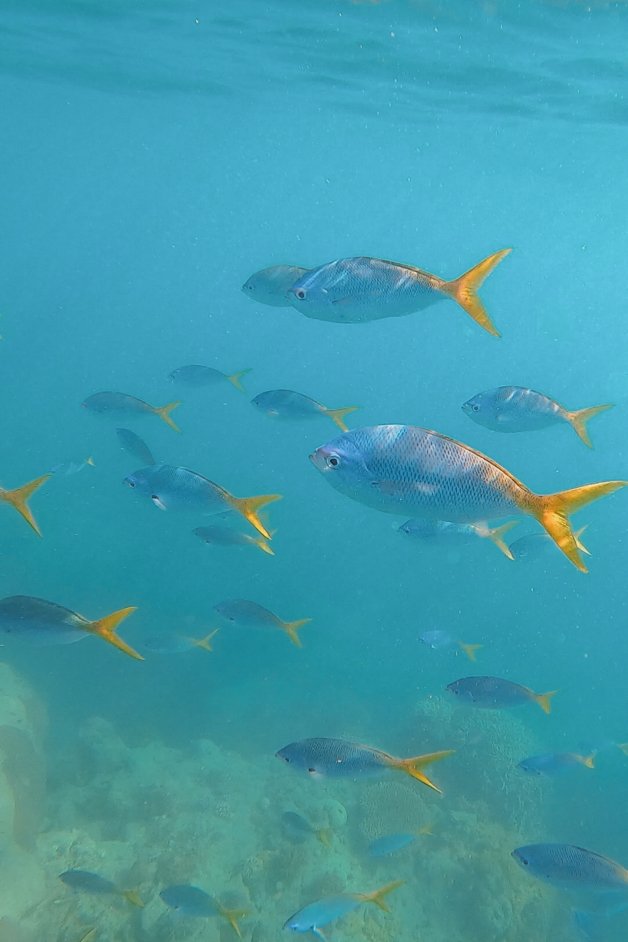
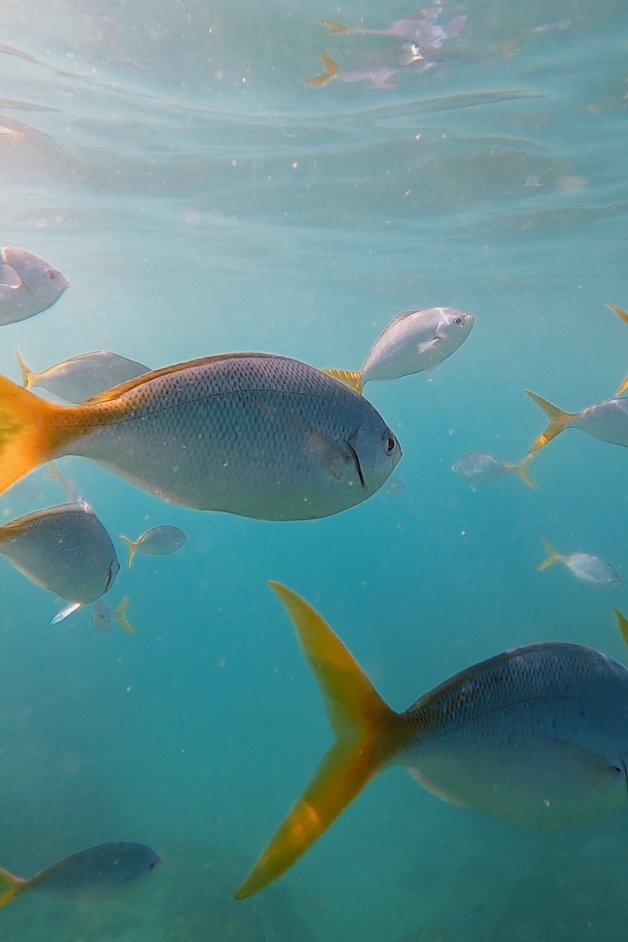
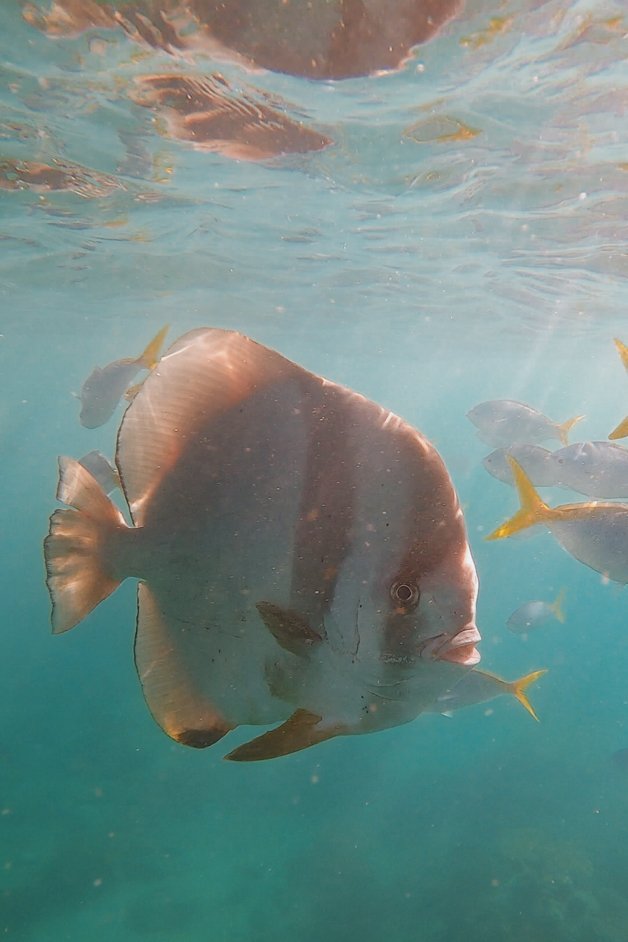
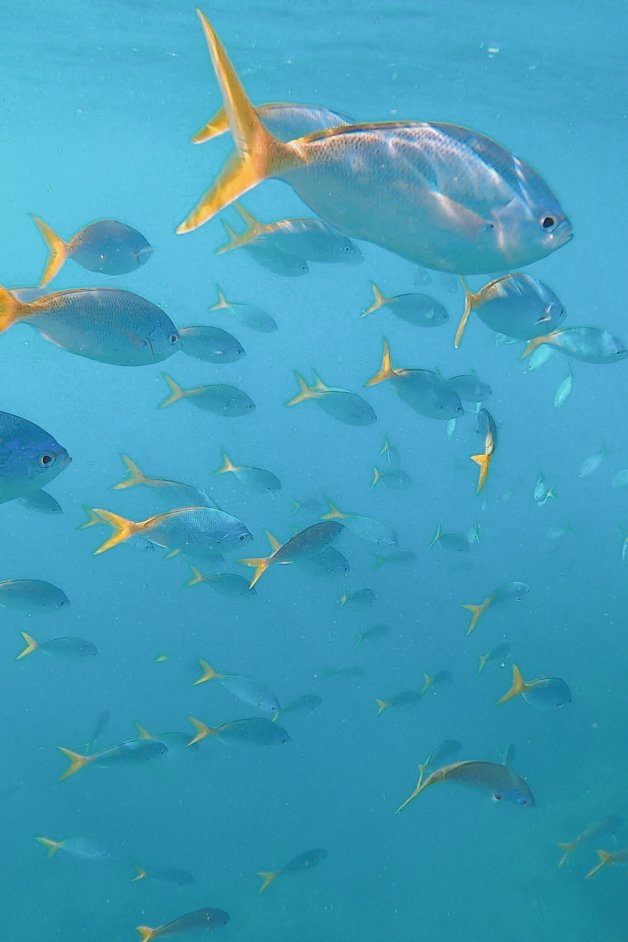
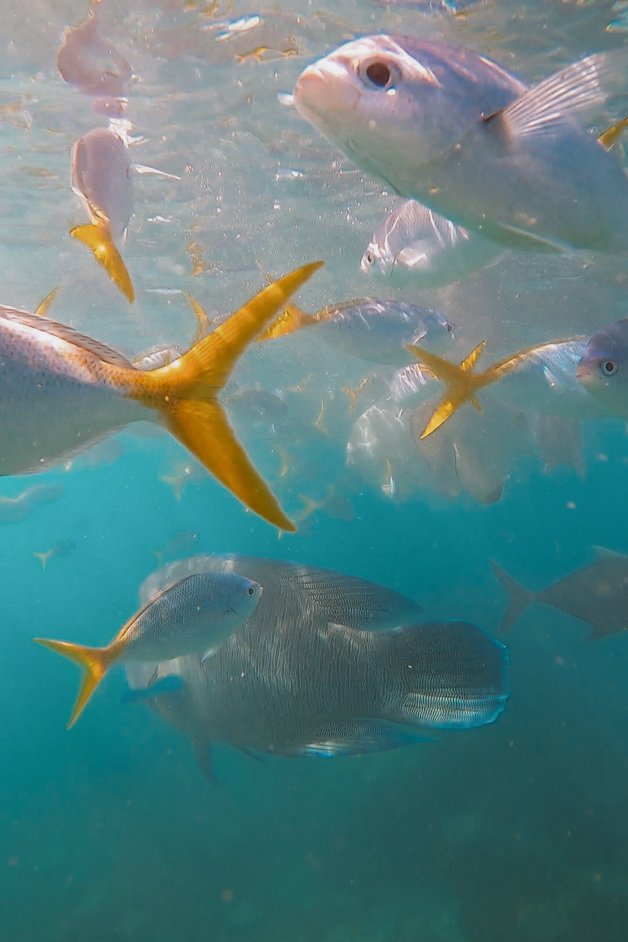
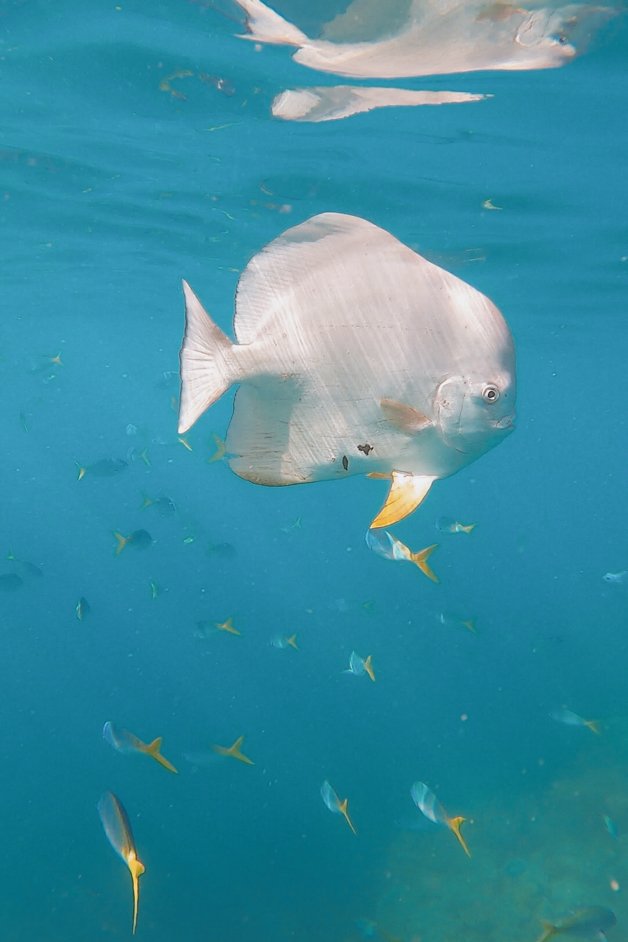
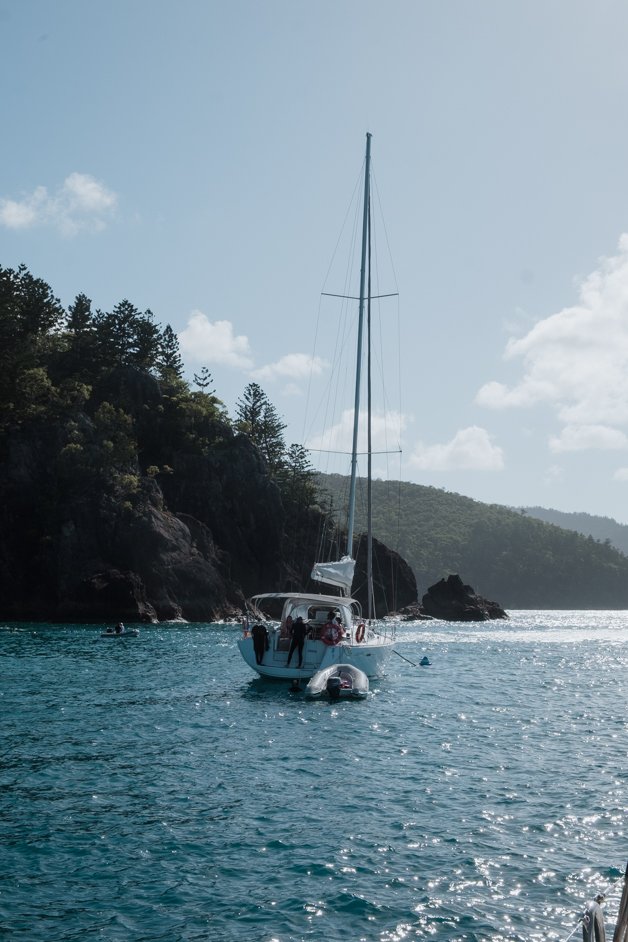
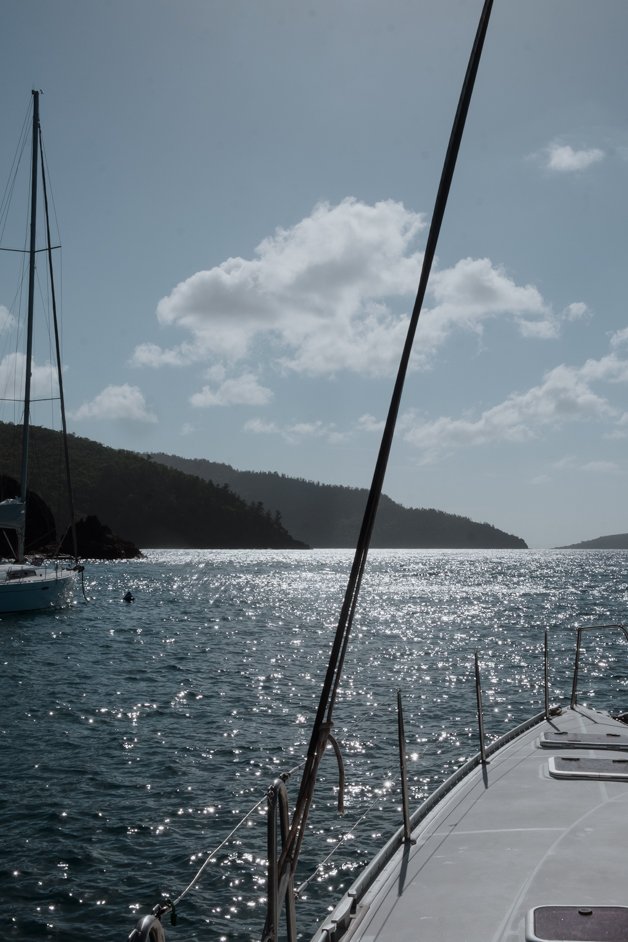
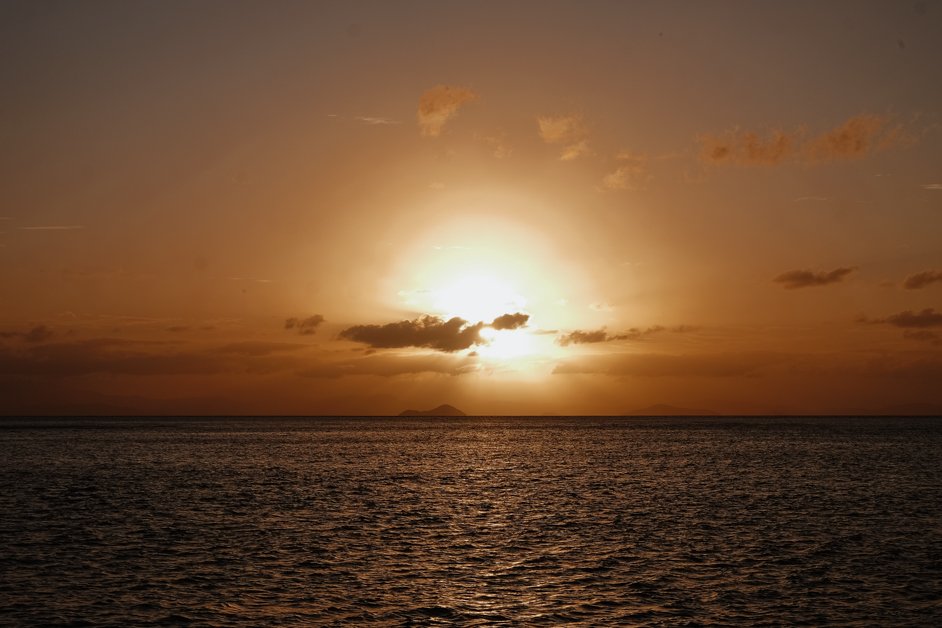
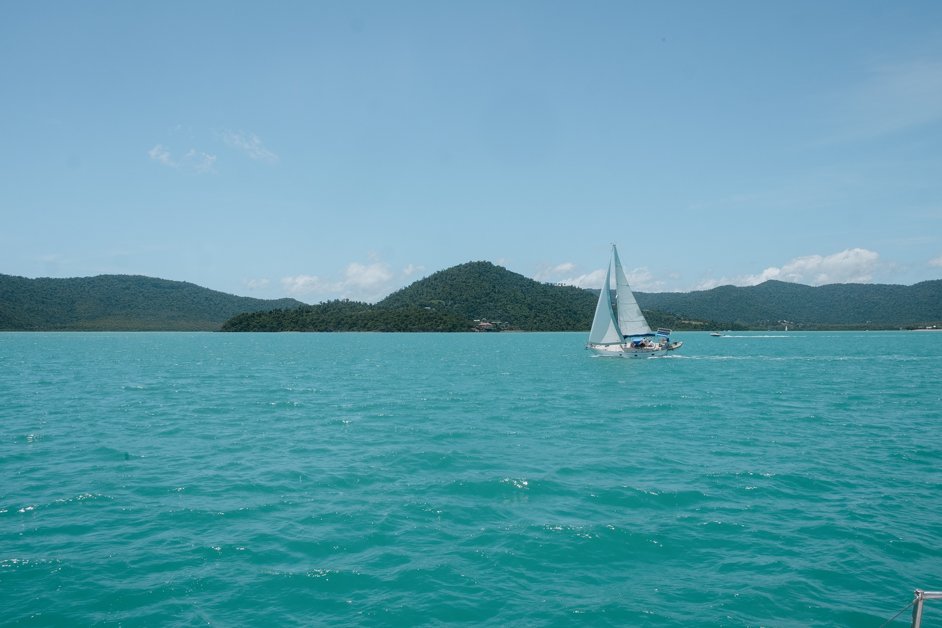
We spent the night in Blue Pearl Bay on the north side of Hayman Island as part of our Whitsunday Islands sailing trip. There were a few other boats dotted around near us, each of us with our own cove, as we watched a beautiful golden sunset dip below the clouds.
Day 3
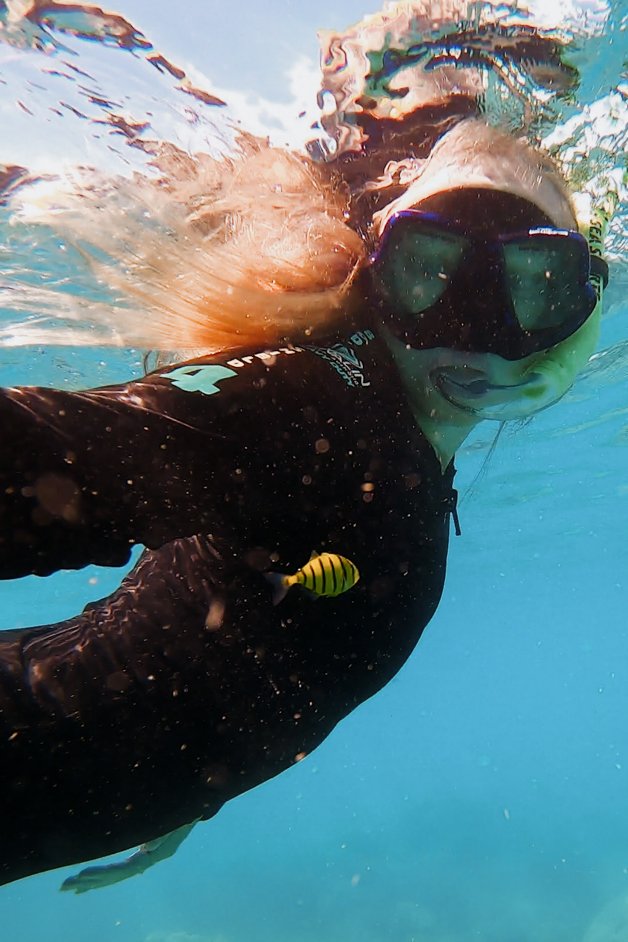
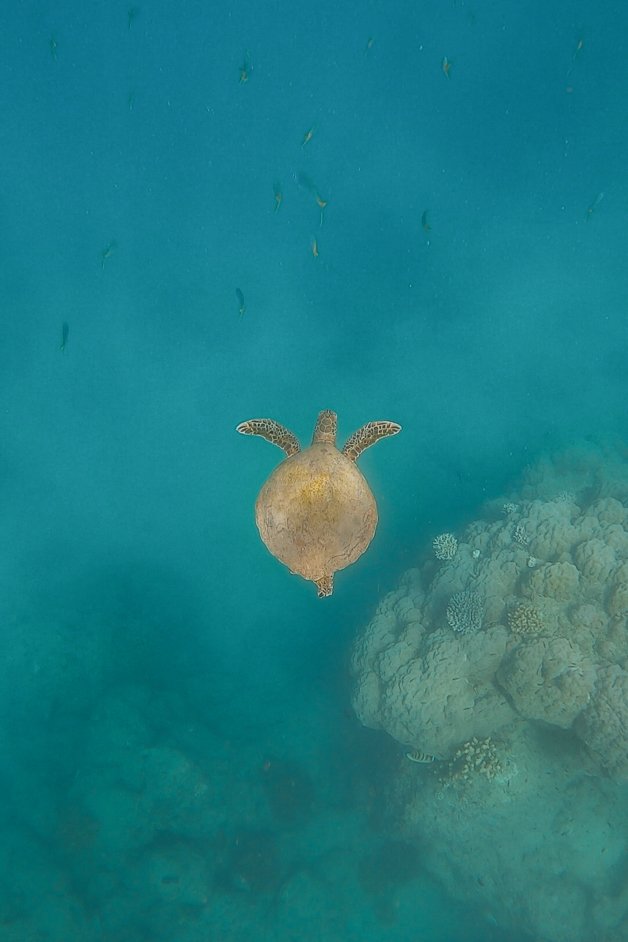
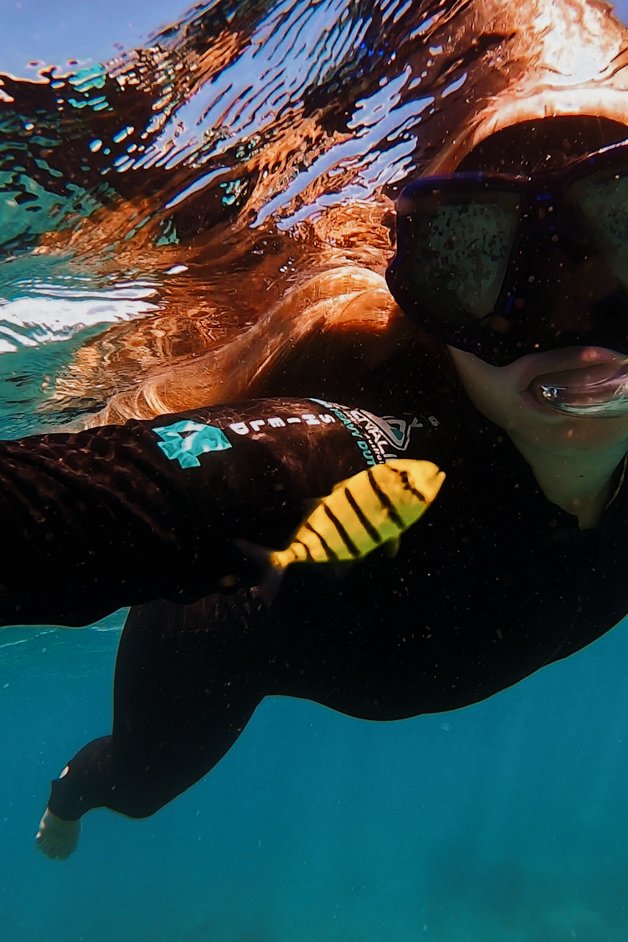
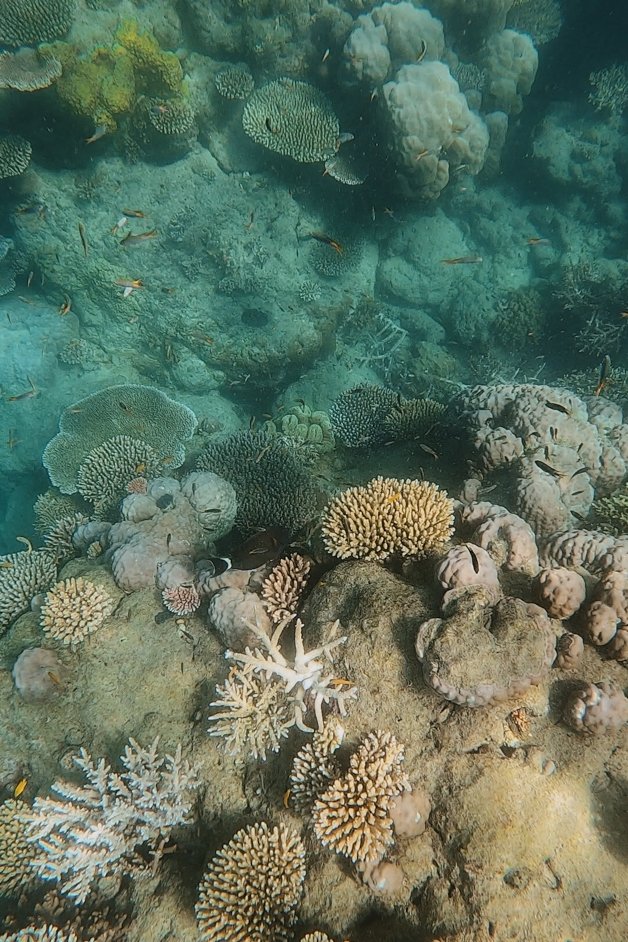
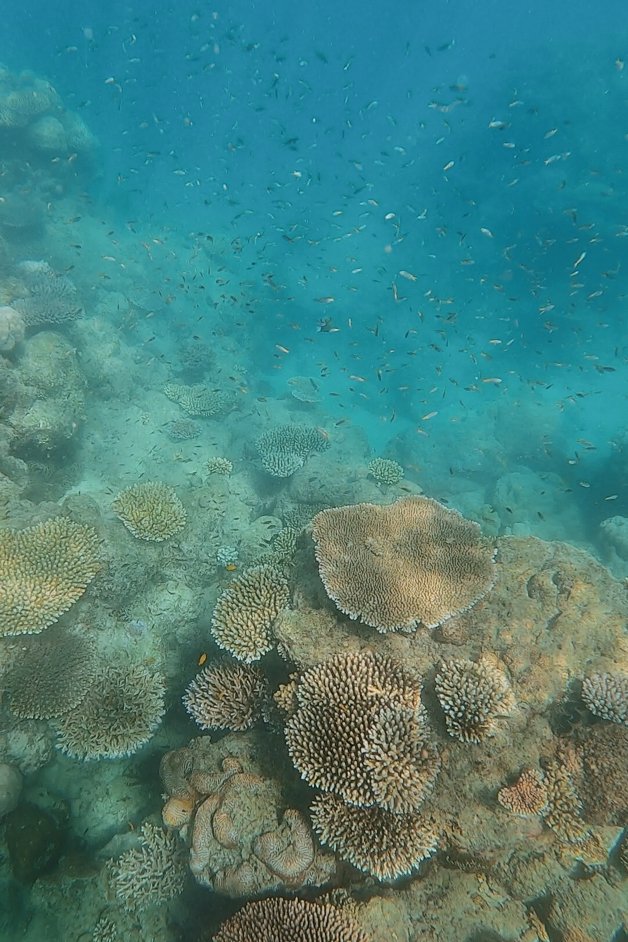
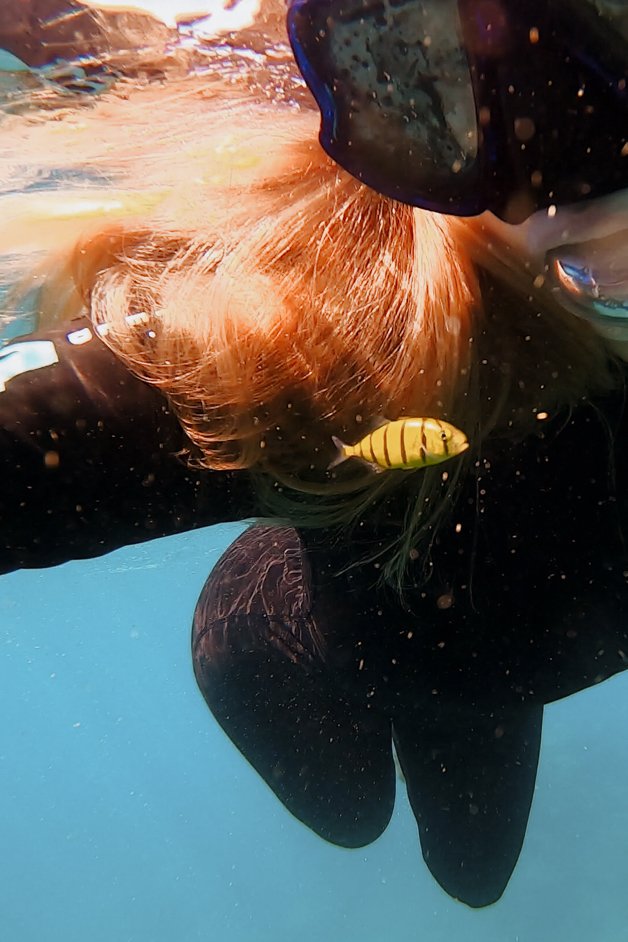
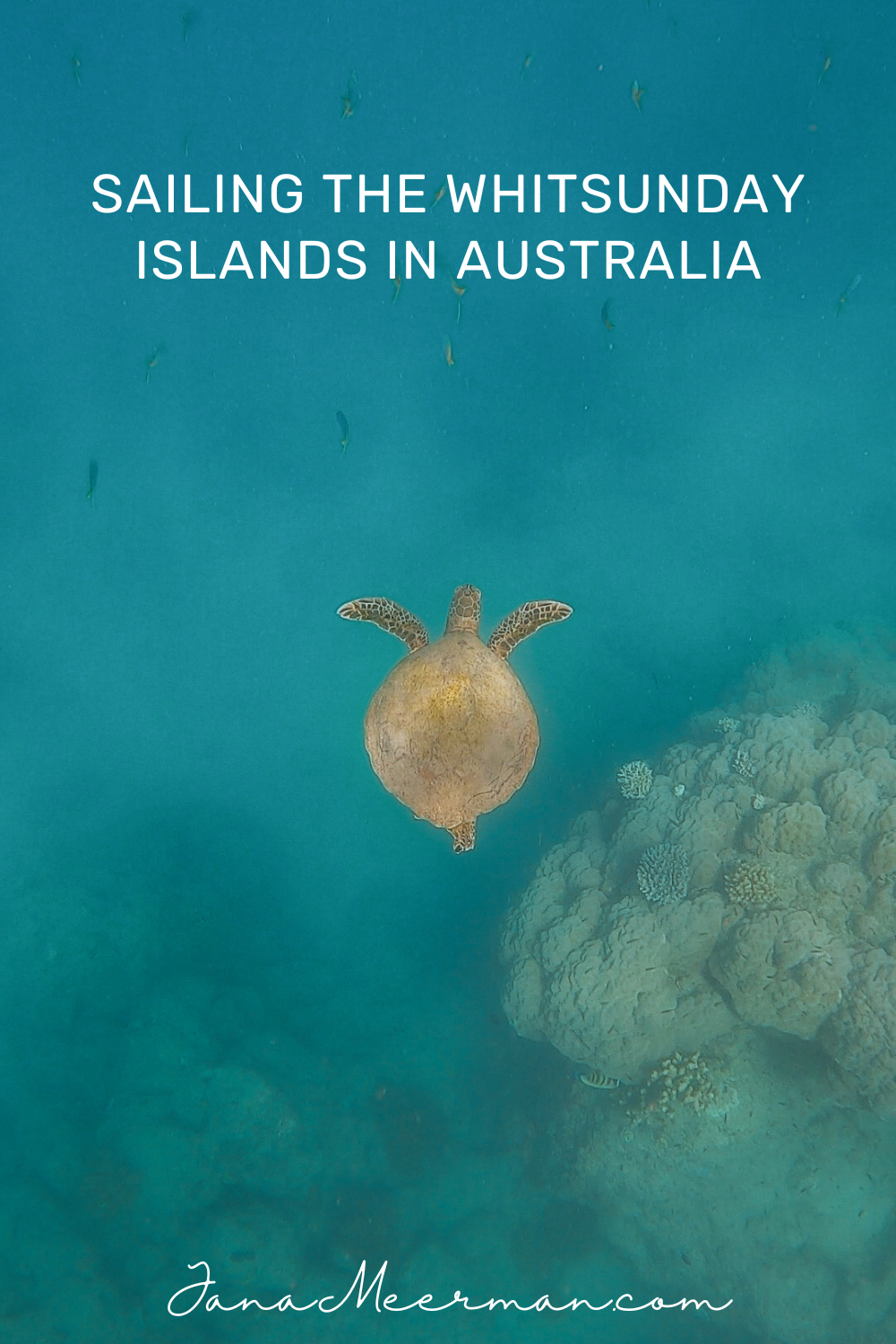
We woke up in Blue Pearl Bay and jumped straight off the catamaran into the water to snorkel. There were beautiful corals here, loads of zebra fish and even a turtle. Plus my favourite snorkel memory from the Whitsundays happened here as I had a tiny yellow fish swim with me for the entire hour while I snorkeled!
→ Check out the reel I made about snorkeling with my tiny yellow fish!
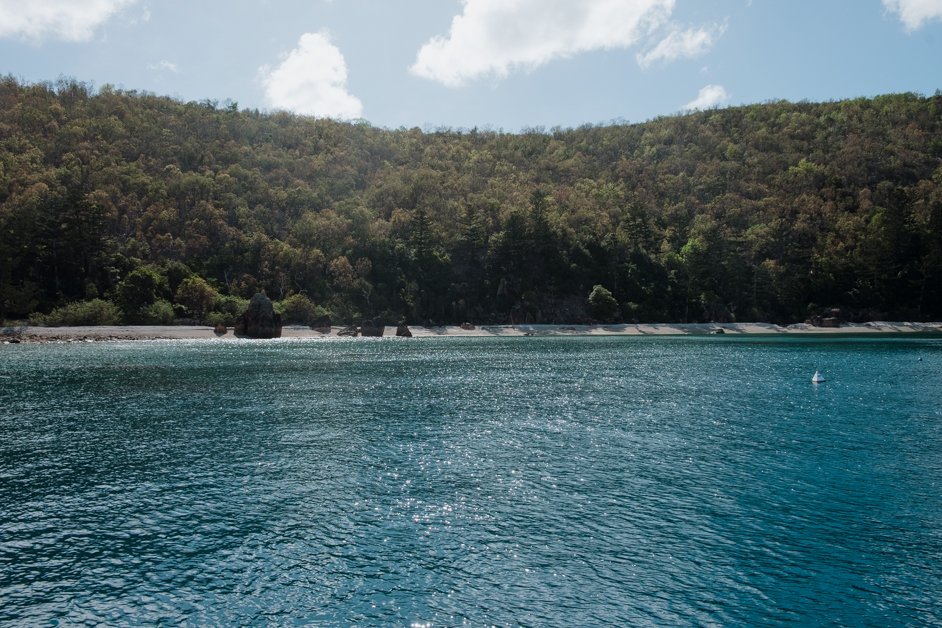
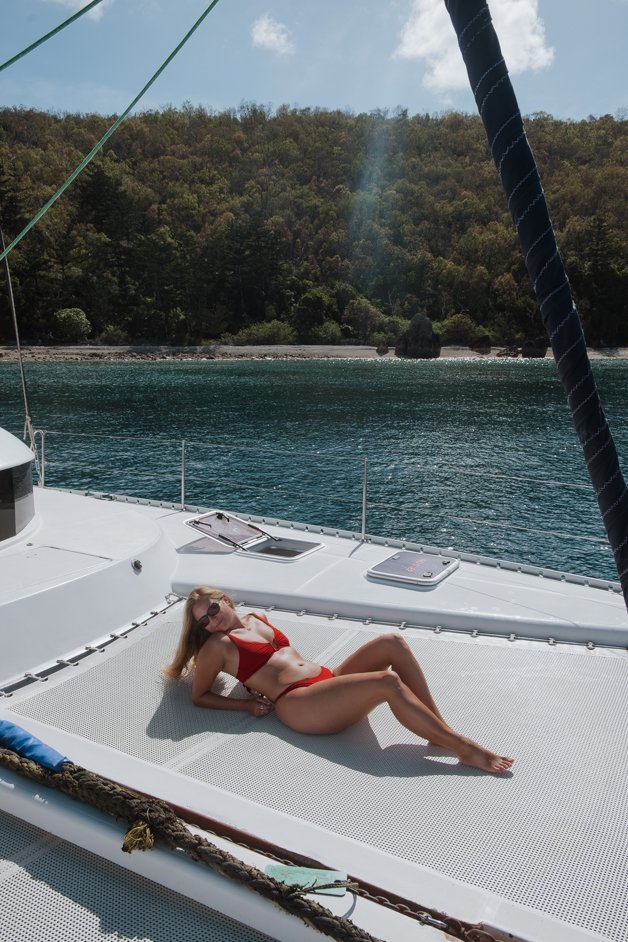
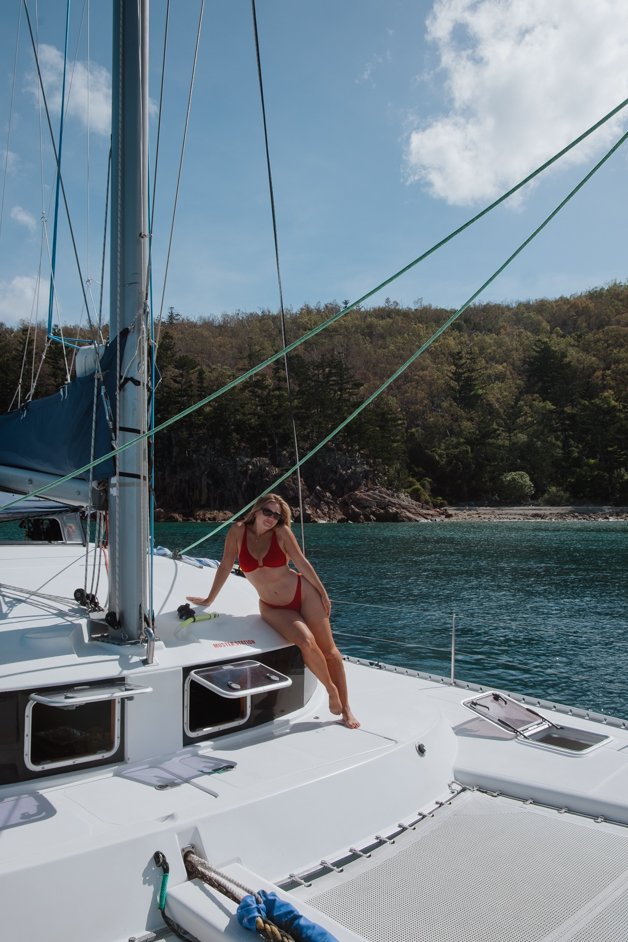
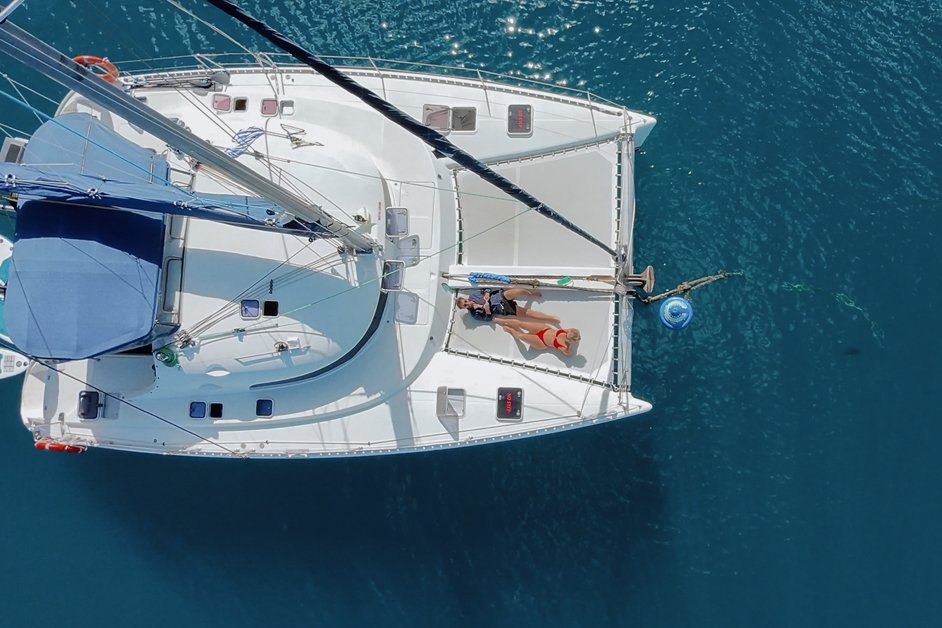
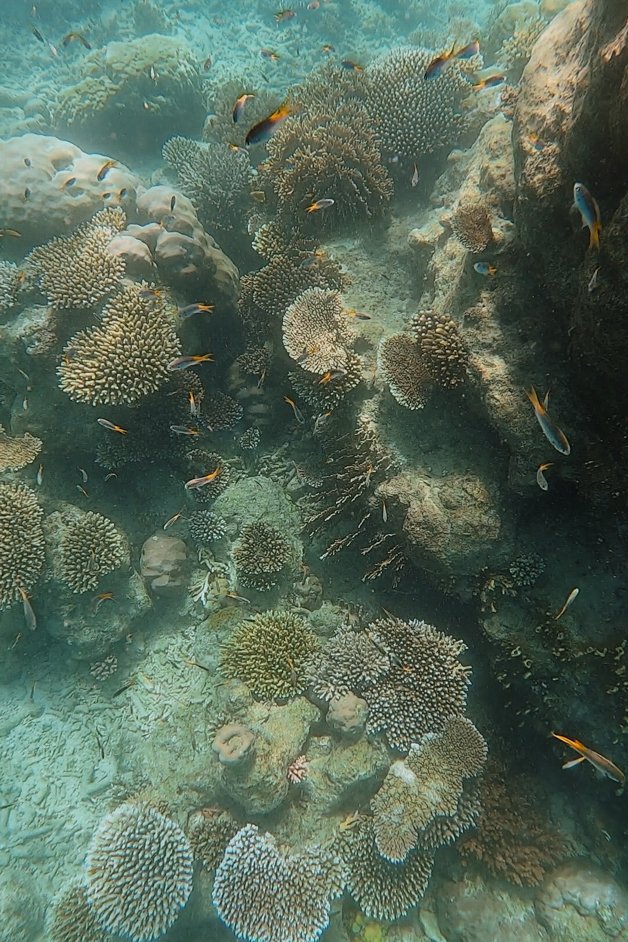
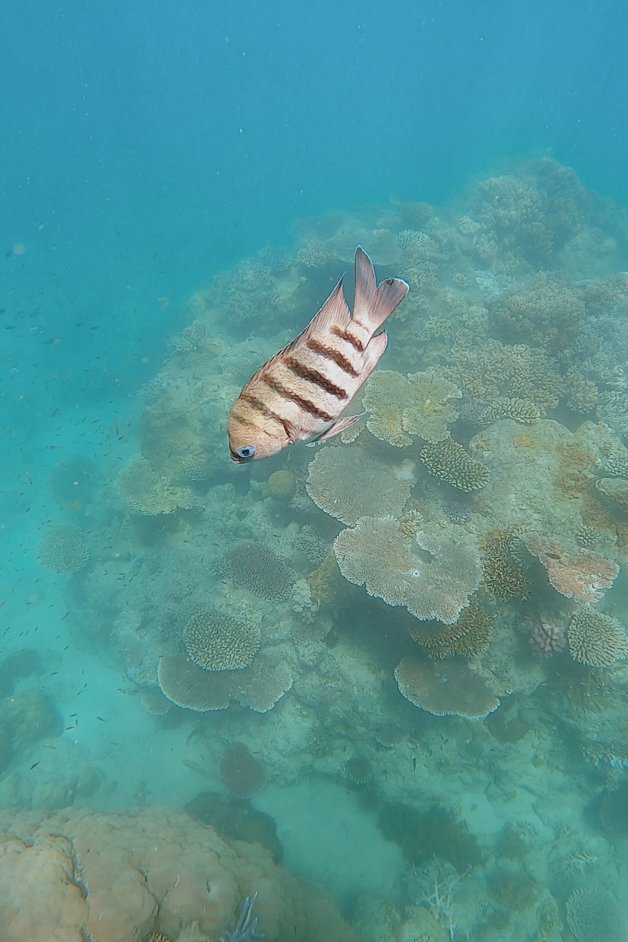
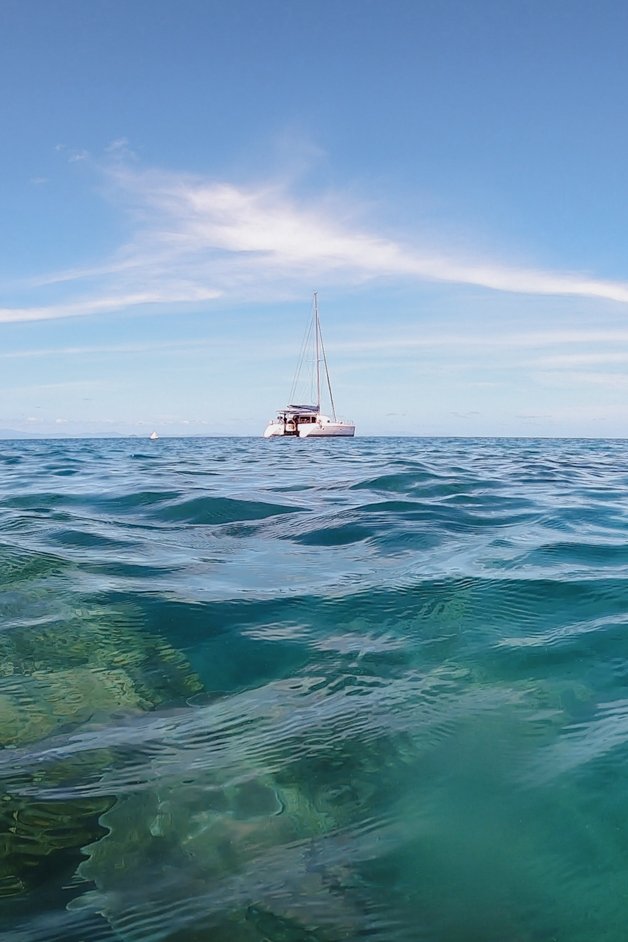
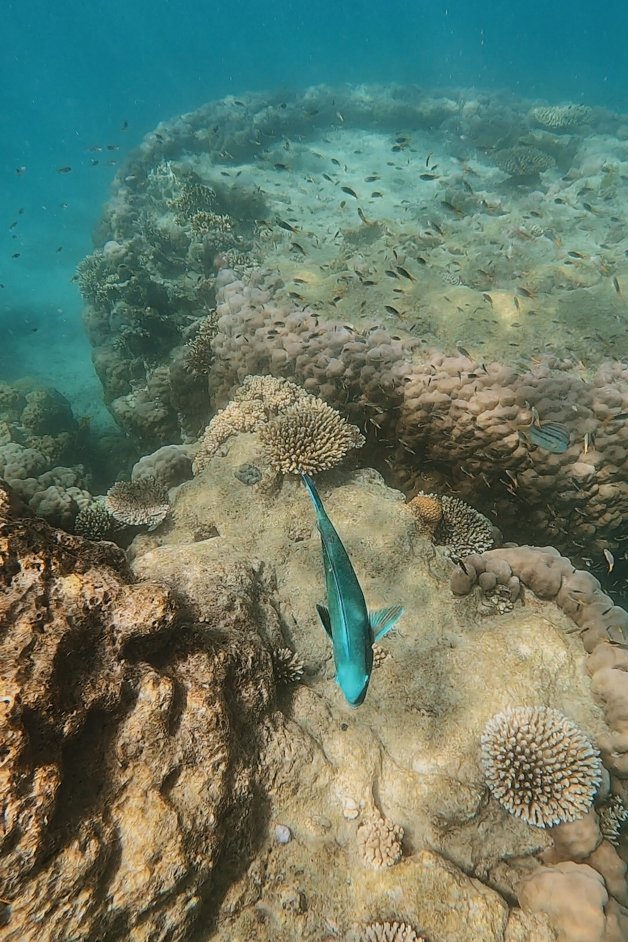
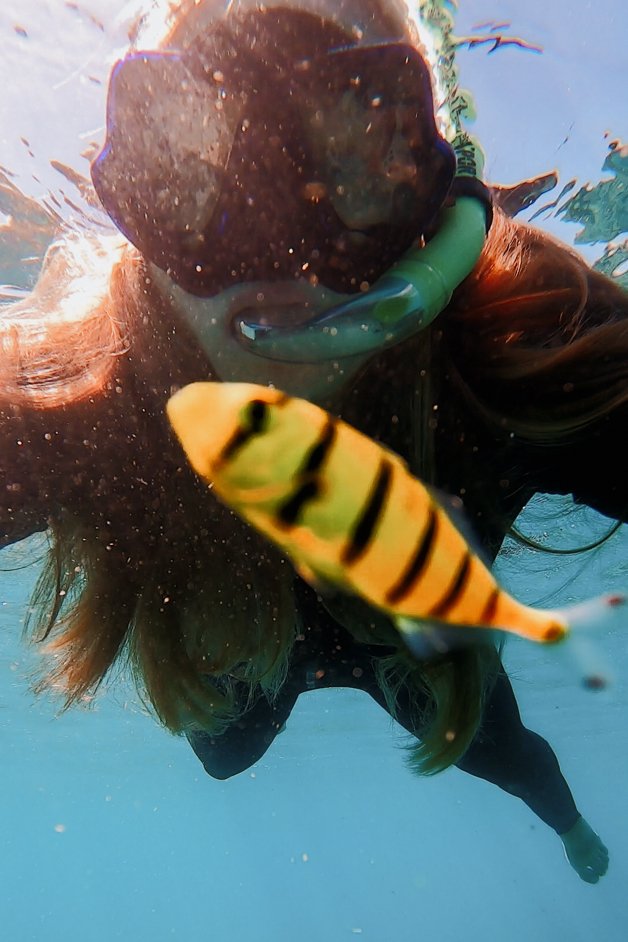
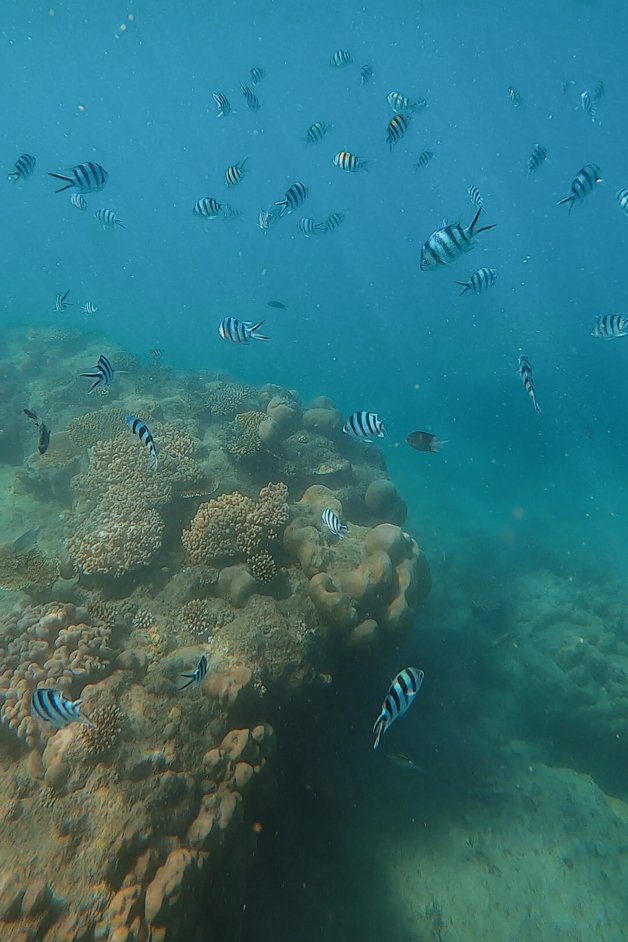
From Pearl Bay, we sailed back around Hayman Island back toward Hook Island where we had snorkeled the day before close to Luncheon Bay and Mantaray Bay.
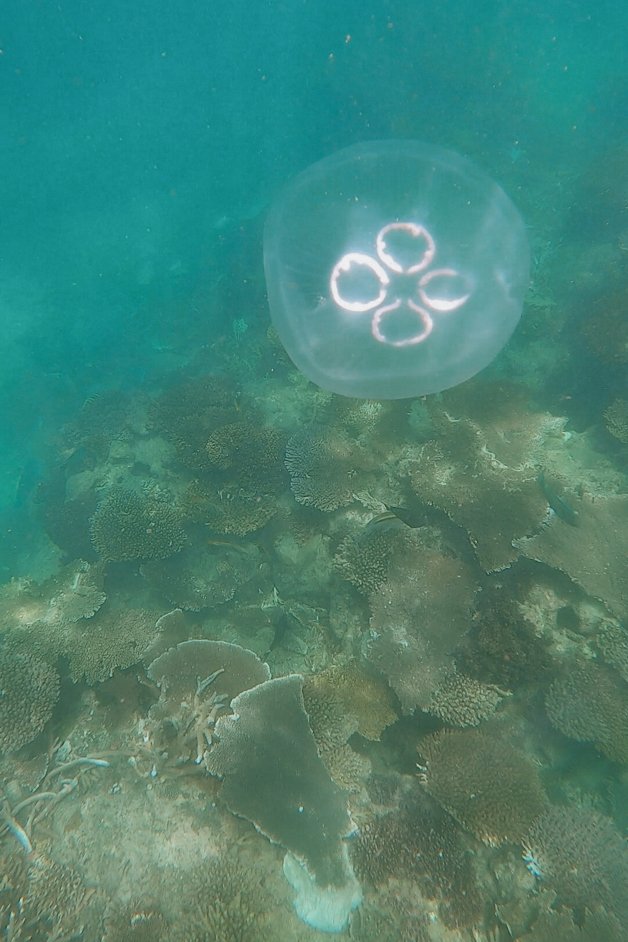
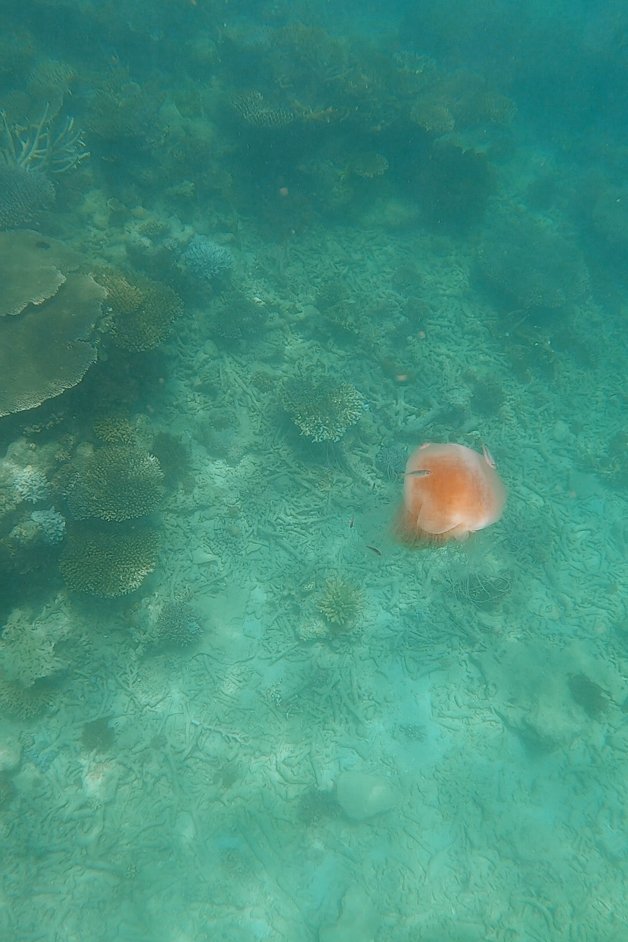
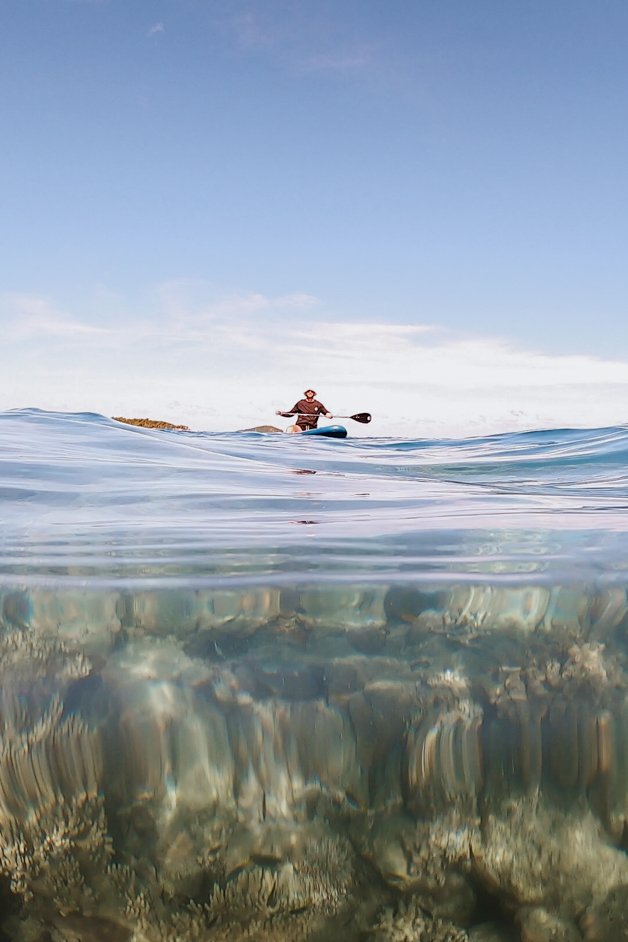
Maureens Cove is on the north side of Hook Island where we saw pretty coral and quite a few jellyfish. Personally, I think Maureens Cove was my least favourite snorkeling spot as there just wasn't as much to see compared with our other locations in the Whitsundays. However, we did enjoy stand-up paddle boarding here and it's always fun to be in the water!
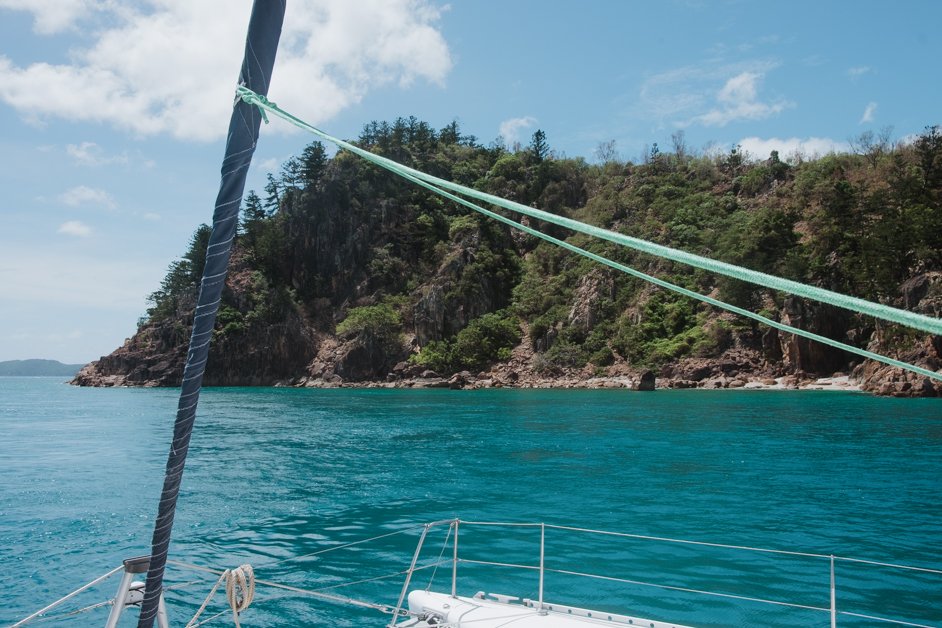
Sailing around Hayman Island
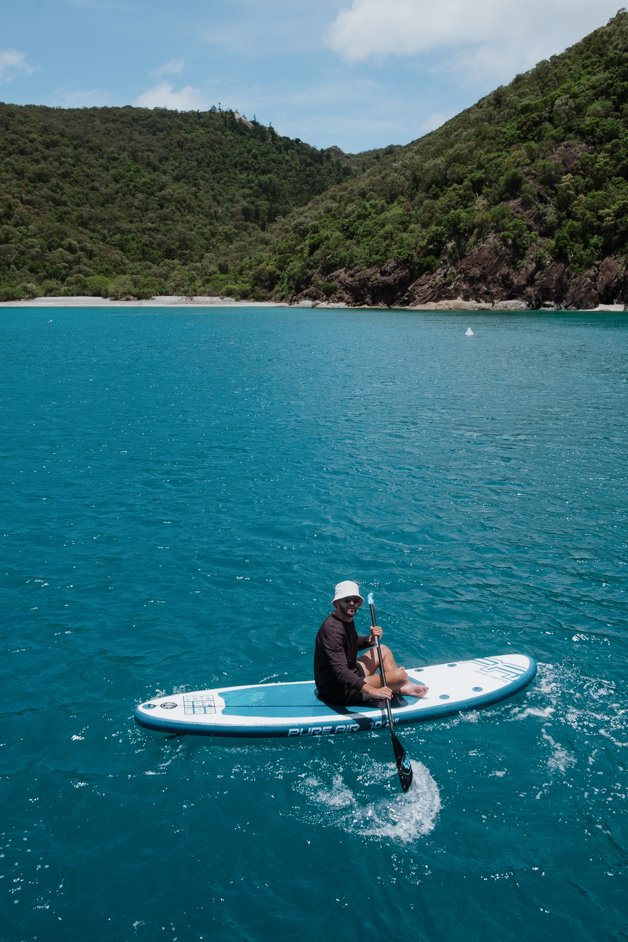
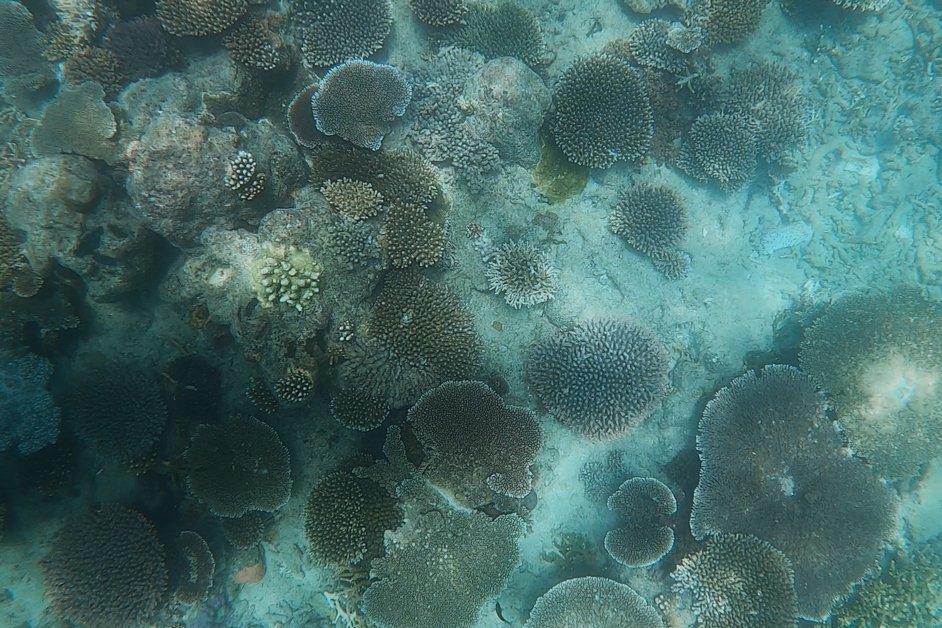
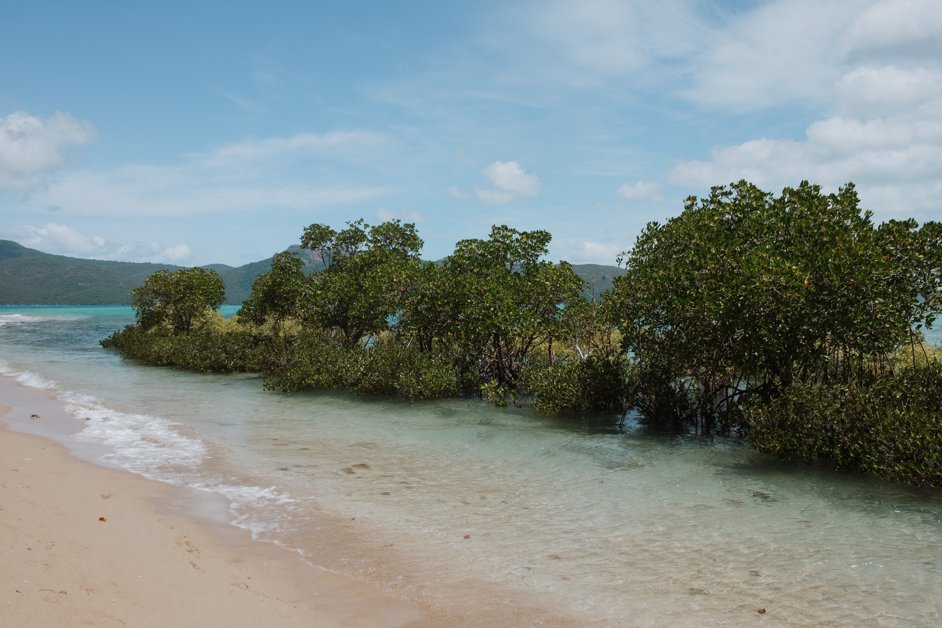
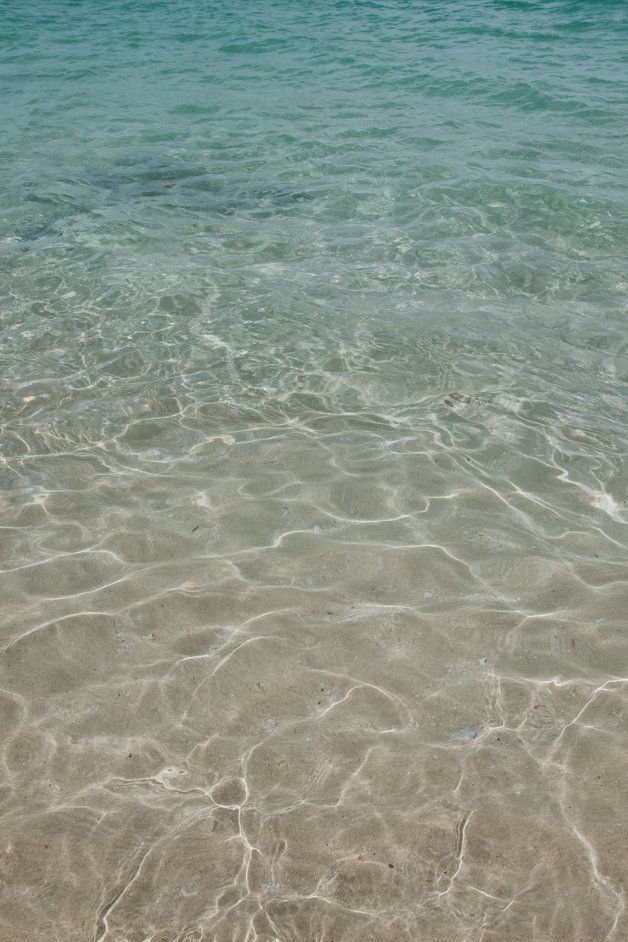
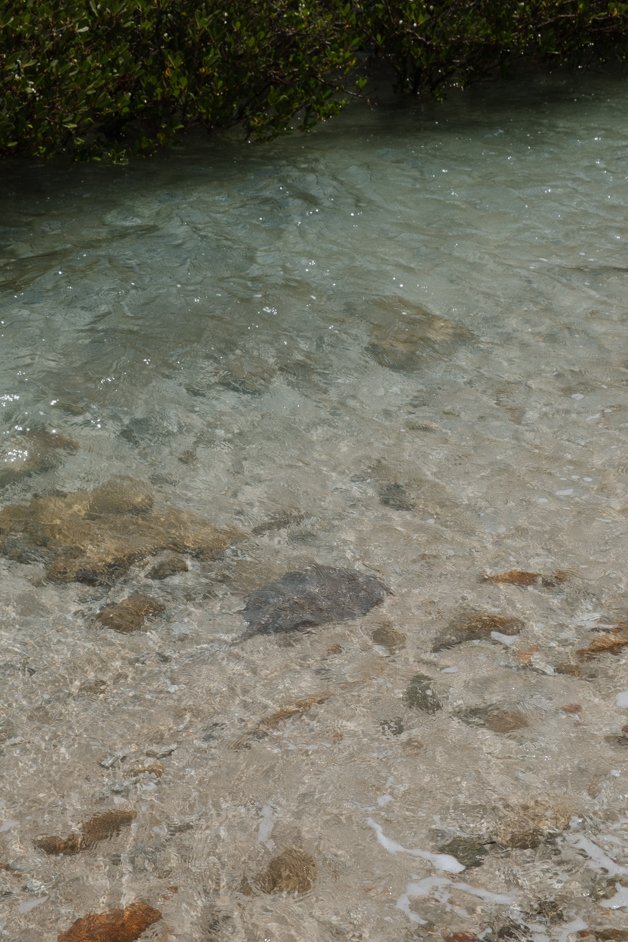
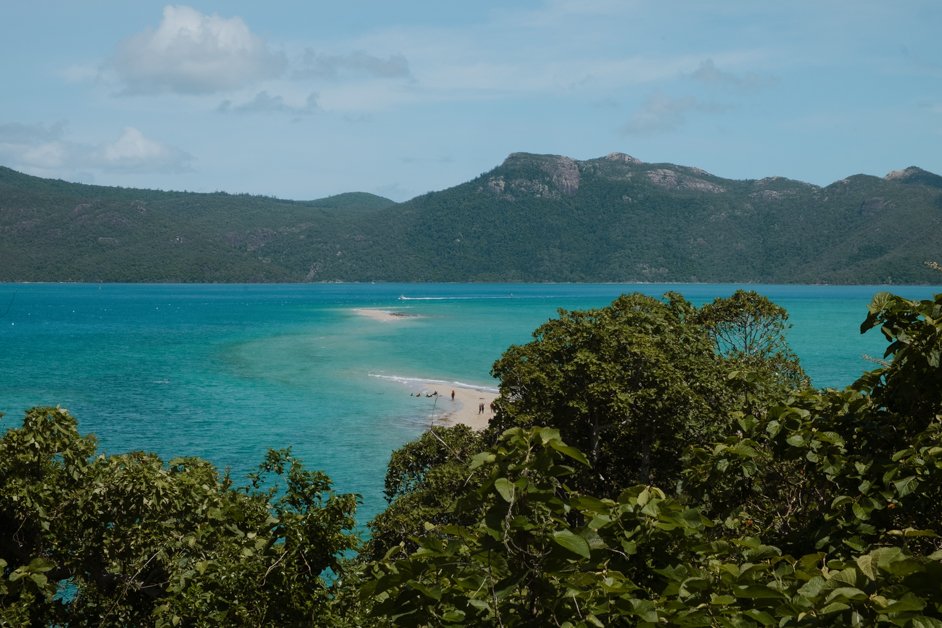
After Maureens Cove, we sailed to Langford Island, a very small mostly-sand island in the northwestern part of the Whitsundays. First, we took the dinghy to shore to go for a short walk along the island from where we could spot small stingrays in the mangroves. There was also a beautiful viewpoint on Langford Island with views down to the contrasting white sand and blue water.
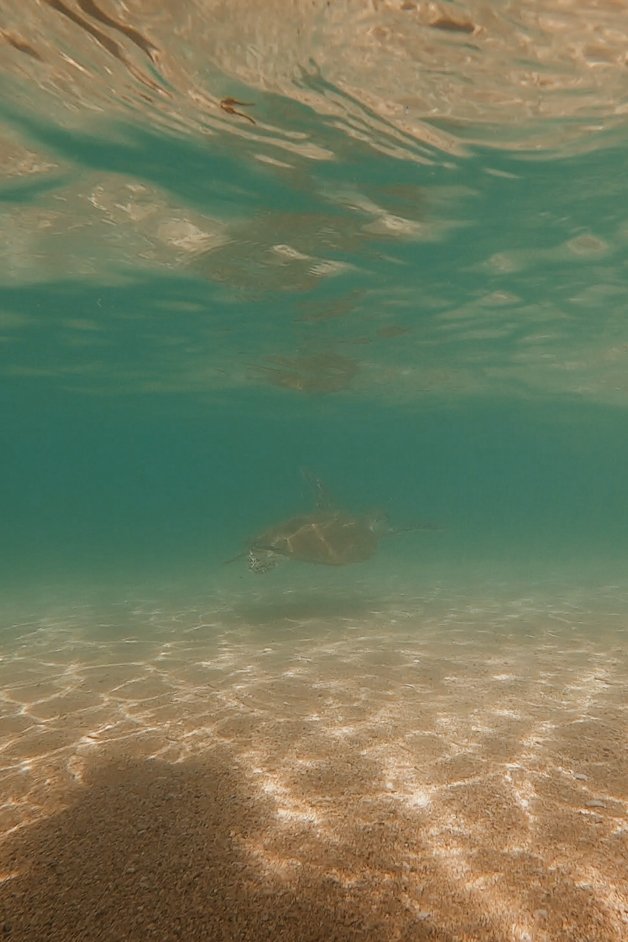
We returned to the catamaran to change into our snorkel gear for our last snorkel of the day. We jumped straight off the boat into the waters around Langford Island in the hopes of spotting some turtles who like to hang out here.
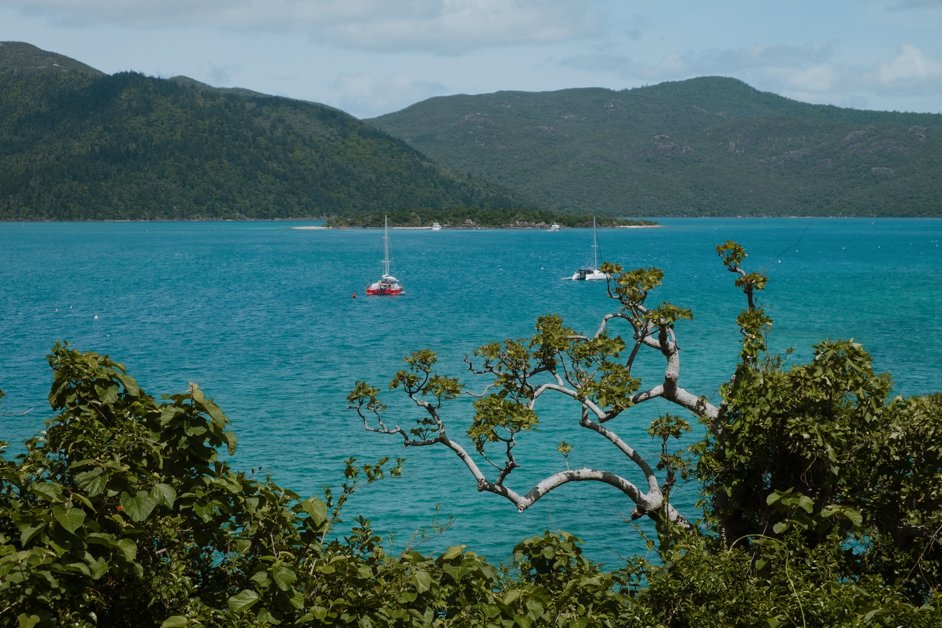
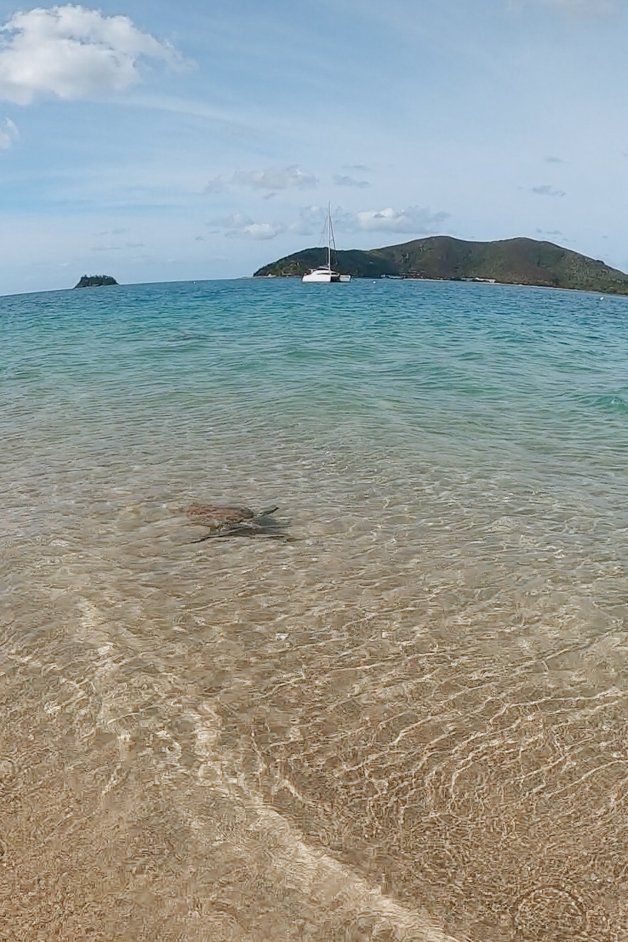
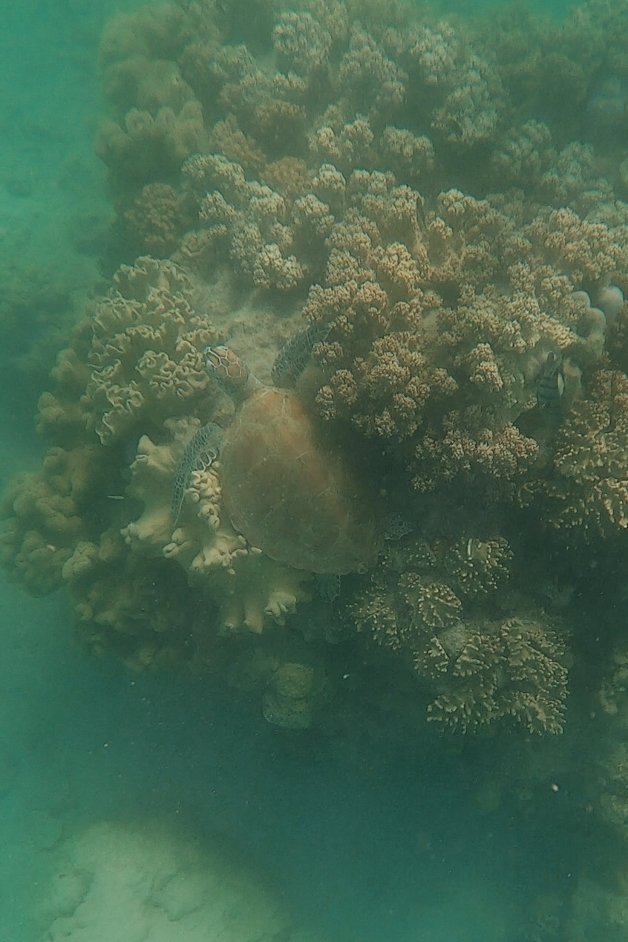
We spent the night here on the northwest side of Hook Island with a few other boats dotted around near us, each of us with our own cove.
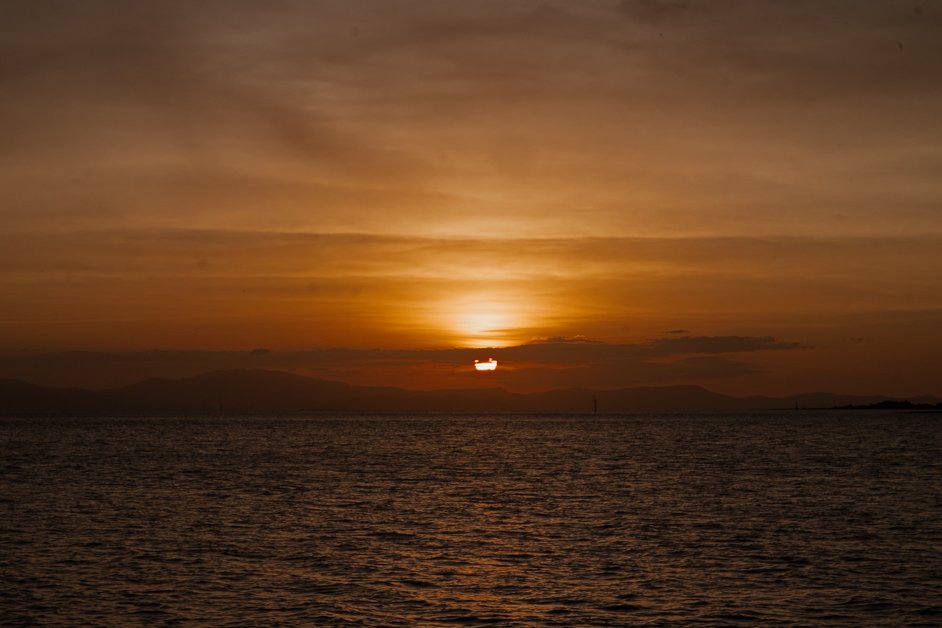
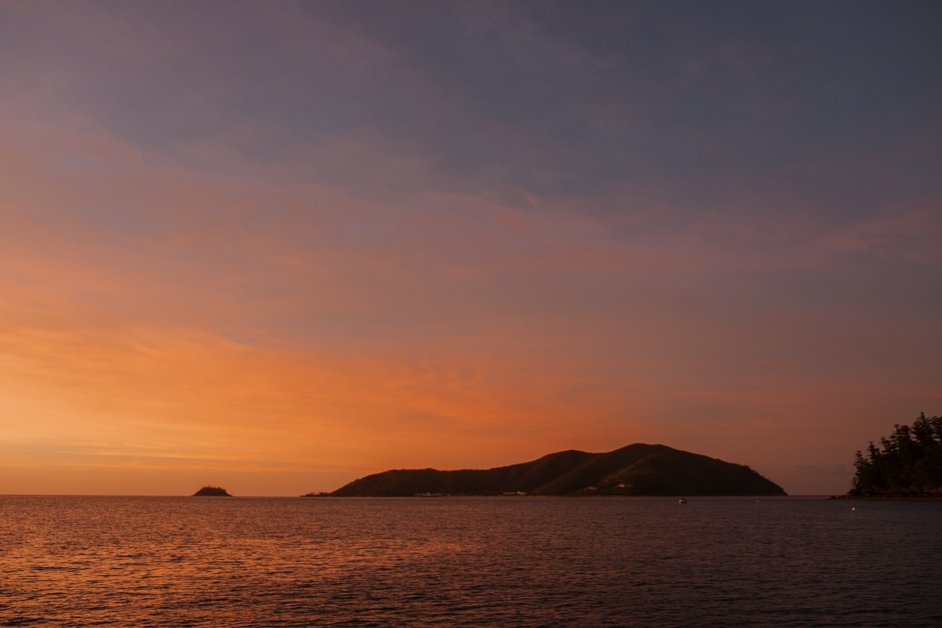
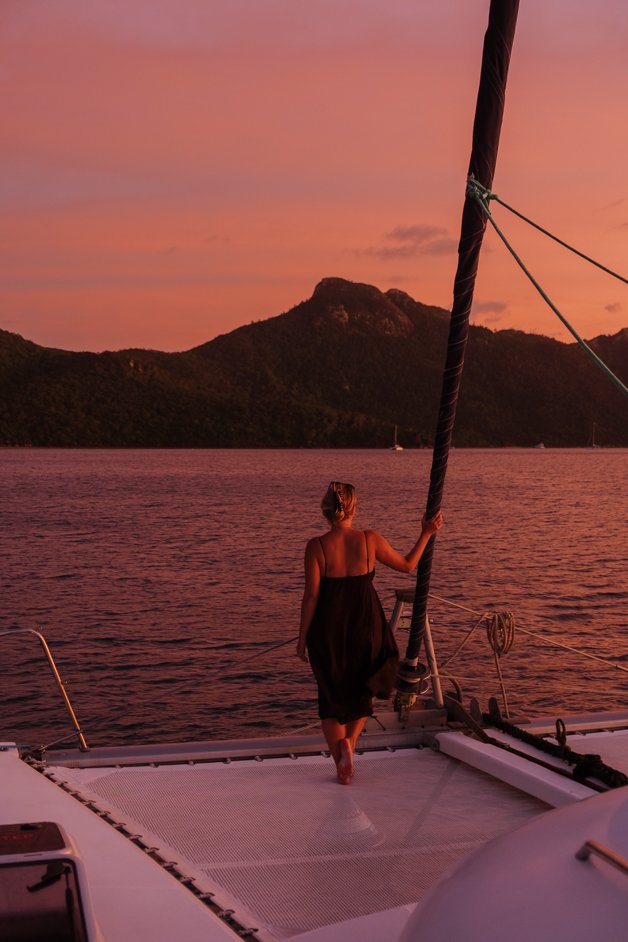
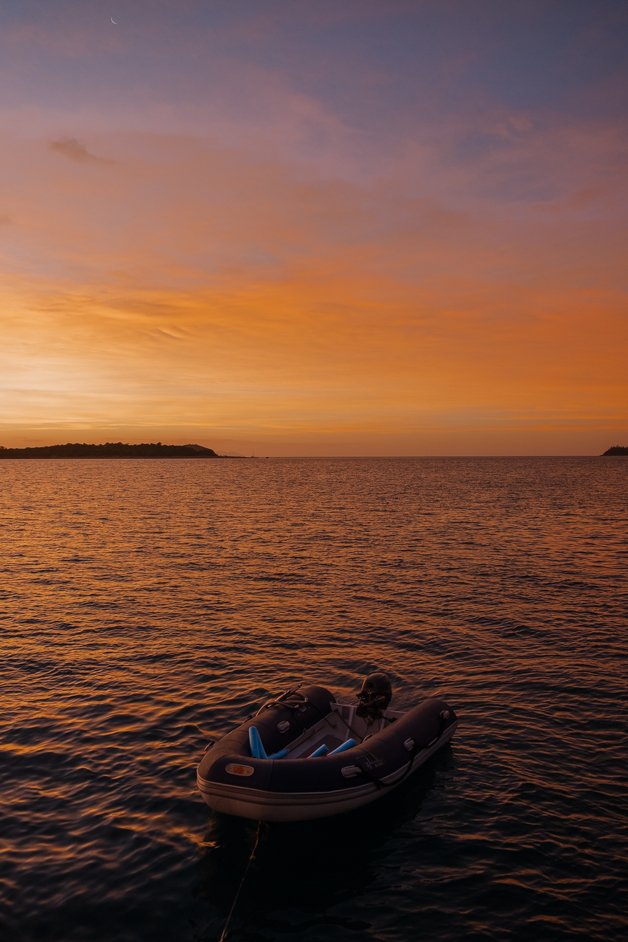
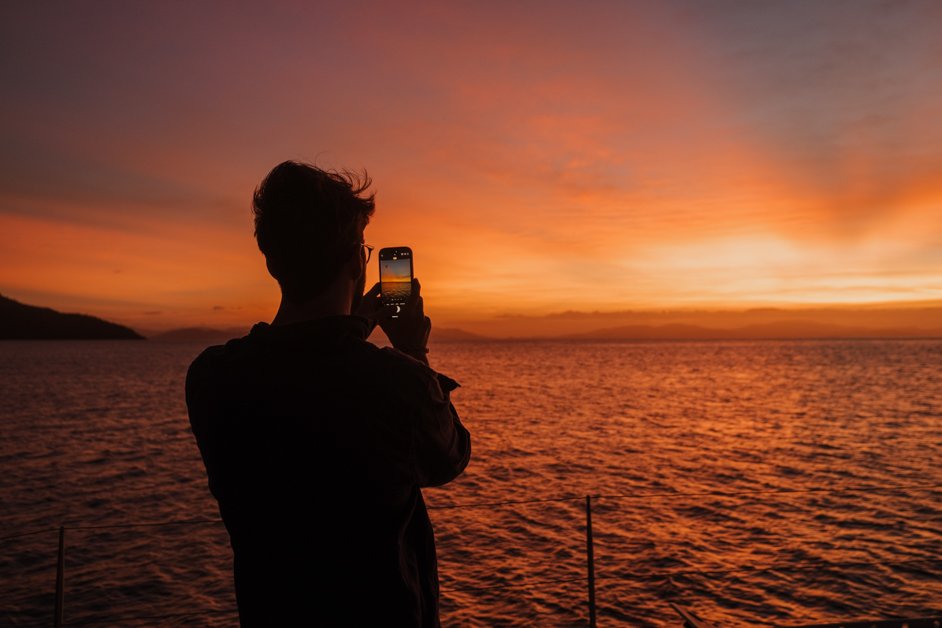
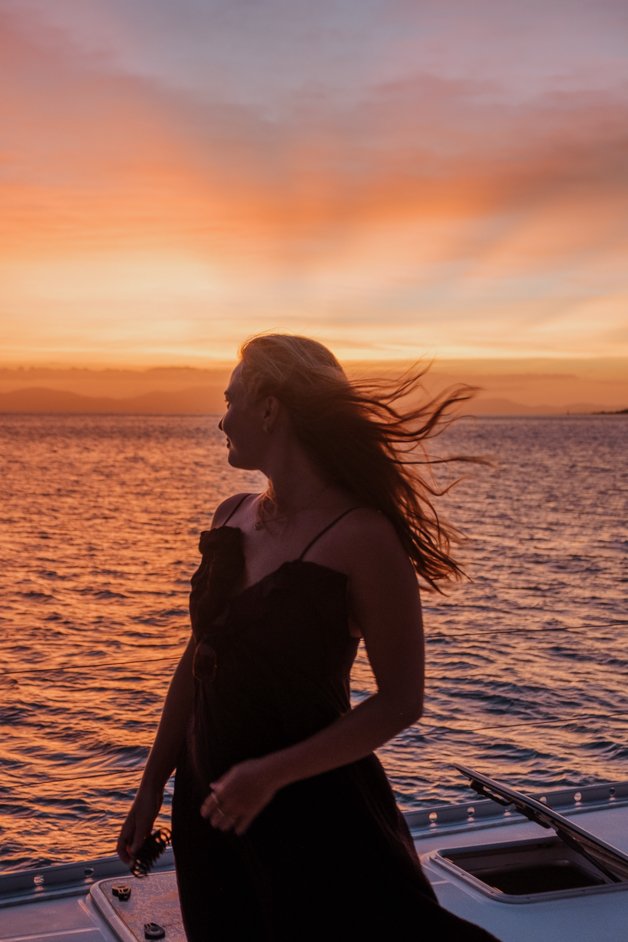
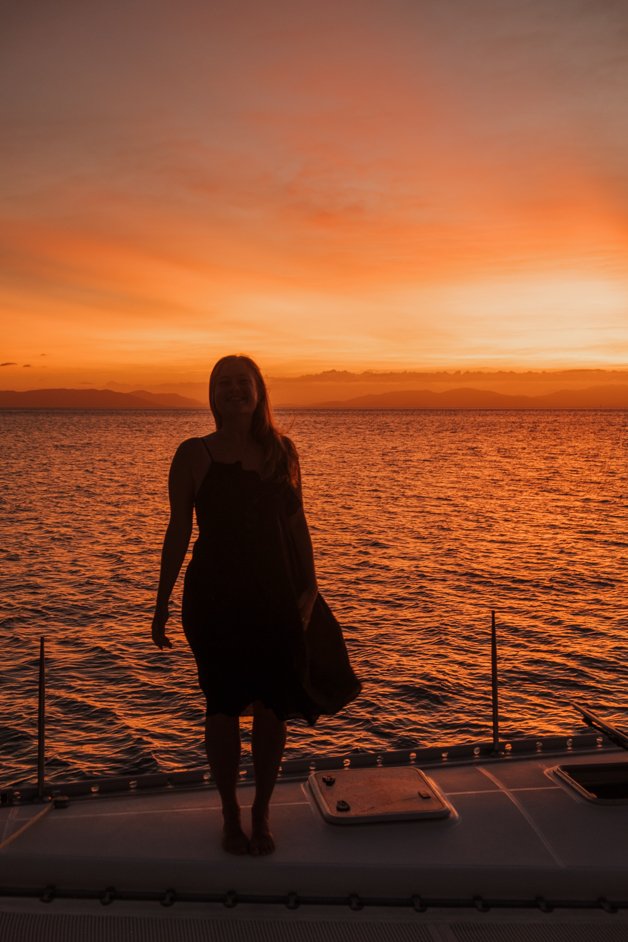
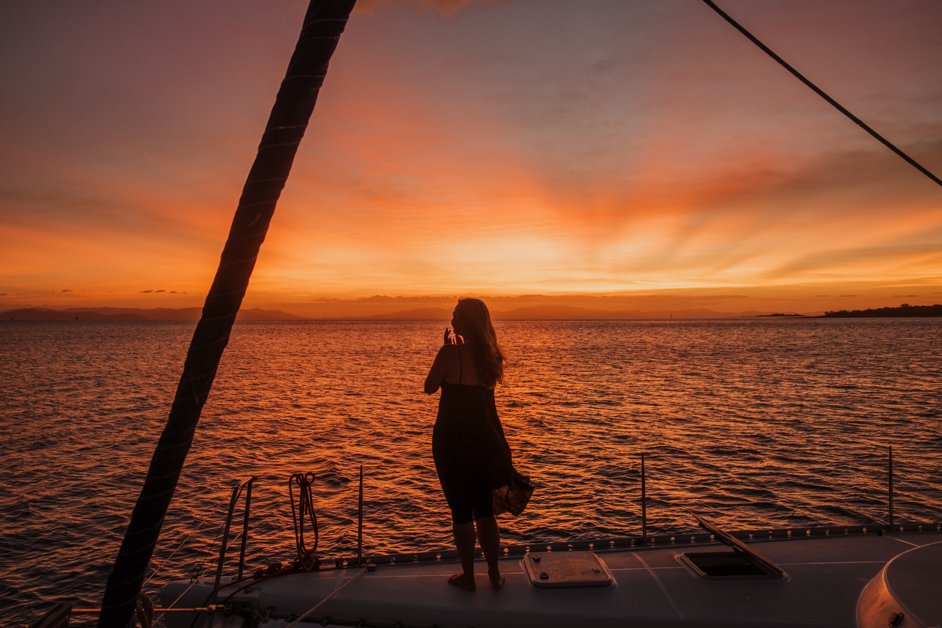
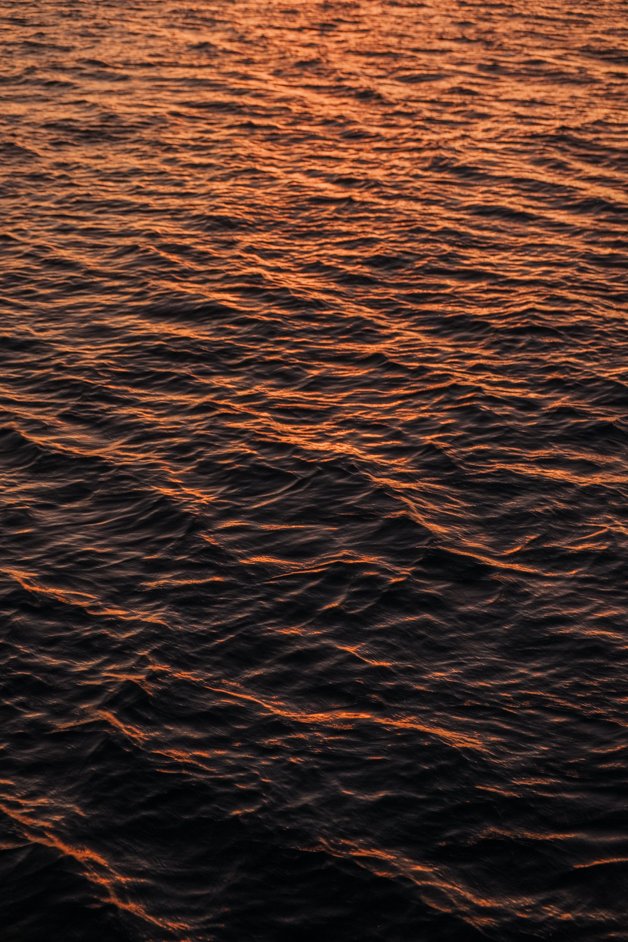
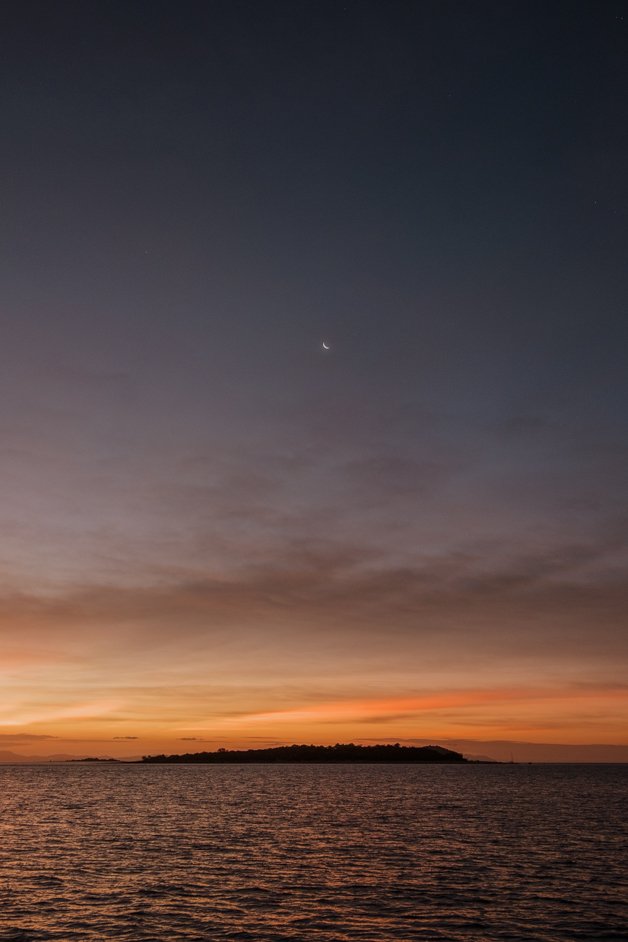
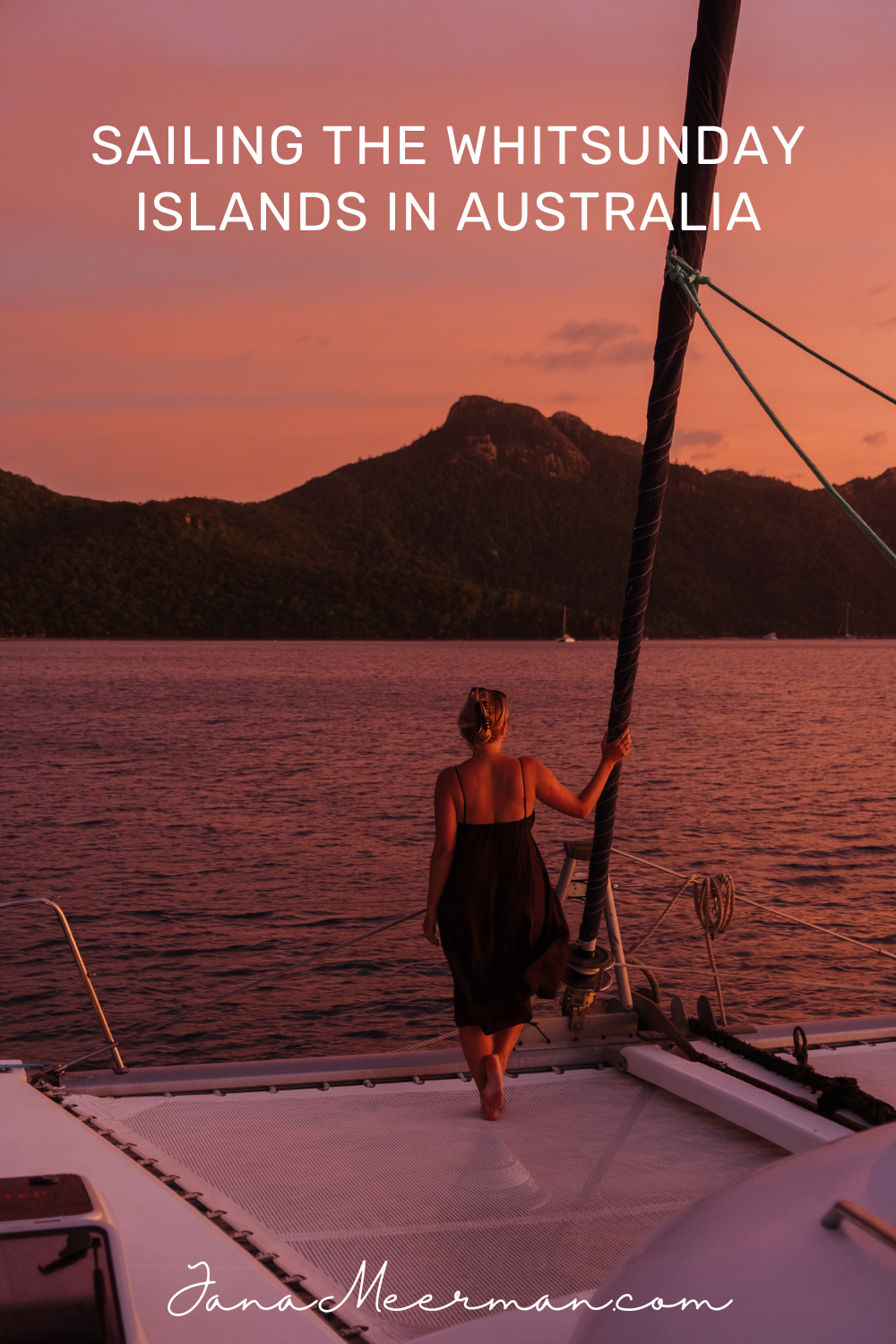
It was the final night of our sailing trip and we got the most magnificent sunset, one of the best I've ever seen. Vibrant shades of purple, pink, orange, yellow and red lit up the entire sky in every direction and we couldn't stop taking photos.
→ Check out the reel I made about sunset from the catamaran!
Day 4
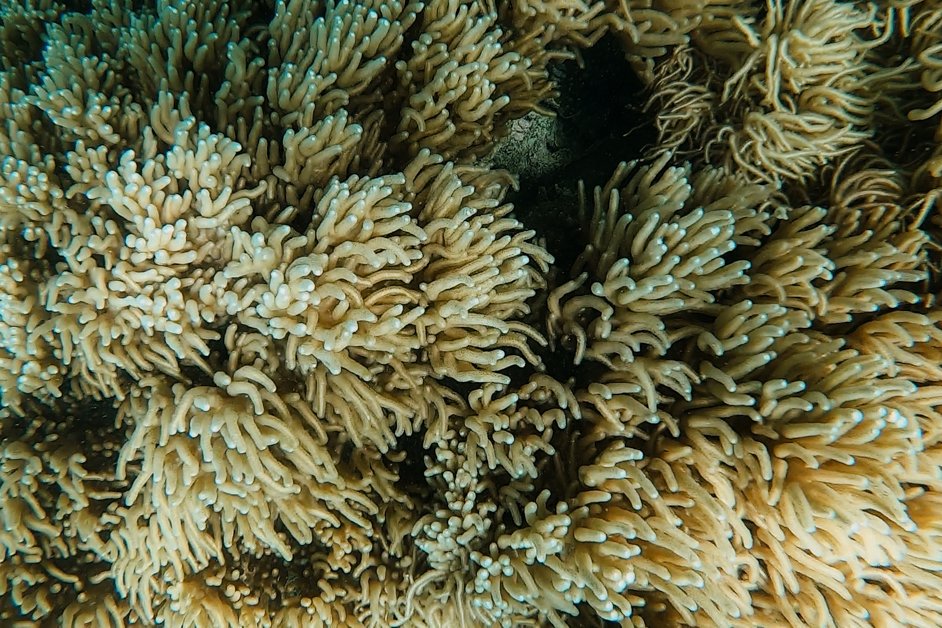
Our final morning was upon us and along with it, our last snorkel session. We snorkeled off the boat one last time at Cockatoo Point, where we had spent the night, where we saw so many gorgeous corals and plenty of fish. It was the perfect ending to our Whitsundays adventure.
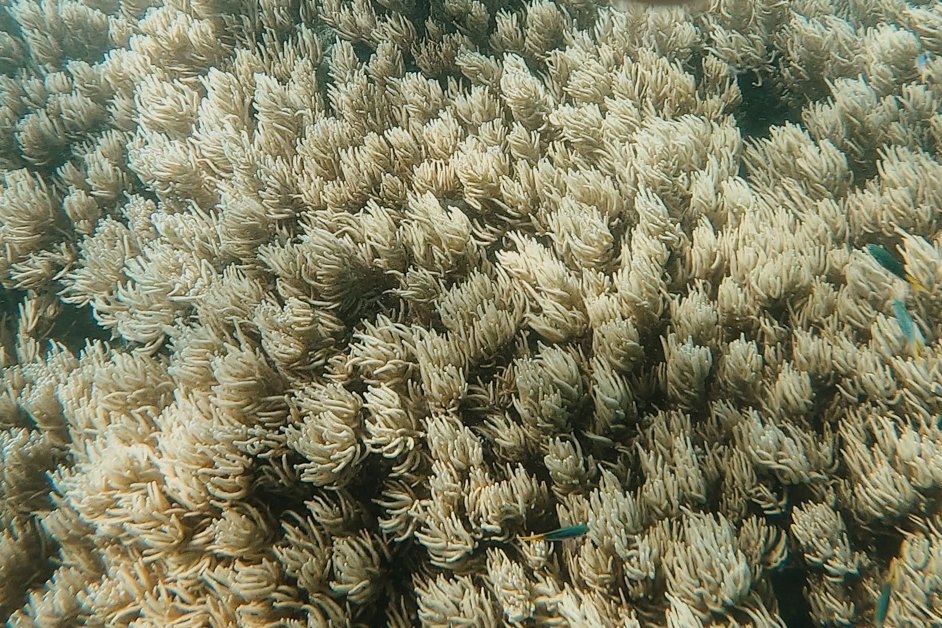
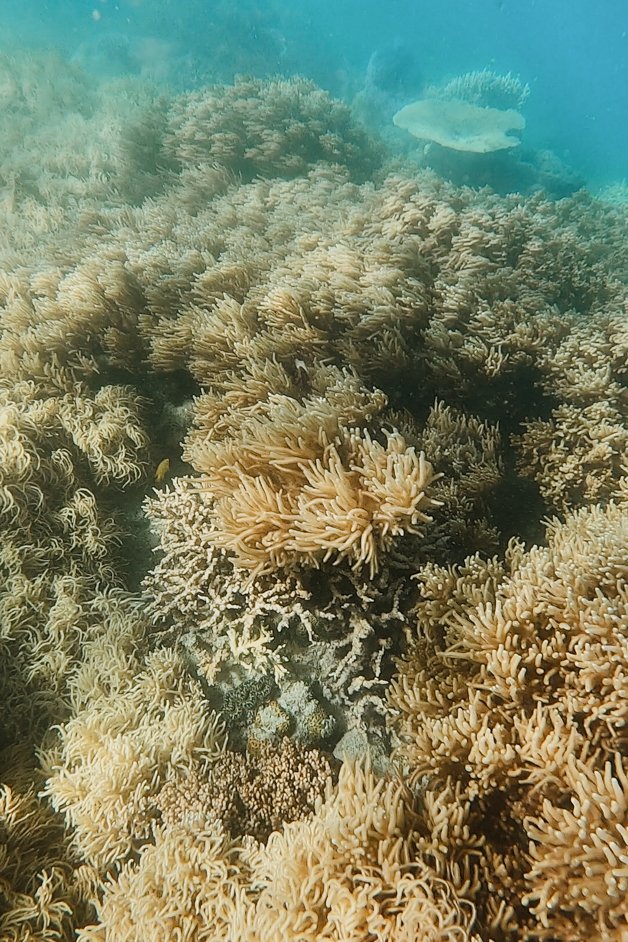
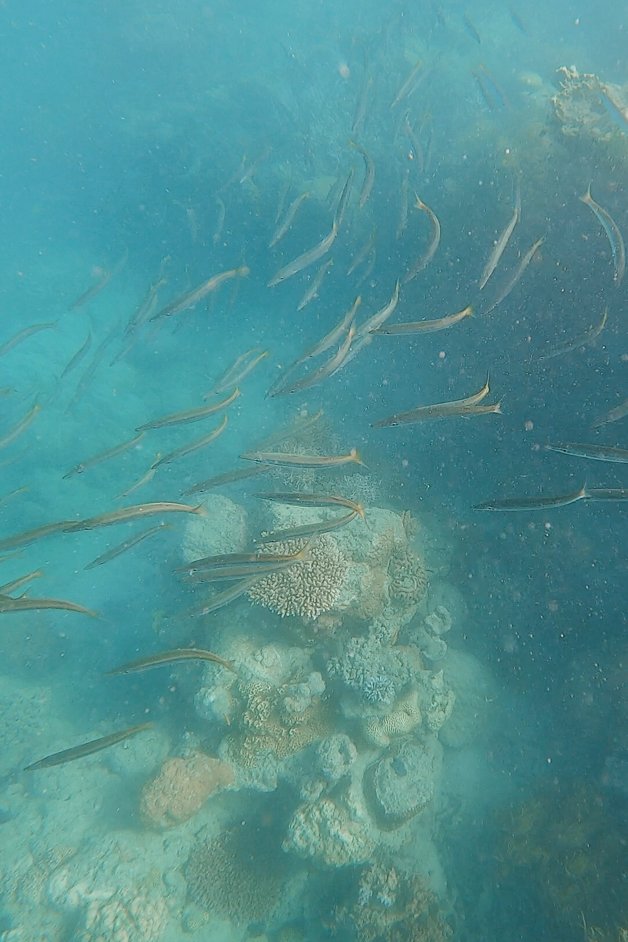
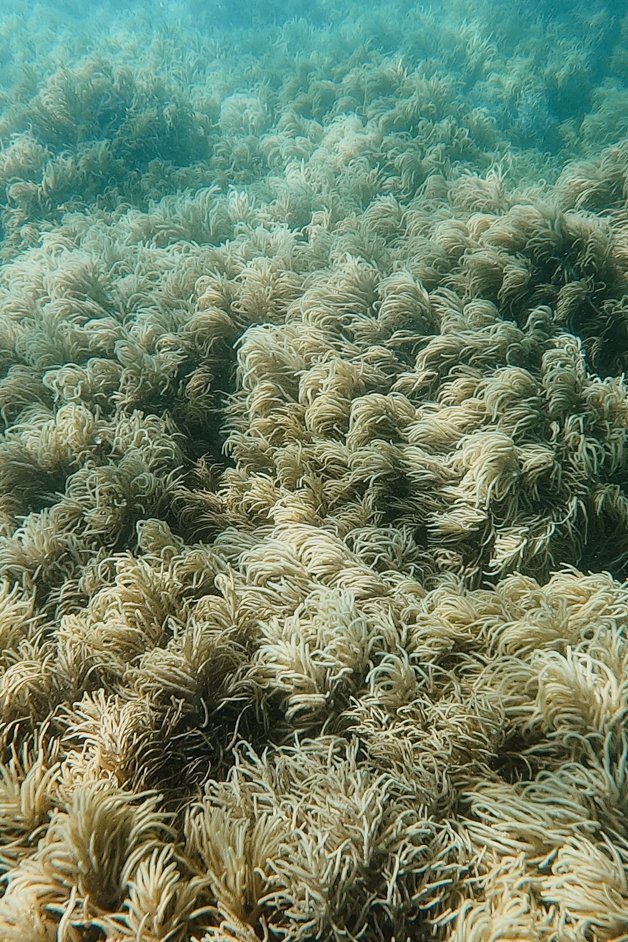
And then, it was time to return to Airlie Beach. The sail back took about three hours of gorgeous cruising back from the islands to mainland and we enjoyed sitting on the front deck of the catamaran listening to the waves.
BOOK AN EXPERIENCE IN THE WHITSUNDAY ISLANDS!
PIN THIS POST TO REFER BACK TO LATER!
GET READY TO TRAVEL!
— Book tours and experiences - with GetYourGuide
— Get all the gear you need for your trip - with Amazon (North America)
— Get all the gear you need for your trip - with Amazon (Europe)
— Find a place to stay - with Booking.com
— Choose a hostel to stay at - with Hostelworld
— Purchase global travel insurance - with World Nomads
— Load an international eSim on your phone - with AirAlo
— Start your own travel blog - with Hostinger
— Join the GetYourGuide Travel Creator Community - with GetYourGuide
Discover more from Jana Meerman
Subscribe to get the latest posts sent to your email.

Hi! I’m Jana, a Dutch-German-British-Canadian with a dream of seeing every country in the world. I am a storyteller, photographer and adventurer passionate about documenting and sharing my travels.